Text-to-Image
Interior Design
通用
Proportion of Millwork: Frames are More Important Than Panels
Prompt
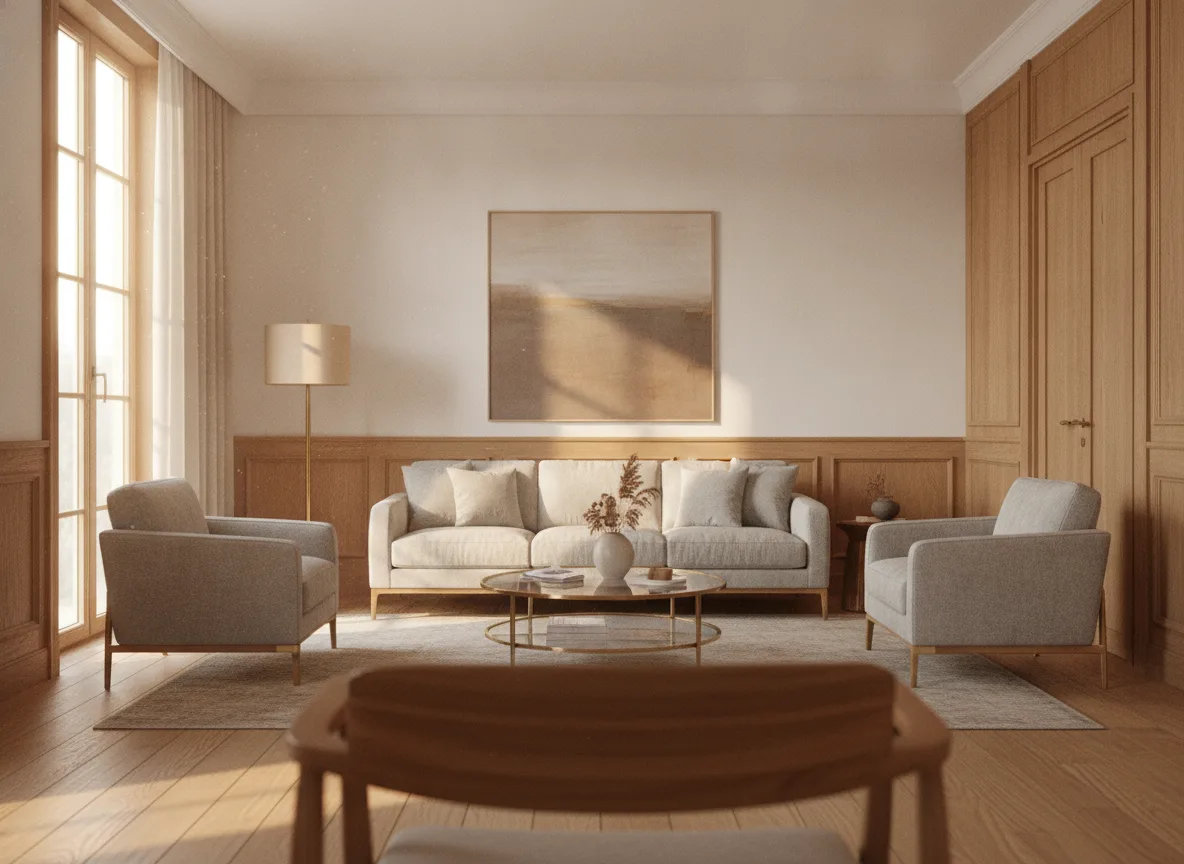
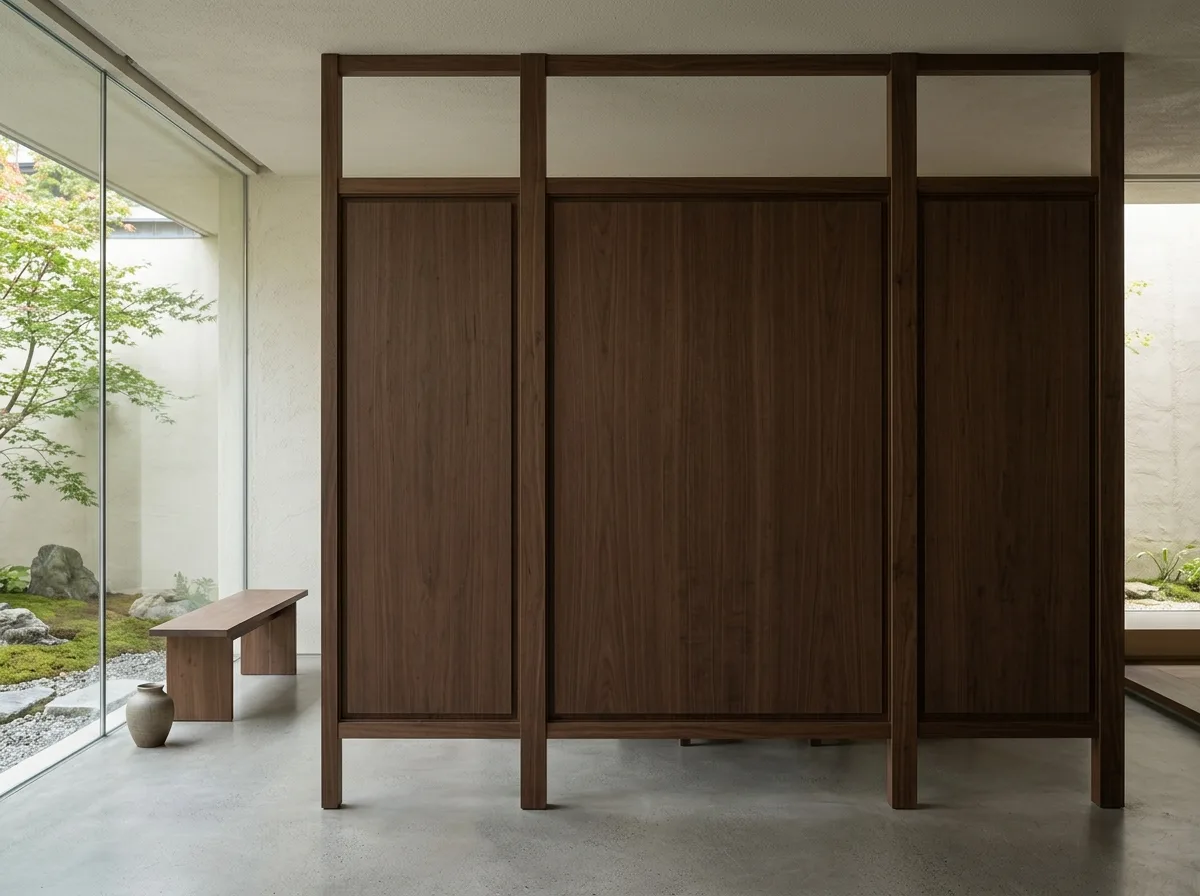
A contemporary oriental wooden wall. Its compositional logic derives from traditional frames and panels—vertical stiles and horizontal rails form the framework, with flat panels embedded in between. However, all proportions have been re-evaluated: the frame sections are finer and more rectilinear than traditional ones, without any moldings or carvings; the number of divisions has been greatly reduced, with a single wall divided into only three to four large sections instead of a dozen small ones; the panels are completely flat, with a fine recess between them and the frame. Thus, the entire wall reveals a traditional organizational method, but with a contemporary, restrained expression. The wood is dark solid wood, matte finished, with straight and fine grain. Avoid: using dense small-grid divisions, adding moldings and carvings to the frame, using protruding panels, staining the wood a high-saturation reddish-brown.
Translated from Chinese by AI.
Show the original prompt
一面當代的東方木作牆。它的組成邏輯來自傳統的框與板——垂直的立框與水平的橫檔構成骨架,中間嵌入平整的板面。但所有的比例都被重新推敲過:框料的斷面比傳統更細、更方正,沒有任何線腳與雕刻;分割的格數大幅減少,一片牆只分成三到四個大格而不是十幾個小格;板面完全平整,與框料之間是一道細細的退凹。因此整面牆讀得出傳統的組織方式,但表情是當代的、克制的。木料是深色的實木,霧面處理,紋理直而細。避免:使用密集的小格分割、在框料上加線腳與雕花、使用凸出的板面、把木料染成高彩度的紅褐色。