Text-to-Image
Architecture
通用
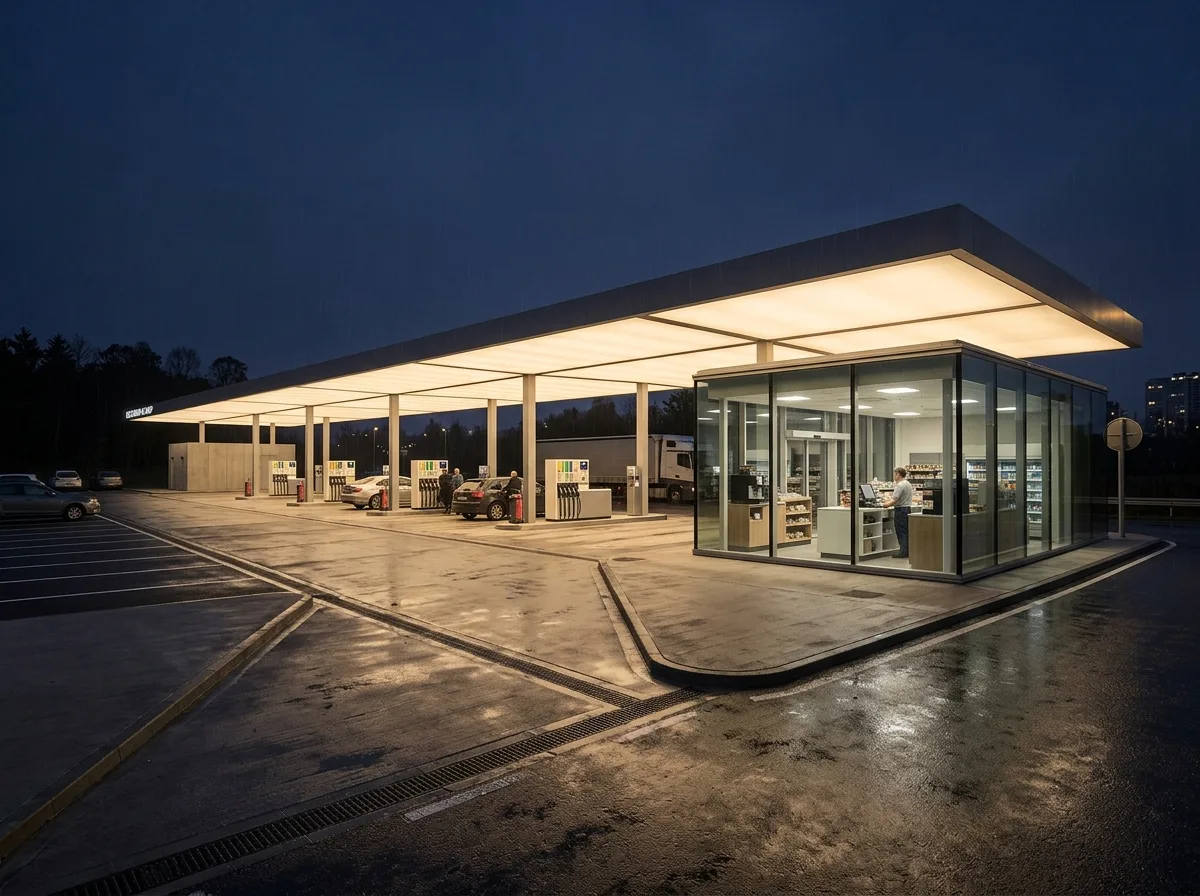
Gas Station Convenience Store: Relationship Between Awning, Cars, and Store
Prompt
Gas Station Convenience Store: The Relationship Between Canopy, Cars, and Store.
The store's volume and the gas island's large canopy are part of the same design: the canopy is a thin horizontal slab, with columns and gas pumps underneath, and the store is a glass box at one end of the canopy. Both are connected by the same material language and the same horizontal line. The glass facade faces the fueling area, allowing the staff to see every car and every pump from the cashier. Parking is on the other side of the store, separating the fueling and shopping circulation. At night, the underside of the canopy is a uniformly lit ceiling, becoming a landmark visible from afar on the highway. The flooring material and drainage slope are clearly defined. Shot at night from the highway side, the glowing canopy, the glass box store, and its relationship with the gas island are all visible.
Avoid: Store and canopy acting independently, glass facade covered with advertisements obscuring cars, mixed fueling and parking circulation, using spot lighting under the canopy.
Translated from Chinese by AI.
Show the original prompt
商店的量體與加油島的大雨庇是同一個設計:雨庇是一片水平的薄板,下方是柱列與加油機,商店則是雨庇一端的玻璃盒子,兩者用同一種材質語彙與同一條水平線串起來。玻璃面正對加油區,店員從收銀的位置看得見每一台車與每一支油槍。停車位在商店的另一側,讓加油與購物的動線分開。夜間雨庇的下方是整片均勻的發光天花,成為公路上遠遠就看得到的標的。地坪的材質與洩水坡度處理明確。夜間從公路側拍攝,發光的雨庇、玻璃盒的店與加油島的關係同時可見。避免:商店與雨庇各自為政、玻璃面被廣告貼滿看不見車、加油與停車動線混雜、雨庇下方使用點狀燈具。