Text-to-Image
Interior Design
通用
Taiwanese Neo-Tradition: Modernizing Chinese Vocabulary
Prompt
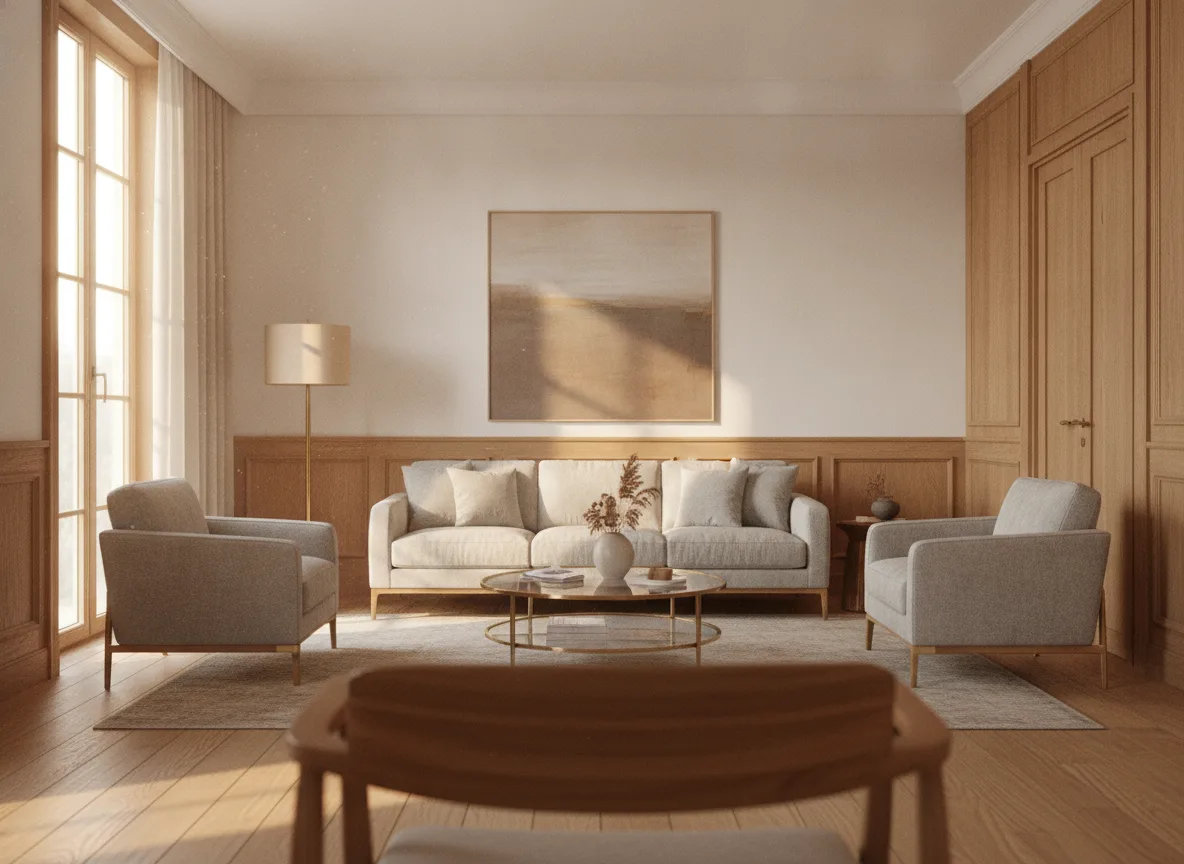
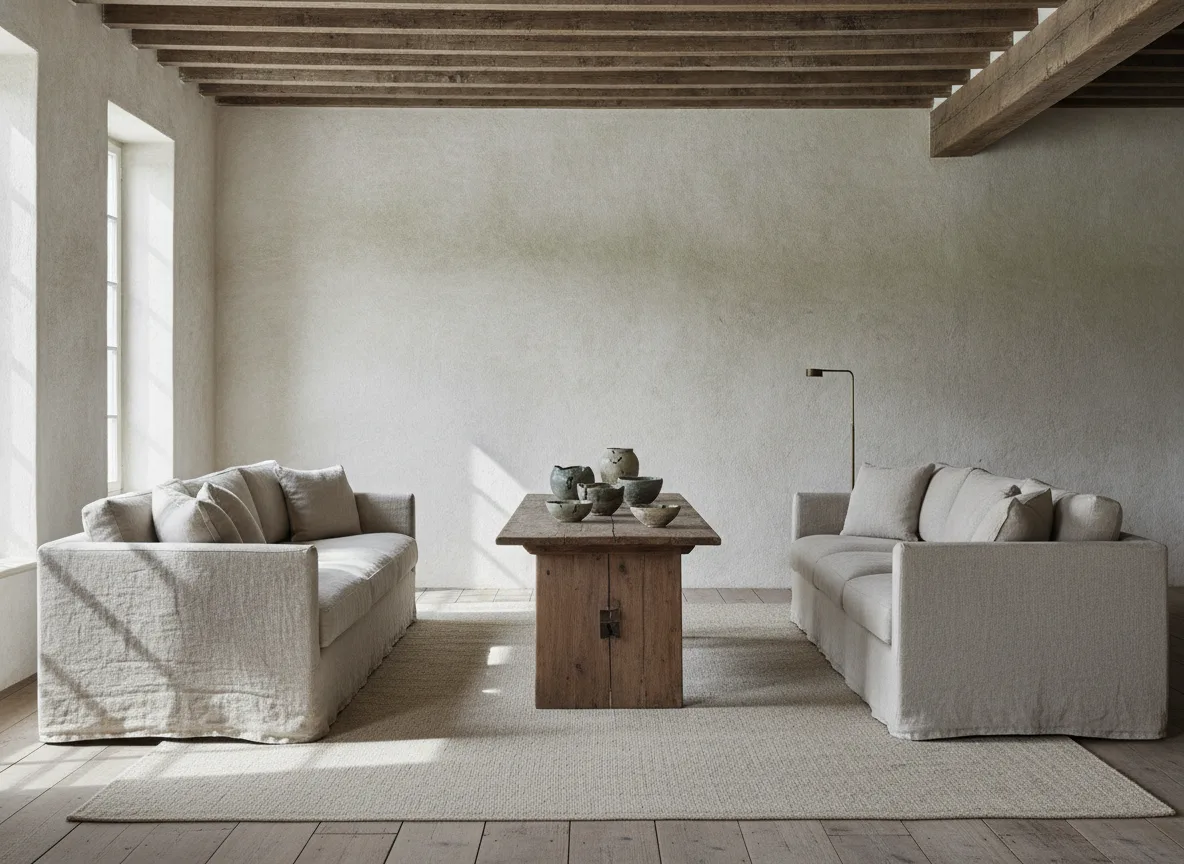
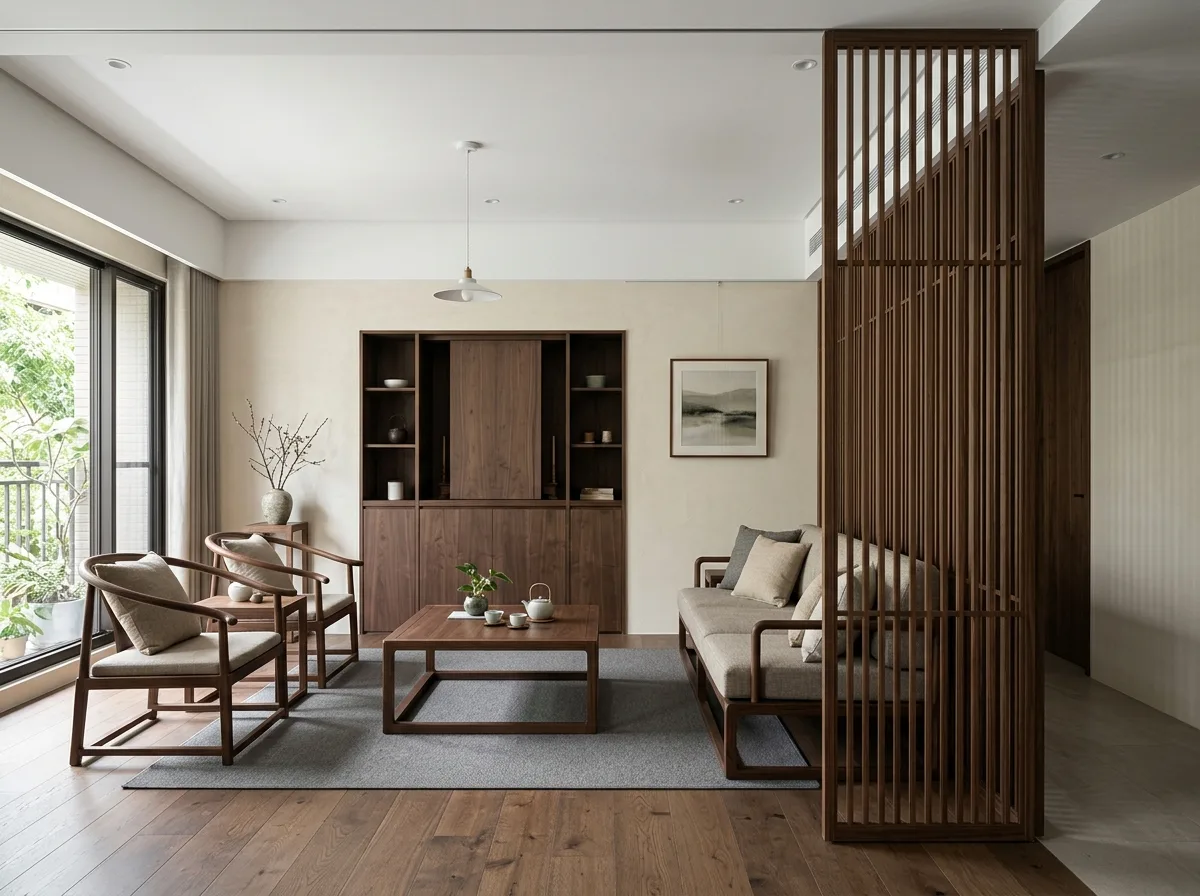
A new traditional living room in a Taiwanese residence, where traditional Chinese vocabulary is given a contemporary treatment. The wooden grille element is retained, but the grid proportions are enlarged and the lines thinned, forming a translucent screen rather than an intricate decorative window. The furniture silhouettes are derived from Ming style—the curves of the horseshoe armchair, the proportions of the square table, the simplicity of the cabinets—but all moldings are removed, leaving only the simplest cross-sections. The wood is a uniform dark walnut, with a matte oil-wax finish. The walls are warm off-white mineral plaster, and the ceiling is completely white. The function of the ancestral altar (Shenmingting) is integrated into a full-height wooden cabinet of the same color, which can be slid open or closed. The floor is wide plank wood flooring. Soft furnishings are plain linen and coarse woven cotton, in colors of beige and gray. Avoid: using Chinese palace-style redwood carvings and gilding, adding dragons, phoenixes, and intricate totems, using high-saturation Chinese red, having complex moldings on the woodwork.
Translated from Chinese by AI.
Show the original prompt
一間台灣住宅的新傳統起居室,把華人的傳統語彙做當代處理。木格柵的元素保留,但格子的比例放大、線條加細,做成一片通透的隔屏而不是繁複的花窗。家具的輪廓來自明式——圈椅的弧線、方桌的比例、櫃體的簡潔——但線腳全部取消,只留最單純的斷面,木料是統一的深胡桃色,霧面油蠟。牆面是溫暖的米白礦物塗料,天花完全留白。神明廳的機能被整合進一整面同色的木作櫃體中,可以推拉關閉。地面是寬板木地板。軟裝是素面的亞麻與粗織棉,顏色是米與灰。避免:使用中國宮廷式的紅木雕花與鎏金、加入龍鳳與繁複圖騰、使用高彩度的中國紅、讓木作出現複雜線腳。