Text-to-Image
Interior Design
通用
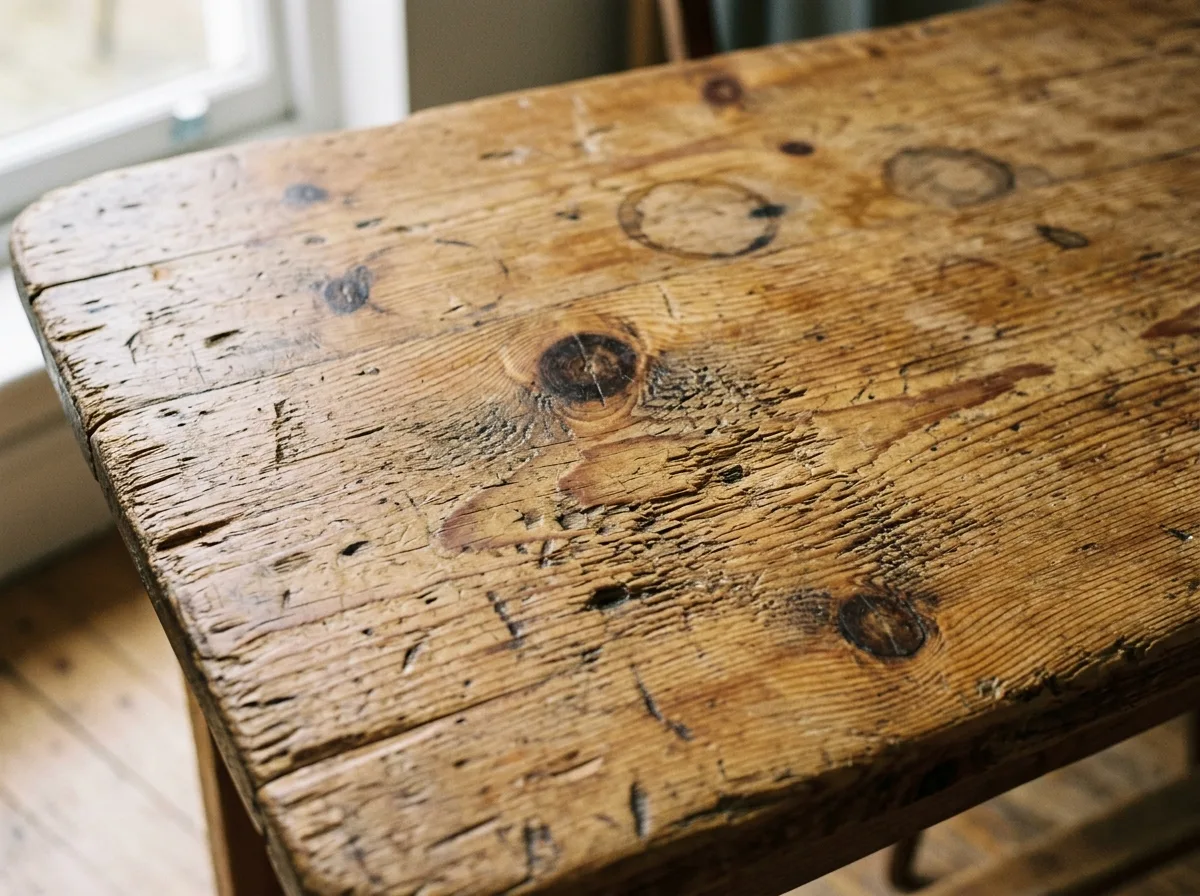
Old pine: soft, knotty, and yielding
Prompt
A close-up of old pine wood. Pine is a softwood, so after decades of use, its surface is covered with dents—cuts from knives, impressions from heavy objects, and impacts—and all edges are rounded. The wood grain has numerous knots, and the color transitions from honey yellow to deep amber, a result of decades of oxidation. The tabletop shows raised wood fibers from scrubbing and dark water rings. This type of wood was originally considered a cheap, inferior material, and precisely because it was inexpensive, it was used extensively and roughly, thus accumulating these marks. It is entirely different from the flat, smooth surface of hardwood. Avoid: using flat, knot-free wood, polishing and waxing the surface to a shine, using dark-stained faux-aged wood, eliminating dents and water stains.
Translated from Chinese by AI.
Show the original prompt
一組舊松木的近景。松木是軟木,因此使用幾十年之後表面佈滿凹痕——刀切的、重物壓的、撞出來的,邊角全部磨圓;木紋有大量的節疤,顏色從蜜黃過渡到深琥珀,是氧化幾十年的結果;桌面上有洗刷留下的木纖維起毛與深色的水漬環。這種木頭本來被視為便宜的次等材料,正因為便宜才用得起、用得凶,也因此才留下這些痕跡。它與硬木的平整光滑是兩回事。避免:使用平整無節的木材、把表面拋光打蠟成光亮、使用染成深色的仿舊木、消除凹痕與水漬。