Text-to-Image
Interior Design
通用
Contemporary Shoji: Rewriting the proportion of the grid
Prompt
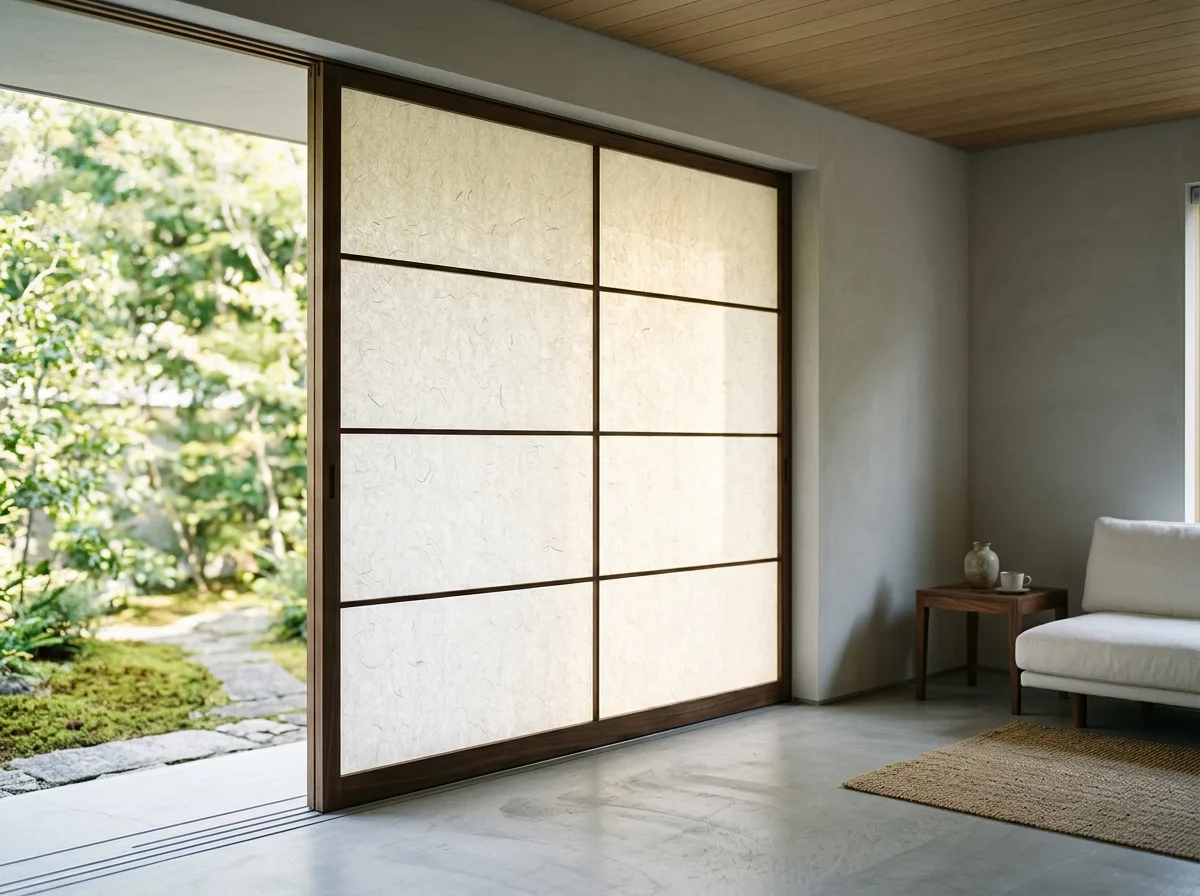
A contemporary shoji screen. The construction still uses a wooden frame with translucent paper or film, but the proportions have been re-evaluated: the number of grids is significantly reduced, with one door divided into only three to four large sections instead of the traditional dozen or so; the cross-section of the kumiko (lattice bars) is thinner, only 1.5 cm; the entire door extends to the ceiling, without the upper ranma (transom) and lower skirt panel. Therefore, it reads as a glowing surface rather than a patterned door. The wood is light ash or dark walnut, ultra-matte. When light passes through, the fibrous texture of the paper and the dark lines of the kumiko are simultaneously visible. Avoid: using traditional dense grid divisions, adding ranma and skirt panels, making the kumiko thicker, using patterned and colored paper.
Translated from Chinese by AI.
Show the original prompt
一片當代化的紙門。做法仍然是木框加半透明的紙或膜,但比例被重新推敲:格子的數量大幅減少,一片門只分成三到四個大格而不是傳統的十幾格;櫺條的斷面更細,僅一點五公分;整片門的高度做到天花,沒有上方的欄間與下方的裙板。因此它讀起來是一片會發光的面,而不是一個有圖案的門。木料是淺色的白蠟或深色的胡桃,超霧面。光穿過時,紙的纖維紋理與櫺條的深色線條同時可見。避免:使用傳統的密集格子分割、加入欄間與裙板、把櫺條做粗、使用有圖案與彩色的紙。