Text-to-Image
Architecture
通用
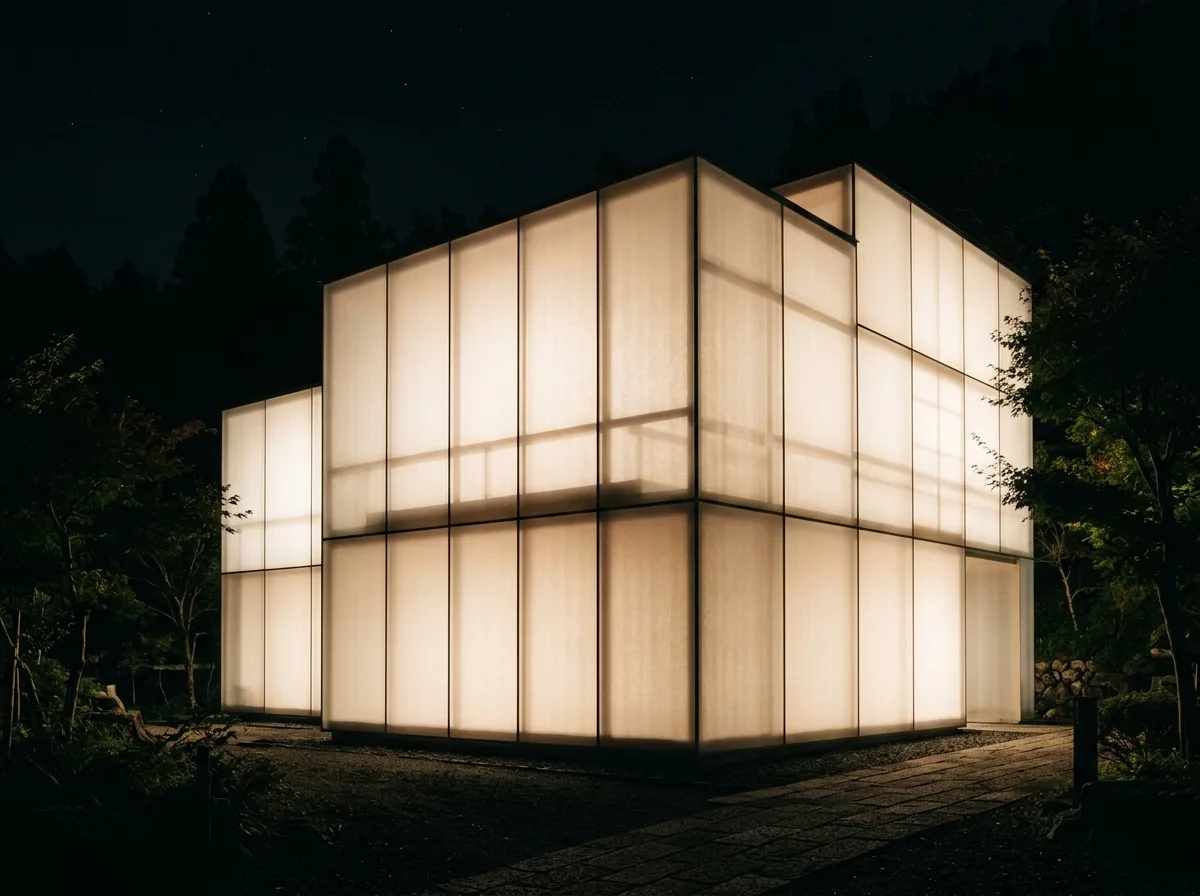
The lantern theory: architecture as a paper lantern at night
Prompt
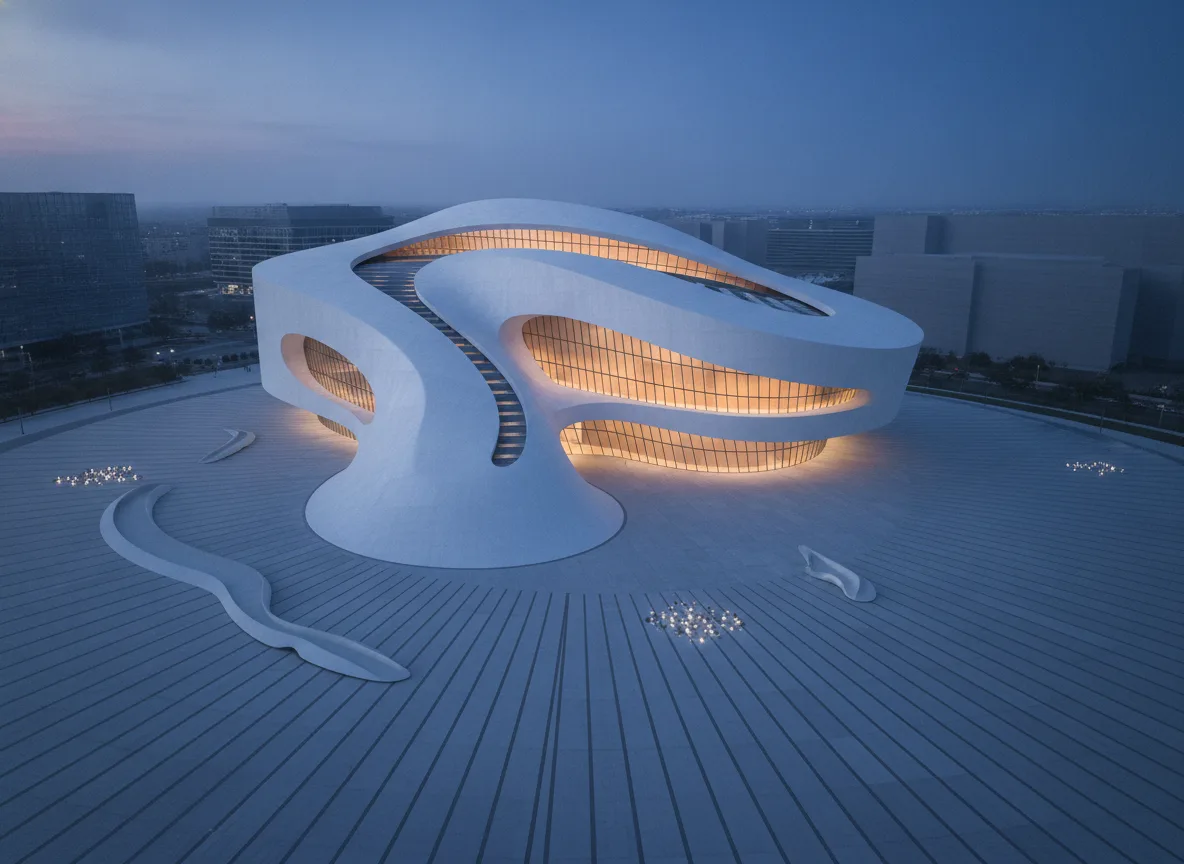
Architecture at night, with exterior walls made of translucent materials—frosted glass, polycarbonate panels, or washi-textured membranes. All light fixtures are installed indoors. The entire building thus transforms into a giant internally glowing lantern at night: the exterior walls emit a uniform and soft milky white light, with no specific light points visible, only the faint dark lines of the interior structural columns and beams showing through, like the framework of a lantern. The edges of the light have no sharp boundaries, and the building's mass appears light, warm, and substantial due to its luminescence. The surrounding environment remains dark, with the building as the sole light source.
Avoid: Adding floodlights externally, having individual light points appear on the exterior walls, using highly saturated colors, depicting the exterior walls as completely transparent.
Translated from Chinese by AI.
Show the original prompt
夜間的建築,外牆是半透明的材料——霧面玻璃、聚碳酸酯板或和紙質感的膜材,所有燈具都設在室內。整棟建築因此在夜裡變成一個由內發光的巨大燈籠:外牆呈現均勻而柔和的乳白光,看不見任何一個具體的燈點,只有室內結構的柱與樑透出淡淡的深色線條,像燈籠的骨架。光的邊緣沒有銳利的界線,建築的量體因為發光而顯得輕、暖、有厚度。周邊環境維持黑暗,建築是唯一的光源。避免:在外部加裝投光燈、讓外牆出現一顆一顆的燈點、使用高彩度的顏色、把外牆畫成完全透明。