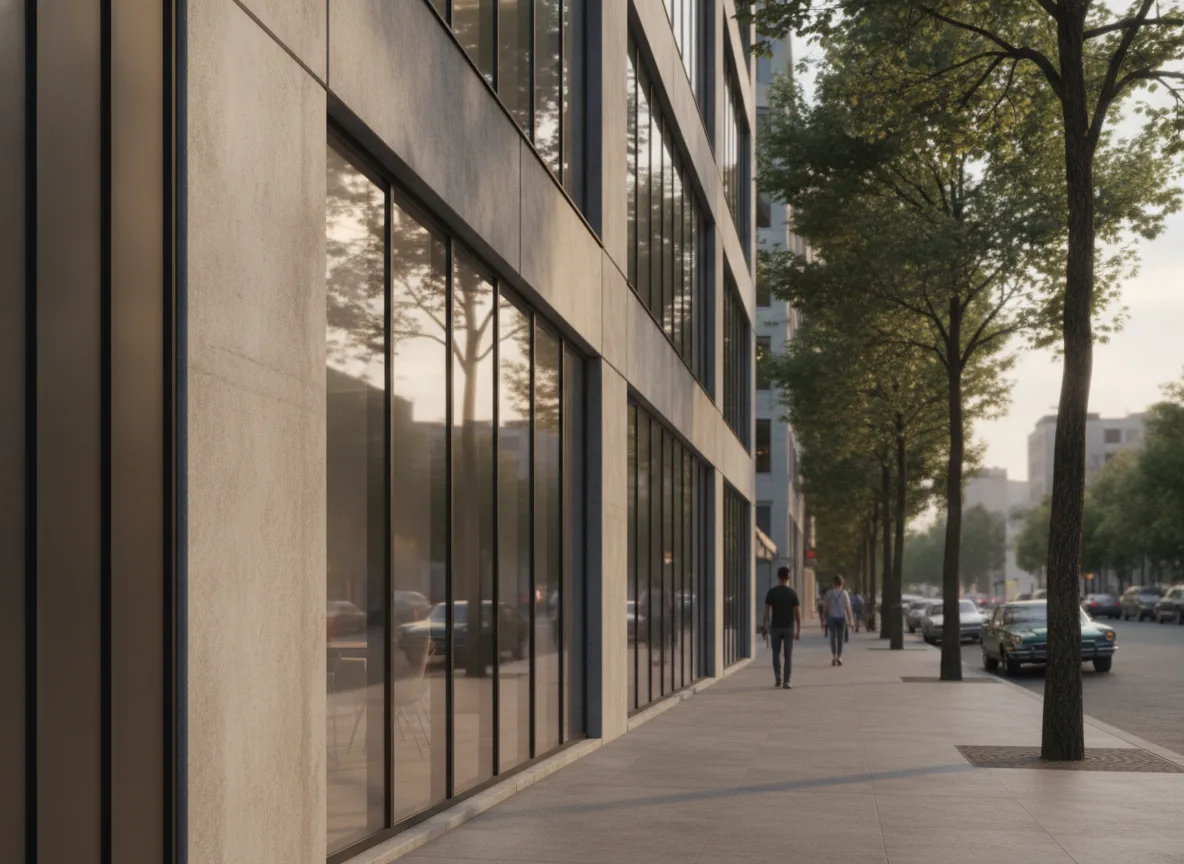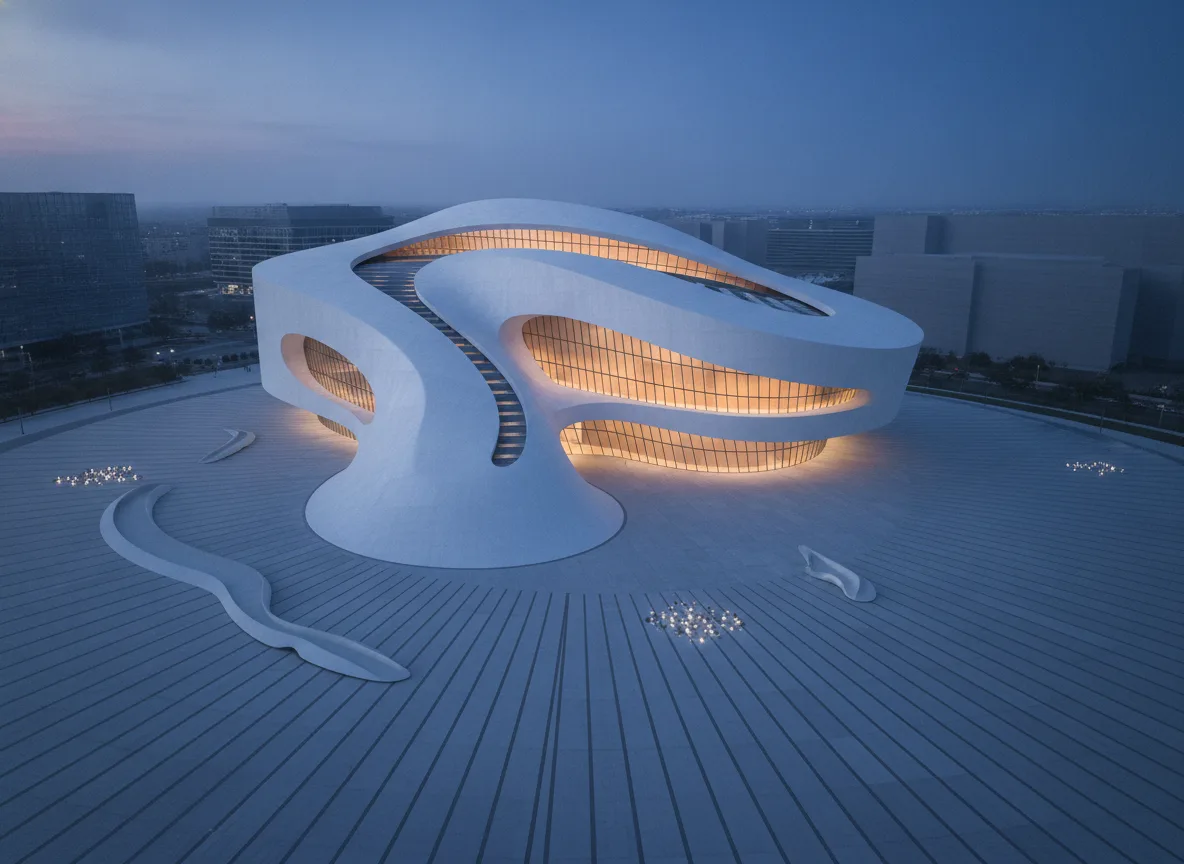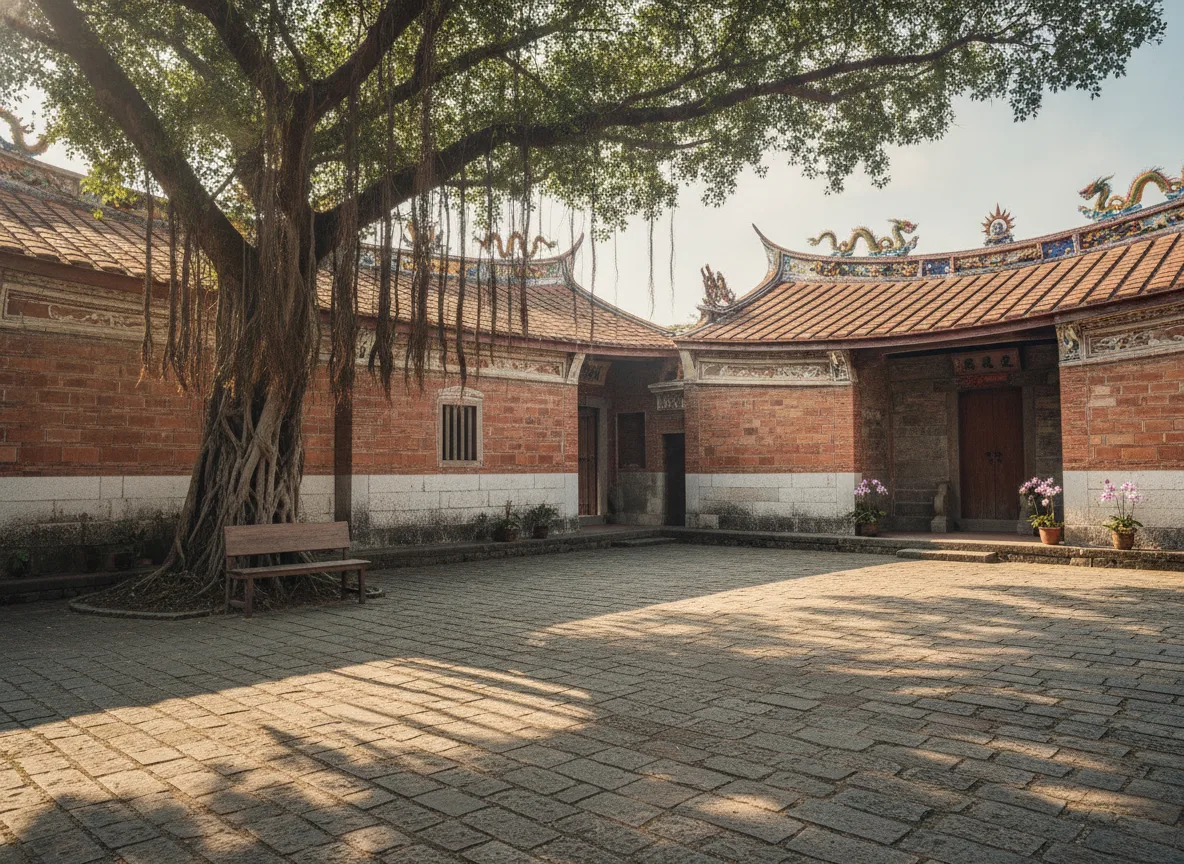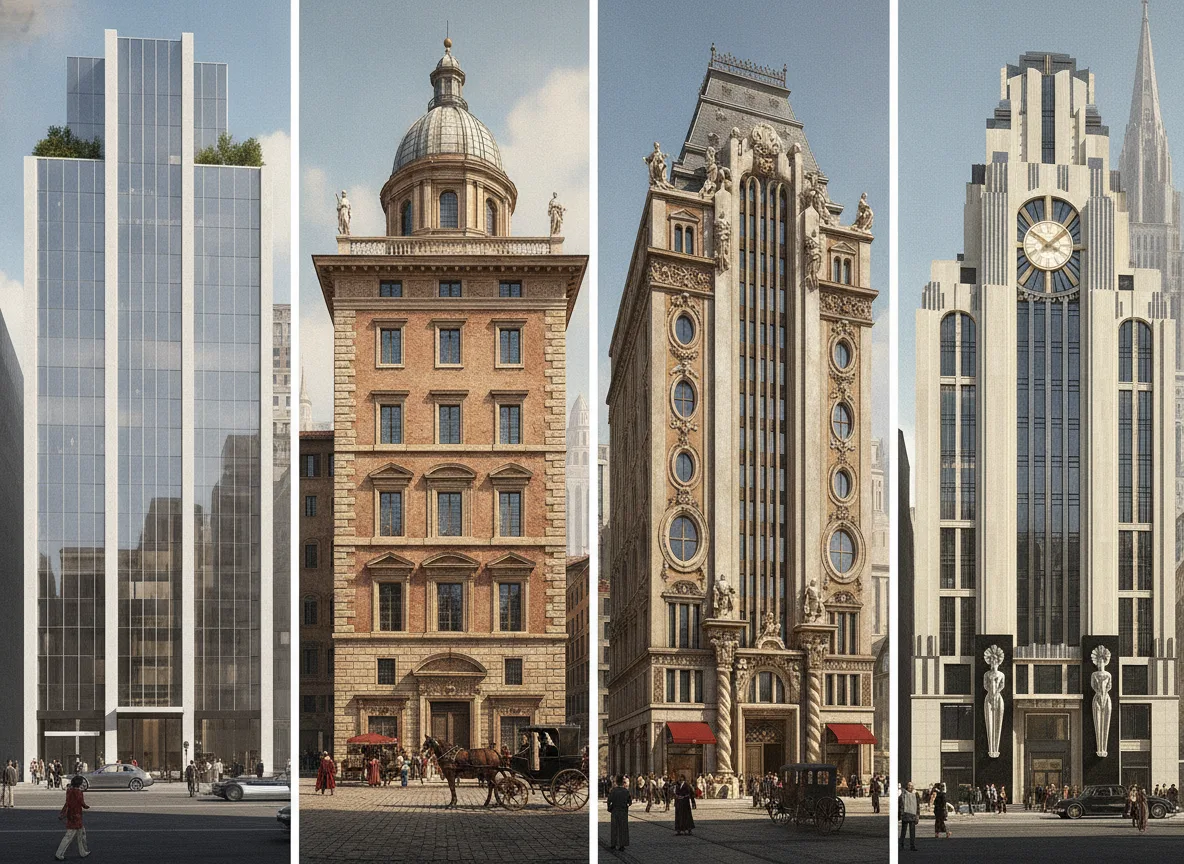
Image Editing
Architecture
Nano banana
Discrete Block Style Poster
Prompt
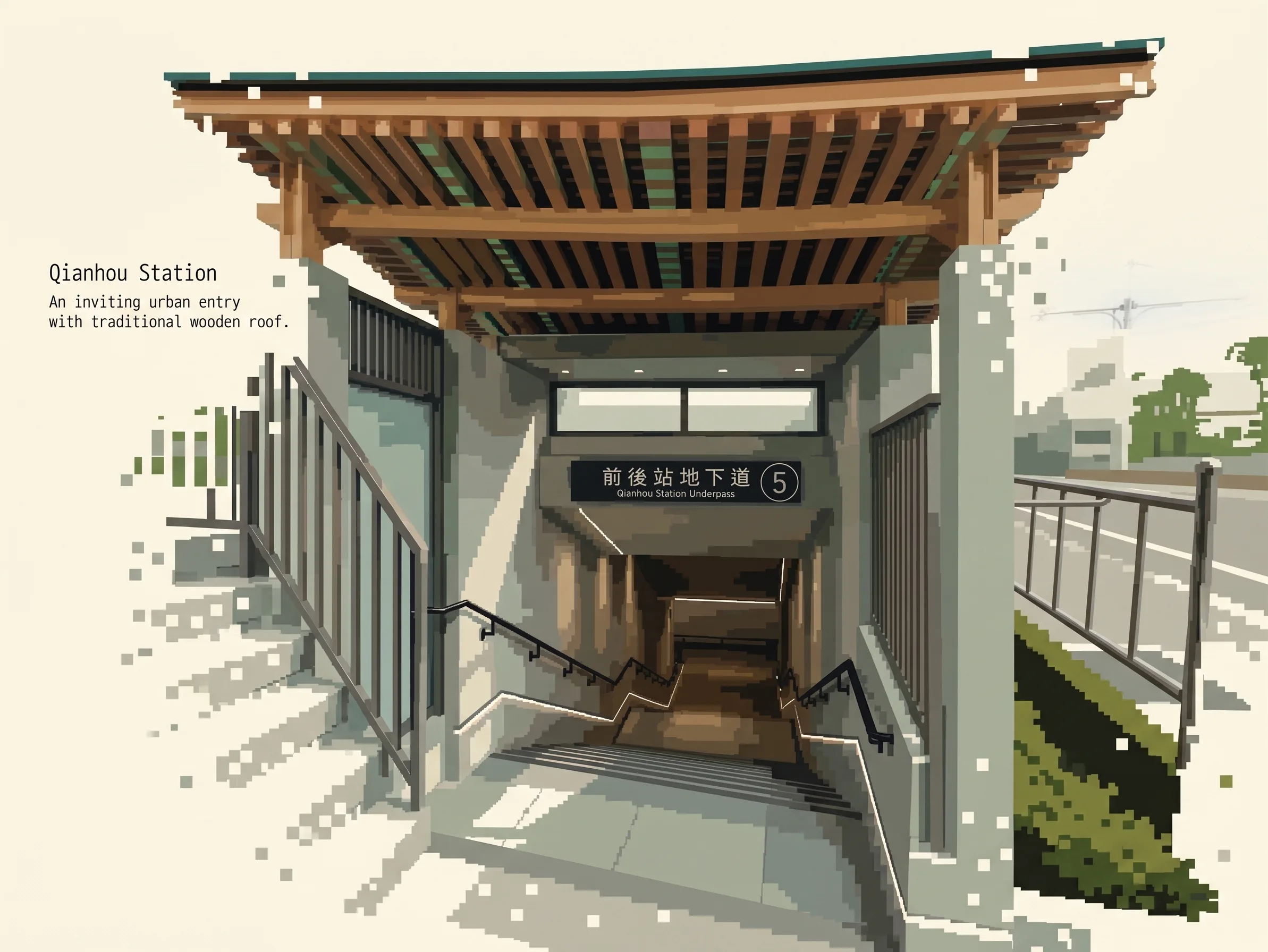
Please take each travel photo I upload and turn it into a separate, high-level editorial poster, without combining multiple photos; each photo should be output individually. **Place** it on a warm off-white or light ivory paper surface, reorganizing the same scene into an “artificial pixelated vanishing landscape” with ample negative space. This is not a photo mosaic filter, nor is it simply reducing the resolution of the entire photo.

First, select the most recognizable visual anchor from the photo, such as a bridge, a colorful facade, a dome, a motorcycle, a bicycle, a boat, a gatehouse, or a distinct roofline. Then, retain only the minimal elements necessary to convey the location and spatial relationships.

Employ a scaled-down, refined secondary composition: the main subject typically occupies about 30%–50% of the redraw area's width and about 30%–50% of its height, concentrated in the lower-middle, slightly to the left or right, and naturally arranged according to the original photo's orientation. Retain at least about 50%–65% of the complete off-white paper surface around the edges.

The background should only retain two or three layers of sparse pixel hints. Remove repetitive window panes, fine tile textures, small text on signs, miscellaneous tourist figures, dense pipelines, branches, leaves, and photographic noise, but do not remove essential elements that define the subject's identity, such as eaves, bridge arches, domes, vehicle outlines, human postures, or road directions.

Reconstruct forms using clear-edged, square or nearly square discrete pixel blocks:

- Use medium-sized pixel blocks to establish the main subject's large outline, volume, light and shadow, and primary color planes.
- Use smaller, denser pixel blocks for critical identification points such as eaves, spires, dome edges, window proportions, bridge arches, human postures, wheels, and boat bows.
- Gradually reduce pixel density at the outer edges of buildings, vegetation, road surfaces, water surfaces, reflections, and distant views, causing blocks to break apart, misalign, scatter, and disappear into the paper surface.
- The interior of the subject should remain relatively complete, while the periphery forms a clear pixel vanishing zone.
- Vanishing must result from a decrease in the number and density of independent blocks; do not use soft focus, feathering, smoke, transparent gradients, or pixel stretching.
- A small number of discrete blocks may move away from the subject along eaves, road perspectives, water flow, terrain, or direction of movement, but they must not become random digital glitches.

The color palette should be entirely extracted from the current photo and compressed into approximately 6–12 main color steps. Retain 1–3 of the subject's most recognizable colors, then use adjacent shades to build volume.

The environmental colors should have reduced saturation and be unified towards natural gray, stone gray, gray-blue, gray-green, wood brown, or the architectural colors present in the photo itself. A small area of high-saturation color that genuinely exists in the photo can be used as a visual accent, such as taillights, windows, or clothing colors.

The off-white paper surface must be the largest color block in the redraw area. Do not consistently use neon colors, cyber blue-purple, sunset orange unrelated to the original image, or game console-style high-saturation color schemes.

Extract a small amount of English text based on the location, subject, direction, or action in the photo. The first line should be a 1–3 word English subtitle, and the second line a very short observational sentence of 5–10 English words.

The text content should describe the genuinely visible space or action in the photo, not generic travel slogans, and should not fabricate dates, coordinates, or locations. The text must first be determined word-for-word in the prompt before generation.

Place the text on the complete negative space edge, away from the main pixel subject, using a restrained monospace or thin sans-serif font with slightly wider letter spacing. It can have slight grid or pixelated stair-step edges but must be clearly legible. The text area should not exceed 3%–5% of the redraw area and should not become the primary visual focus.

The overall impression should be that of a low-resolution landscape study, manually selected, color-limited, and re-arranged: the main structure is clear, edges gradually detach pixel by pixel, like a travel memory slowly receding from the paper surface.

Pixels are a medium for reorganizing forms, not a cheap retro filter.

Avoid: Photo mosaic filter, overall resolution reduction, blurry pixelation, low-res redraw with identical composition, smooth digital illustration, 8-bit game interface, retro game characters, voxel 3D, Minecraft blocks, cyber glitches, data corruption effects, pixel stretching, dot halftone, cross-stitch, diamond painting, full-page pixel background, generic travel icons, fictional landmarks, arbitrary addition of people/vehicles, oversized subject, insufficient negative space, pixels crossing top/bottom boundaries, large bold titles, author names, signatures, logos, QR codes, URLs, fake Chinese, garbled text, and watermarks.

Most important rule: Do not blur the photo; instead, re-decide which information should be retained by pixels and which should disappear pixel by pixel; the subject must instantly correspond to the original photo, and the paper white must be more prominent than the pixels.
Translated from Chinese by AI.
Show the original prompt
请将我上传的每一张旅行照片分别制作成一张独立的高级编辑海报,不多图拼接,每张照片单独输出。**分在**温暖米白或浅象牙色纸面上,将同一场景重新组织为一幅具有大量留白的“人工像素消隐景观”。这不是照片马赛克滤镜,也不是把整张照片降低分辨率。

先从照片中选择一个最有识别度的视觉锚点,例如一座桥、一段彩色立面、一座穹顶、一辆摩托车、一辆自行车、一艘船、一个门楼或一组明确屋顶,再只保留能够说明地点和空间关系的最少元素。

采用缩小提炼的二次构图:主体通常只占转绘区宽度约30%–50%、高度约30%–50%,集中在中下部、偏左或偏右,并依据原照片的方向自然安排。四周保留至少约50%–65%的完整米白纸面。

背景只保留两三层稀疏像素暗示。删除重复窗格、瓦片细纹、招牌小字、游客杂影、密集管线、枝叶与摄影噪声,但不得删掉决定主体身份的屋檐、桥拱、穹顶、车辆轮廓、人物姿态或道路方向。

使用边缘清楚、正方或近似正方的离散像素块重新搭建形体:

- 以中等尺寸像素块建立主体的大轮廓、体量、明暗和主要色面。
- 在屋檐、塔尖、穹顶边缘、门窗比例、桥拱、人物姿态、车轮、船头等识别关键处使用更小、更密的像素块。
- 在建筑外缘、植被、路面、水面、倒影和远景处逐渐减少像素密度,使方块断开、错位、散落并消失到纸面。
- 主体内部相对完整,外围形成清楚的像素消隐带。
- 消隐必须来自独立方块数量与密度的下降,不得使用柔焦、羽化、烟雾、透明渐变或像素拉伸。
- 少量离散方块可以沿屋檐、道路透视、水流、地形或运动方向离开主体,但不能成为随机数字故障。

配色完全从当前照片提取并压缩为约6–12个主色阶。保留主体最具识别度的1–3个颜色,再用相邻深浅色建立体积。

环境色降低饱和度,并向自然灰、石灰色、灰蓝、灰绿、木褐或照片自身的建筑色统一。可以将照片中真实存在的一处小面积高饱和色作为视觉跳点,例如尾灯、门窗或服装颜色。

米白纸面必须是转绘区的最大色块。不得固定使用霓虹色、赛博蓝紫、与原图无关的日落橙或游戏机式高饱和配色。

根据照片中的地点、主体、方向或动作提炼少量英文文字。第一行为1–3个英文单词的小标题,第二行为一句5–10个英文单词的极短观察句。

文字内容应描述照片中真实可见的空间或动作,不写空泛的旅行口号,不虚构日期、坐标和地点。必须先在提示词中逐字确定文字,再进行生成。

文字放在远离像素主体的完整留白边缘,使用克制的等宽字体或细无衬线字体,字距略宽,可以带轻微方格或像素阶梯边缘,但必须清晰可读。文字面积不超过转绘区的3%–5%,不能成为第一视觉中心。

整体应像一幅经过人工挑选、限色和重新编排的低分辨率景观习作:主体结构清楚,边缘逐格游离,像一段正在从纸面上缓慢退去的旅行记忆。

像素是重组形体的媒介,不是廉价复古滤镜。

强制避免:照片马赛克滤镜、整体降分辨率、模糊像素化、同构图低清重画、平滑数字插画、8-bit游戏界面、复古游戏角色、体素3D、Minecraft方块、赛博故障、数据损坏特效、像素拉伸、圆点半调、十字绣、钻石画、满版像素背景、通用旅游图标、虚构地标、随意增加人物车辆、主体过大、留白不足、像素越过上下分界、粗大标题、作者名、签名、Logo、二维码、网址、假中文、乱码和水印。

最重要的规则:不要把照片变糊,而要重新决定哪些信息应该被像素保留、哪些信息应该逐格消失;主体必须一眼对应原照片,纸白必须比像素更多。