Text-to-Image
Interior Design
通用
Mending: Repaired Places Don't Need to Be Hidden
Prompt
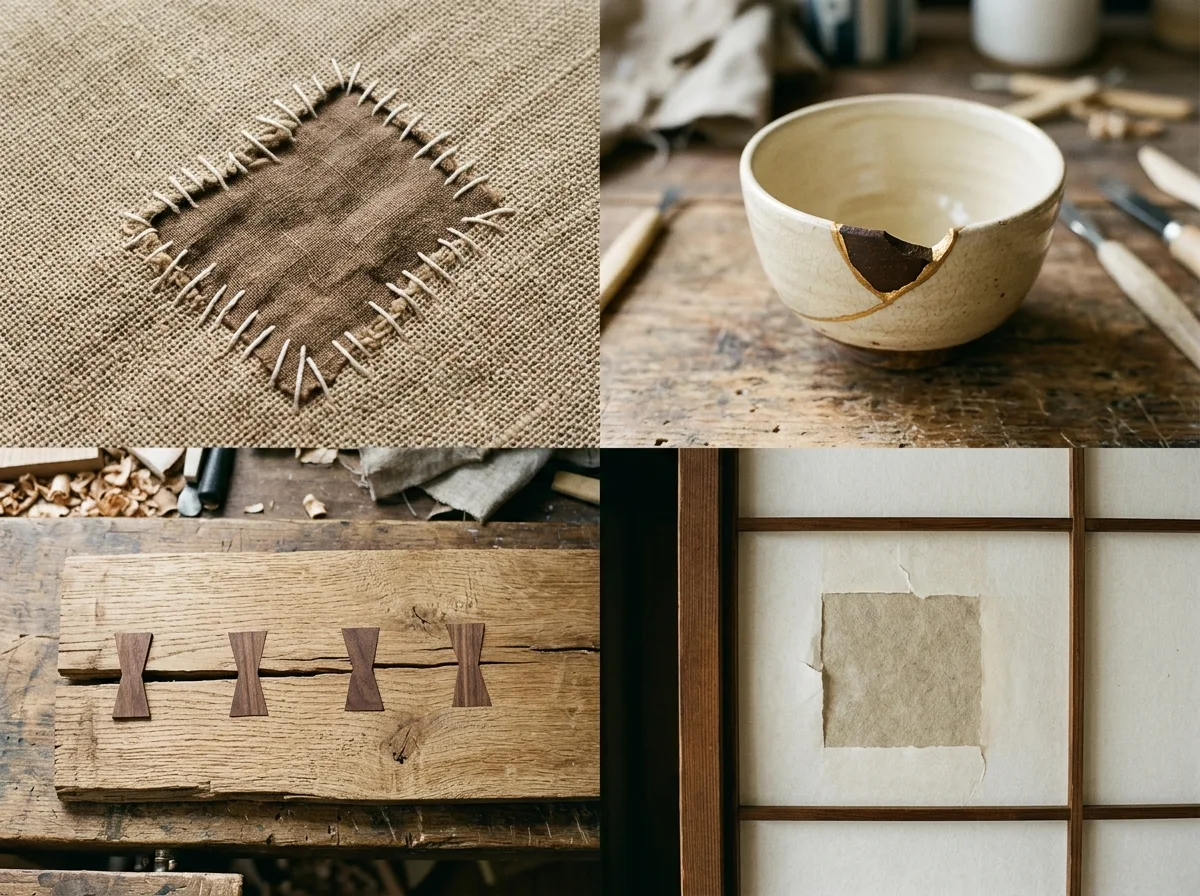
A group of repaired objects where the repairs are not hidden. A piece of linen cloth with a hole, mended from the back with a patch of similar but not identical fabric, densely stitched with coarse hand-sewing threads, the stitches clearly visible; a cracked wooden board, fixed by horizontally embedding a dark wooden butterfly joint, the color of the joint piece distinctly different from the board; a chip in a ceramic object filled with lacquer, the color darker than the original clay; a damaged Washi sliding door, patched from the back with another piece of paper, forming a slightly darker square. None of these repairs attempt to disguise themselves as original, but clearly acknowledge their later addition. Avoid: making repairs invisible, using identical materials for repair, depicting objects as flawless, making repairs appear sloppy or broken.
Translated from Chinese by AI.
Show the original prompt
一組被修補過而不隱藏的物件。一張破了洞的麻布,以顏色相近但不完全相同的布片從背面補上,並以粗的手縫線密集地縫過,針腳清楚可見;一段開裂的木板,以蝴蝶榫的深色木片橫向嵌入固定,榫片的顏色與木板明顯不同;一只陶器的缺口以漆填補,顏色深於原本的陶土;一張破損的和紙拉門,以另一張紙從背面貼補,形成一塊顏色略深的方形。這些修補都沒有試圖偽裝成原本的樣子,而是清楚地承認自己是後來加上去的。避免:把修補做得看不出來、使用完全相同的材料修補、把物件畫成完好、讓修補顯得草率破爛。