Text-to-Image
Interior Design
通用
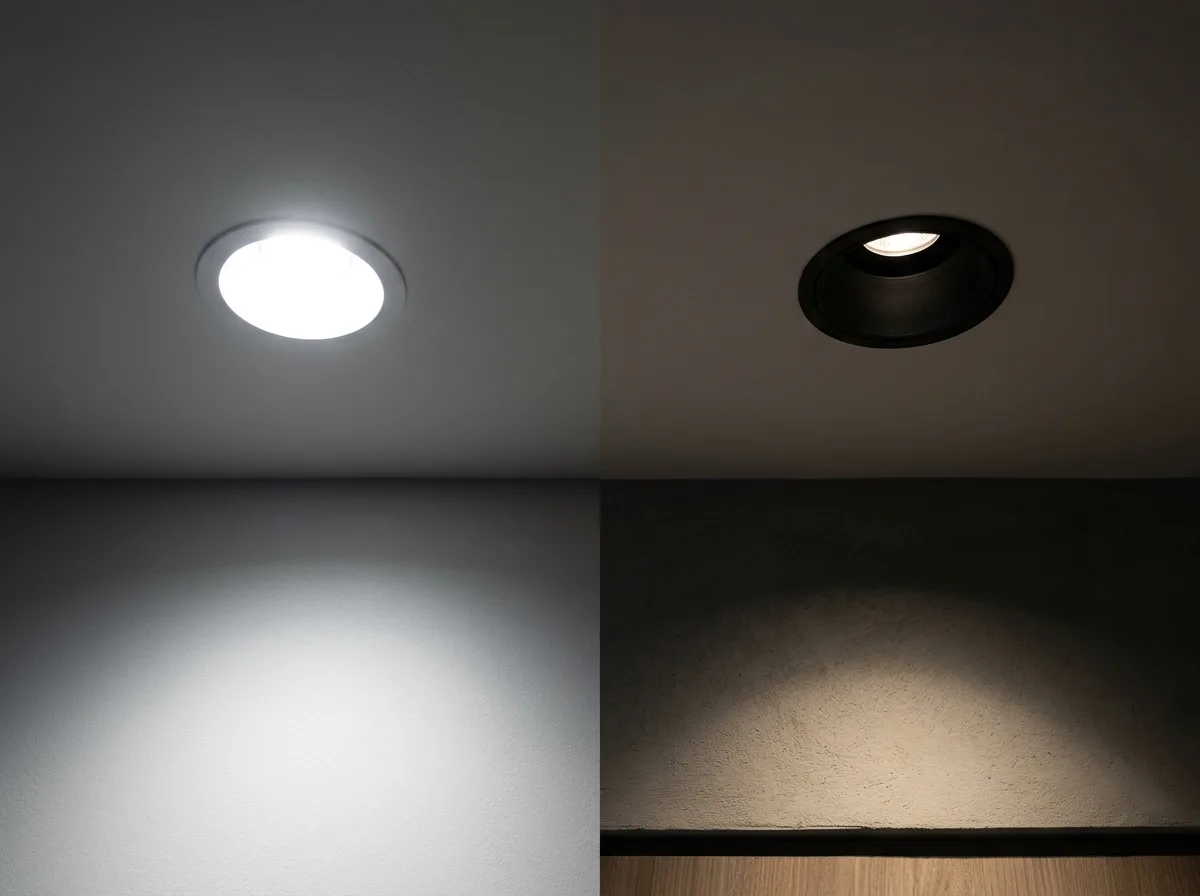
Anti-glare depth: the light source itself is not visible
Prompt
Close-up of an indoor ceiling, showing two types of recessed lights side by side. On the left are shallow-can inexpensive recessed lights: the luminous surface is almost flush with the ceiling. When viewed from a low angle, the dazzling white light points are directly visible, and the ceiling appears to have bright, bleached holes, causing eye discomfort. On the right are deep-can anti-glare recessed lights: the light source is recessed deep inside the can, with black inner walls and a glare shield. When viewed from the same angle, the holes appear black, and the light source itself is completely invisible; only the effect of light falling on the wall and floor below is seen. The ceiling thus appears quiet and undisturbed. Both types provide similar illumination below, but the visual experience is entirely different. Avoid: depicting the two types of lights as identical, showing the light point from the deep-can light on the right, eliminating the dazzling effect on the left, illuminating the entire ceiling brightly.
Translated from Chinese by AI.
Show the original prompt
室內天花的近景特寫,並列兩種嵌燈。左邊是淺筒的便宜嵌燈:發光面幾乎與天花齊平,從斜下方看過去,可以直接看見刺眼的白色光點,天花上出現一顆一顆亮得發白的孔,眼睛不舒服。右邊是深筒防眩嵌燈:光源退縮到筒內深處,加上黑色的內壁與遮光環,從同樣的角度看過去,孔洞裡是一片黑,完全看不見發光體,只看得見光落在下方牆面與地面上的結果。天花因此顯得安靜、無干擾。兩者的下方照明效果相近,但視覺經驗完全不同。避免:把兩種燈畫成一樣、讓右邊的深筒燈也露出光點、消除左邊的刺眼感、把天花整體打亮。