Text-to-Image
Interior Design
通用
Division of Labor for Wet Areas: Stone and Wood
Prompt
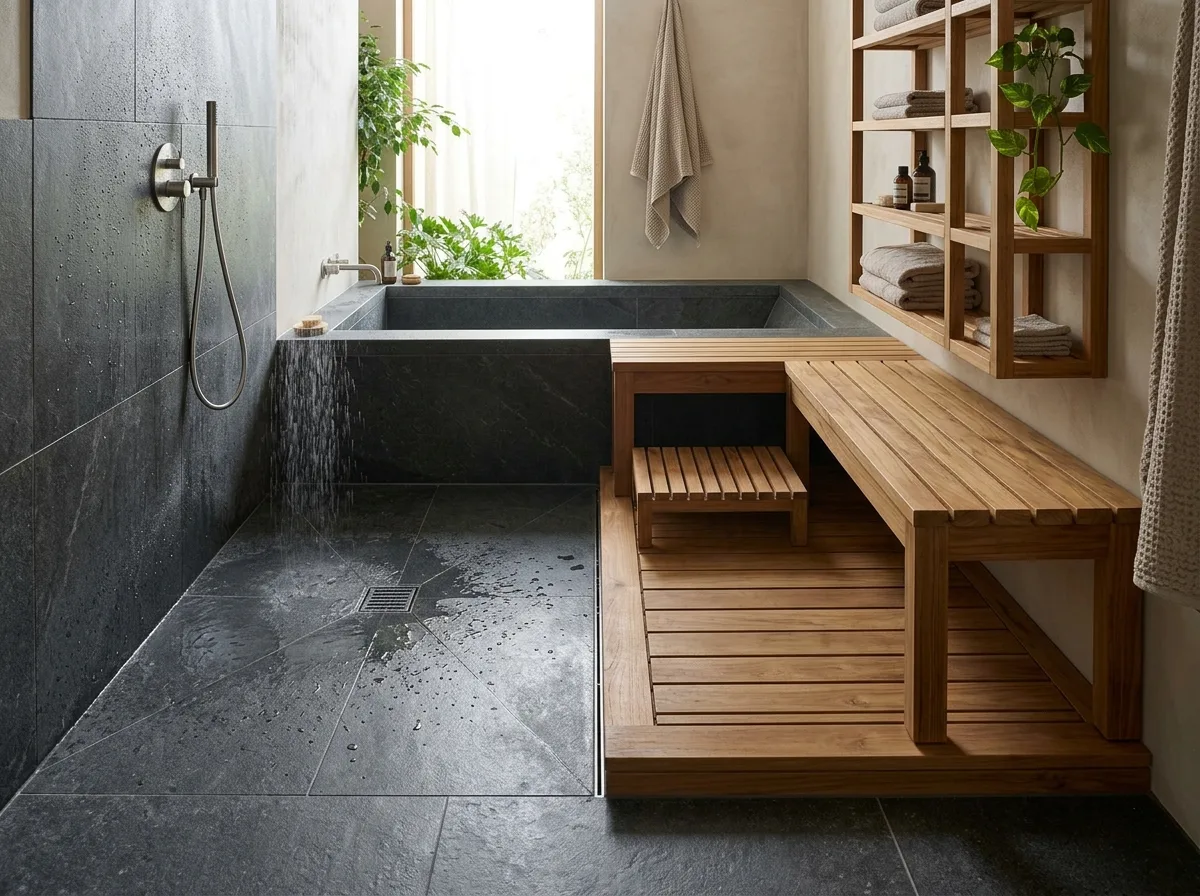
A wet area where materials are allocated according to wetness and tactile sensation. Stone is used in areas that will be directly exposed to water: flooring, shower walls, countertops, bathtub—selecting dense, low-absorption types with a honed, non-slip surface. Wood is used in areas where the body will have prolonged contact: sauna seating, steps next to the bathtub, resting area benches, storage shelves—selecting moisture-resistant teak or cypress, oiled but not varnished, allowing the wood to breathe and dry. The junction between the two materials is separated by a thin drainage gap, so the wood does not sit directly in standing water. The image should clearly show this division of labor: wet areas are entirely stone, seating areas are entirely wood. Avoid: using wood in areas where water will accumulate, using cold stone in areas for prolonged sitting, varnishing wood to seal it, allowing the two materials to directly abut without a drainage gap.
Translated from Chinese by AI.
Show the original prompt
一個依照乾濕與觸感分配材料的濕區。石材用在會直接淋到水的地方:地坪、淋浴牆、檯面、浴缸——選的是密實低吸水率的種類,表面珩磨防滑。木材用在身體會長時間接觸的地方:烤箱的座位、浴缸旁的踏板、休息區的長凳、置物的層板——選的是耐濕的柚木或檜木,只上油不上漆,讓木材可以呼吸與乾燥。兩種材料的交界處以一道細的排水縫分開,木材不直接坐在積水上。畫面可以看出這個分工:濕的地方全是石,坐的地方全是木。避免:在會積水處使用木材、在會久坐的位置使用冰冷的石材、把木材上漆封住、讓兩種材料直接貼合沒有排水縫。