Text-to-Image
Architecture
通用
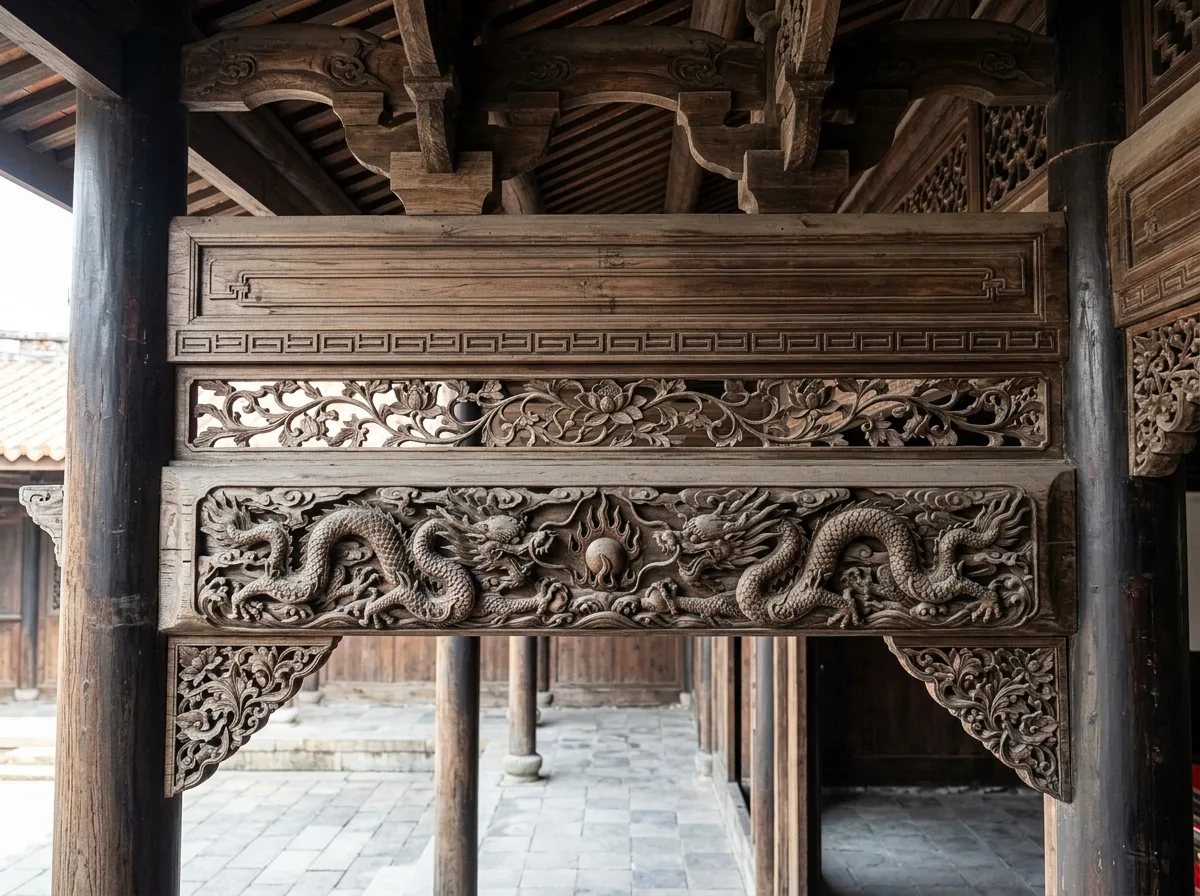
E Fang and Hua Ban (Lintel and Decorative Panel): Between the Two Horizontal Beams
Prompt
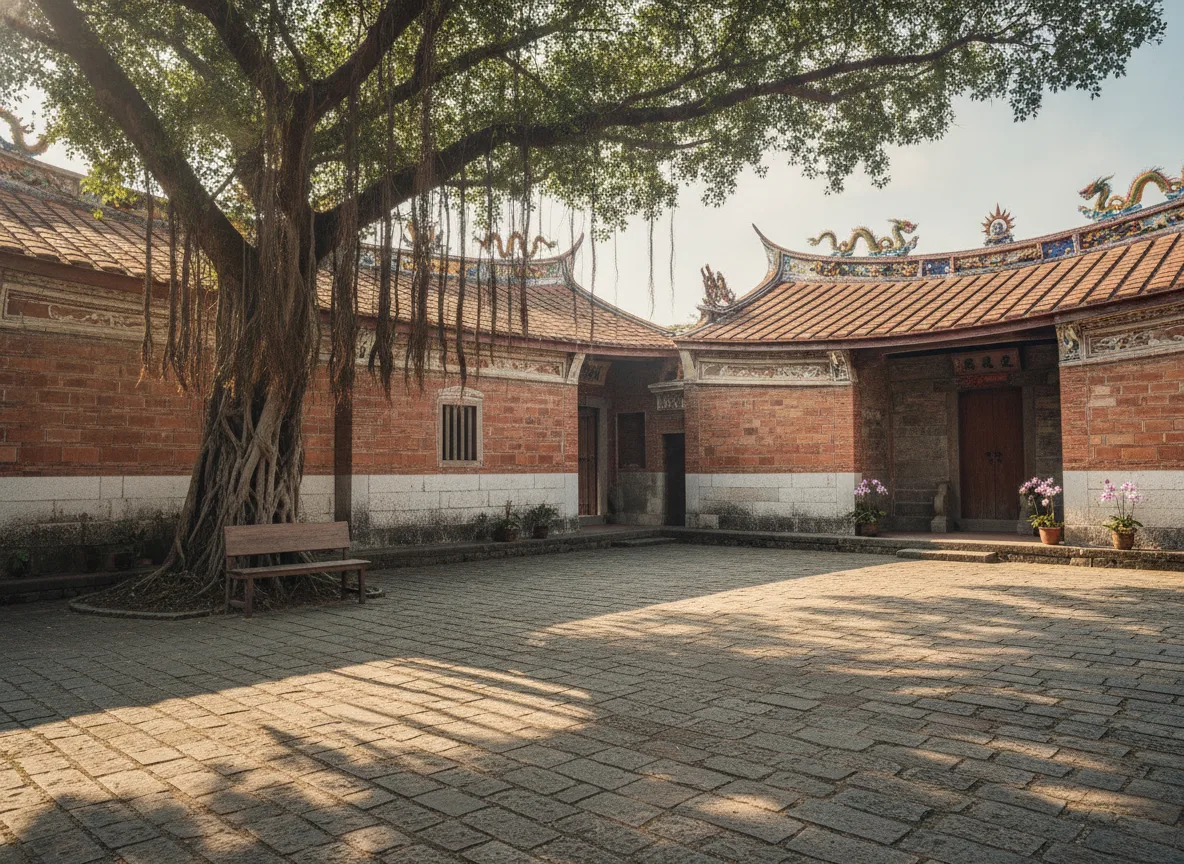
A detailed view of the horizontal components above an bay. Between the columns are two horizontal beams, one above the other: the thicker one below is the 'da e fang' (large lintel), and the thinner one above is the 'xiao e fang' (small lintel). Between them is a thinner 'hua ban' (decorative panel). The 'da e fang' features deep relief carvings of main motifs—twin dragons vying for a pearl or qilin; the 'hua ban' has finer floral and vine patterns; the 'xiao e fang' has simple moldings and meander borders. The carving depth of the three layers progressively decreases, creating a gradient of shadows from deep to shallow under side lighting. At the junction of the 'e fang' ends and the columns are 'que ti'—triangular carved brackets that soften the right-angle transition between the beam and the column. Avoid: making the upper and lower 'e fang' the same thickness, omitting the central 'hua ban', making the carving depth of the three layers identical, omitting the 'que ti' making the junction stiff.
Translated from Chinese by AI.
Show the original prompt
一個開間上方的橫向構件細部。柱與柱之間有上下兩道橫樑:下方較粗的是大額枋、上方較細的是小額枋,兩者之間夾著一片較薄的花板。大額枋上是深浮雕的主要圖案——雙龍搶珠或麒麟;花板上是較細的花草纏枝;小額枋則是簡單的線腳與回紋邊飾。三個層次的雕刻深度依次遞減,因此在側光下形成由深到淺的陰影層次。額枋的兩端與柱交接處有雀替——一塊三角形的雕花托座,把橫樑與柱的直角轉折軟化。避免:把上下額枋做成同樣粗細、省略中間的花板、讓三層的雕刻深度相同、省略雀替讓交接處生硬。