Text-to-Image
Interior Design
通用
What You See from a Hospital Bed: Window Sill Height Determines the View
Prompt
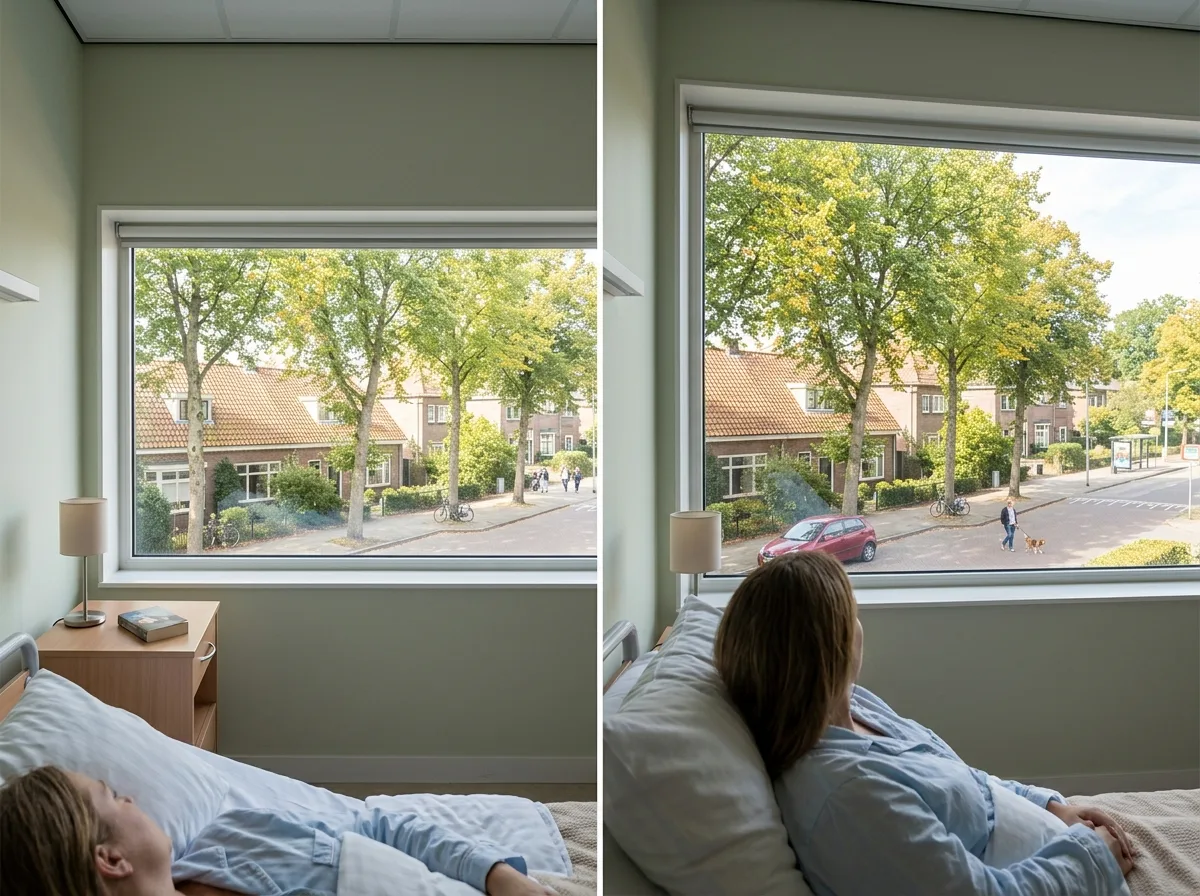
The eye level of a person lying in bed is approximately between sixty and eighty centimeters. If the windowsill is higher than this, they will only see a patch of sky and the top of the opposite building all day. Lowering the windowsill to forty-five centimeters or less changes the view to tree canopies, rooftops, streets, and people—content-rich, varied, and with a sense of time. If the lower edge of the window cannot be lowered, an alternative is to add a low, horizontal long window or a floor-to-ceiling side window. What is planted outside the window is more important than how large the window is: deciduous trees can provide year-round changes. Photographed from both supine and semi-sitting perspectives at bed height, with the content outside the window clearly discernible. Avoid: windowsill higher than the bed surface, outside view being an exterior wall or equipment room, use of fixed frosted glass, curtains that can only be fully open or fully closed.
Translated from Chinese by AI.
Show the original prompt
臥床的人的視線高度大約在六十到八十公分之間,如果窗台高於這個高度,他一整天只能看見一片天空與對面建築的頂部。把窗台降到四十五公分以下,看到的就變成樹冠、屋頂、街道與人——有內容、有變化、有時間感。窗的下緣如果無法降低,替代方案是加一道低的橫向長窗或落地的側窗。窗外種什麼比窗開多大更重要:會落葉的樹能提供整年的變化。從病床高度平躺與半坐兩種視角拍攝,窗外的內容清楚可辨。避免:窗台高於床面、窗外為外牆或機房、使用固定的磨砂玻璃、窗簾只能全開或全關。