Text-to-Image
Landscape
通用
Drainage: Collecting Water Without Curbs
Prompt
Drainage: how to collect water without a curb
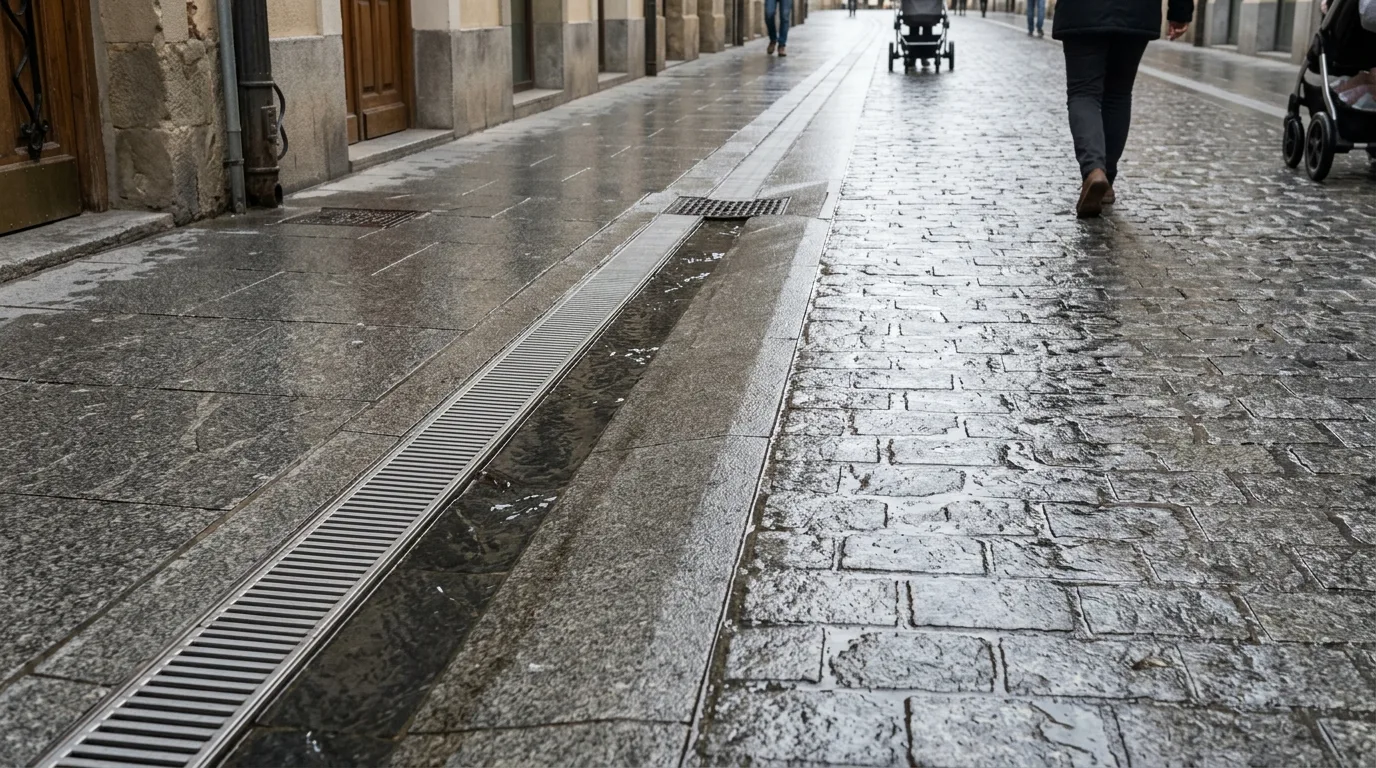
Detailed drainage treatment for a flush pedestrian street. Since there is no curb to block water, drainage is handled in two ways: first, the entire street is made into a single-sided or central extremely gentle slope, with a gradient of about one percent, almost imperceptible to the naked eye but causing water to flow to one side; second, a narrow, elongated open channel, the same color as the pavement, is set at the low point of the slope. The channel is only eight centimeters wide, topped with strip metal grates or directly with grooved stone, running parallel to the street direction rather than across the pedestrian path, so wheelchairs and high heels will not get stuck. Both ends of the channel connect to catch basins. The scene is after rain, showing the direction of water flow and accumulated water in the channel. Avoid: using drainage grates that cross the street, making the channel wide and dangerous, retaining curb stones for water collection, making the slope so steep that it is noticeably inclined.
Translated from Chinese by AI.
Show the original prompt
一條齊平徒步街道的排水處理細部。因為沒有路緣可以擋水,排水改用兩種做法:一是整條街做成單邊或中央的極緩洩水坡,坡度約百分之一,肉眼幾乎看不出來但水會往同一側流;二是在洩水的低點設一道與鋪面同色的細長明溝,寬度僅八公分、上方是條狀的金屬篦或直接是留縫的石材,平行於街道方向而不是橫過通行動線,因此輪椅與高跟鞋不會卡住。溝的兩端接入集水井。畫面是雨後,可以看見水流的方向與溝內的積水。避免:使用橫過街道的排水格柵、把溝做得寬而危險、保留路緣石收水、讓坡度大到明顯傾斜。