Text-to-Image
Interior Design
通用
Paper, Hemp, and Grass: Three natural fibers
Prompt
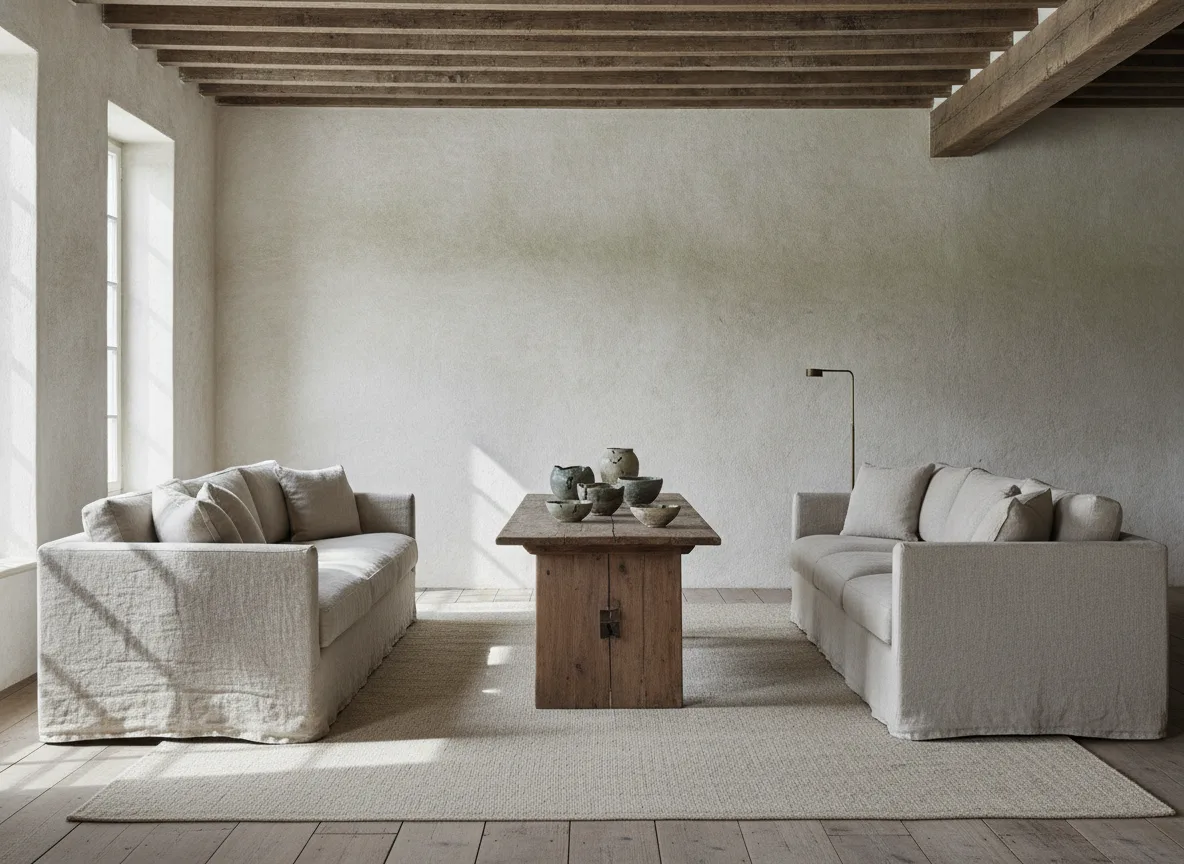
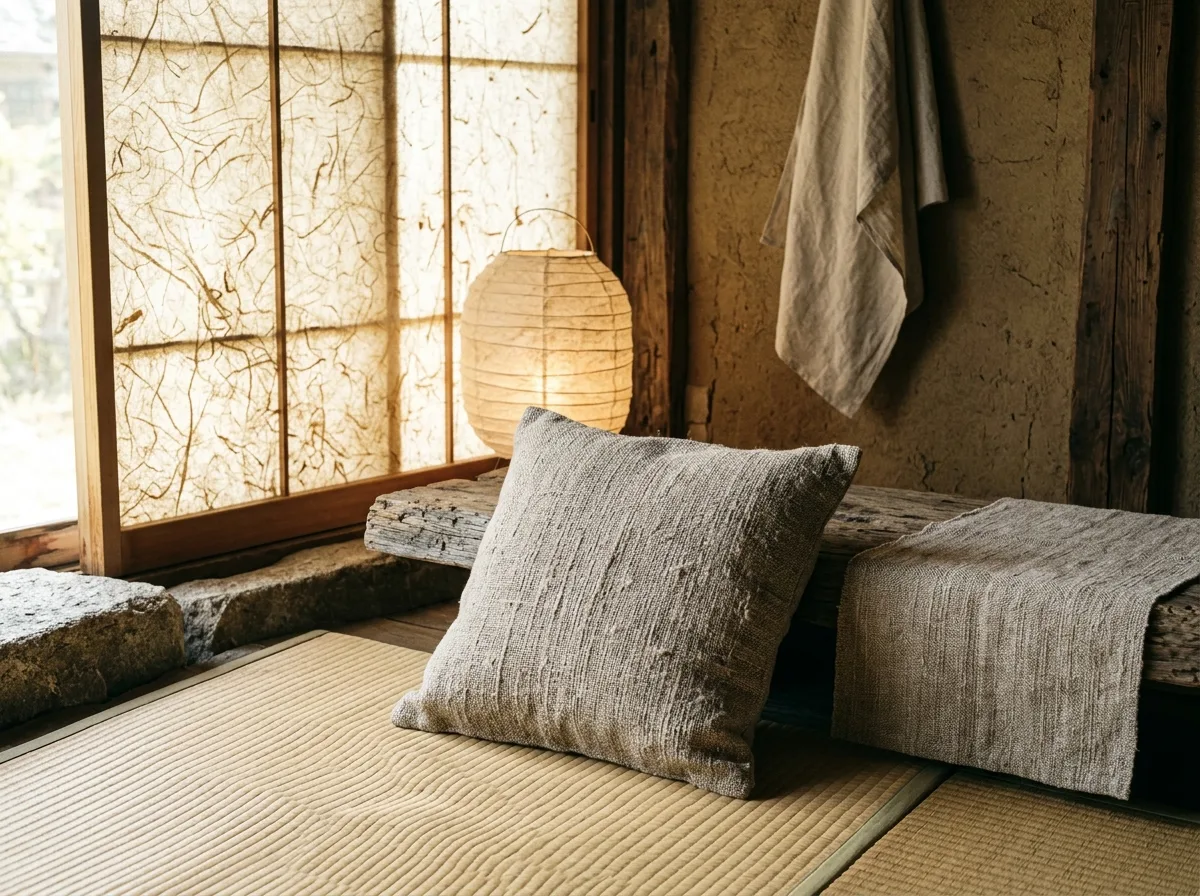
A set of details of natural fibers. Paper is used for shoji screens and lamps: handmade washi paper, uneven in thickness, revealing a mesh-like fiber structure when light passes through. Hemp is used for textiles: coarsely woven cushion covers, table runners, and a piece of fabric hanging on the wall, in an unbleached off-white color with a clear weave. Grass is used for flooring: woven rush matting, in warm yellow-green to beige-brown, showing the direction of individual grass stems. The colors of the three are similar, their textures are matte, and they will change color over time. They are the only soft elements in the space, contrasting with the hardness of wood, earth, and stone. Avoid: using dyed and patterned textiles, using synthetic imitations, allowing too much color difference between the three, adding glossy silk and satin.
Translated from Chinese by AI.
Show the original prompt
一組天然纖維的細部。紙用在障子與燈具:手抄的和紙,厚薄不均,透光時可以看見纖維的網狀結構。麻用在織品:粗織的坐墊套、桌旗與一片掛在牆上的布,顏色是未漂白的米灰,織紋清楚。草用在地坪:藺草編織的蓆面,顏色是溫暖的黃綠到米褐,可以看見一根根草莖的方向。三者的顏色接近、質地都是霧面、都會隨時間變色。它們是空間中唯一柔軟的東西,與木、土、石的硬形成對比。避免:使用染色與有圖案的織品、使用化纖的仿製品、讓三者的顏色差距過大、加入光澤的絲與緞。