Text-to-Image
Interior Design
通用
Layering Scents: The Difference Between Wet and Dry Aromas
Prompt
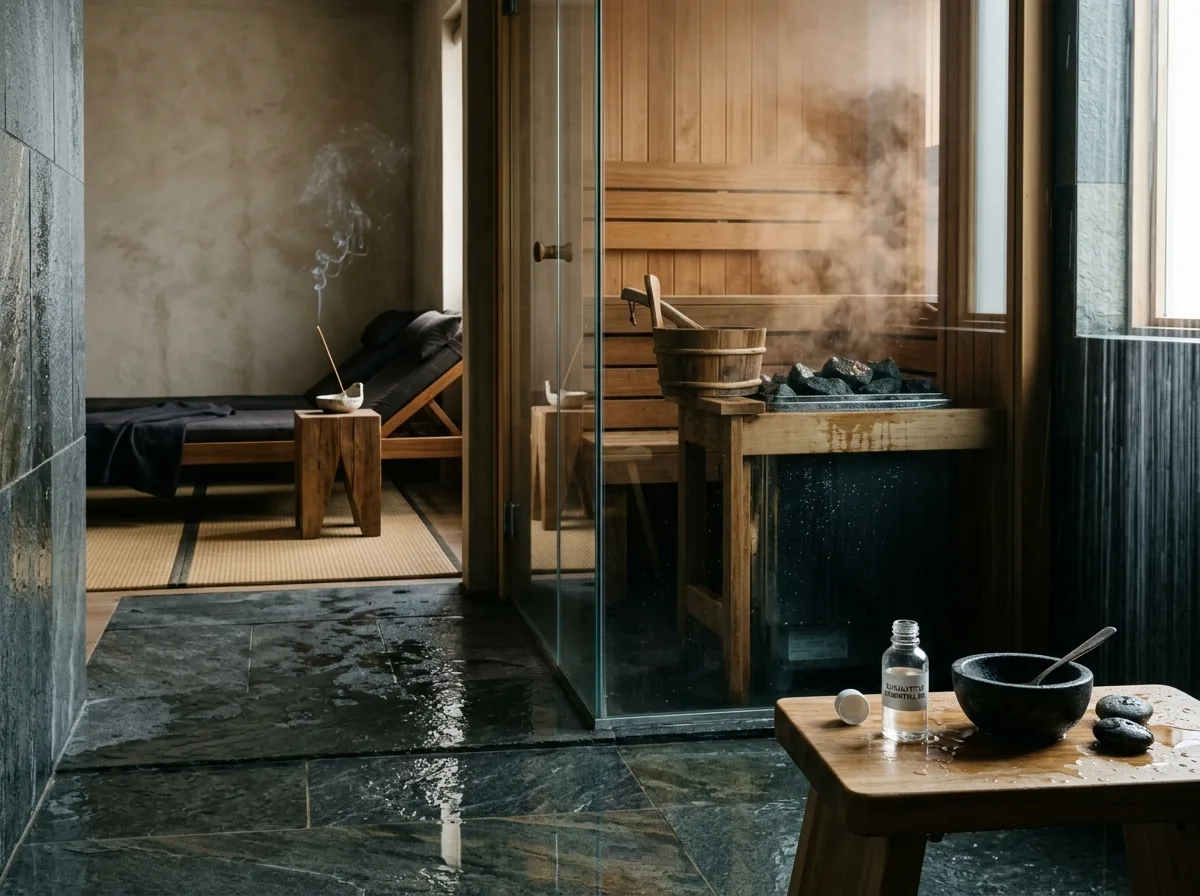
A wet area where scents are deliberately zoned. The hot zone has the scent of wood and steam: the resinous aroma released by spruce in the sauna at high temperatures, plus a hint of eucalyptus essential oil from water poured on the stones. The cold zone and shower area are almost scent-free, with only the mineral scent of water and stone, serving as an olfactory reset. The resting area features a lit incense stick or a ceramic diffuser, emitting a warm woody scent. Thus, walking through these three sections, the nose receives three different signals, corresponding to three different states. The image should show the sources of these scents—water stains on stones, a small bottle of essential oil, a burning incense stick. Avoid: using the same fragrance throughout the entire space, using high-concentration chemical fragrances, placing heat-sensitive diffusers in the hot zone, making the scent so strong it is pungent.
Translated from Chinese by AI.
Show the original prompt
一個氣味被刻意分區的濕區。熱區是木質與蒸氣的味道:烤箱的雲杉在高溫下釋放的樹脂香,加上澆在石頭上的水帶起的一點桉樹精油。冷區與淋浴區幾乎沒有氣味,只有水與石材的礦物感,作為中間的清空。休息區則有一支點燃的線香或一個陶製的擴香器,是溫暖的木質調。因此走過這三段時,鼻子接收到的是三種不同的訊號,對應三種不同的狀態。畫面中可以看見這些氣味的來源——石上的水漬、一小瓶精油、一支正在燃燒的香。避免:整個空間使用同一種香氛、使用高濃度的化學香精、在熱區放置怕熱的擴香器具、讓氣味濃到刺鼻。