Text-to-Image
Interior Design
通用
Deity Painting: The Artwork Behind the Ancestral Altar
Prompt
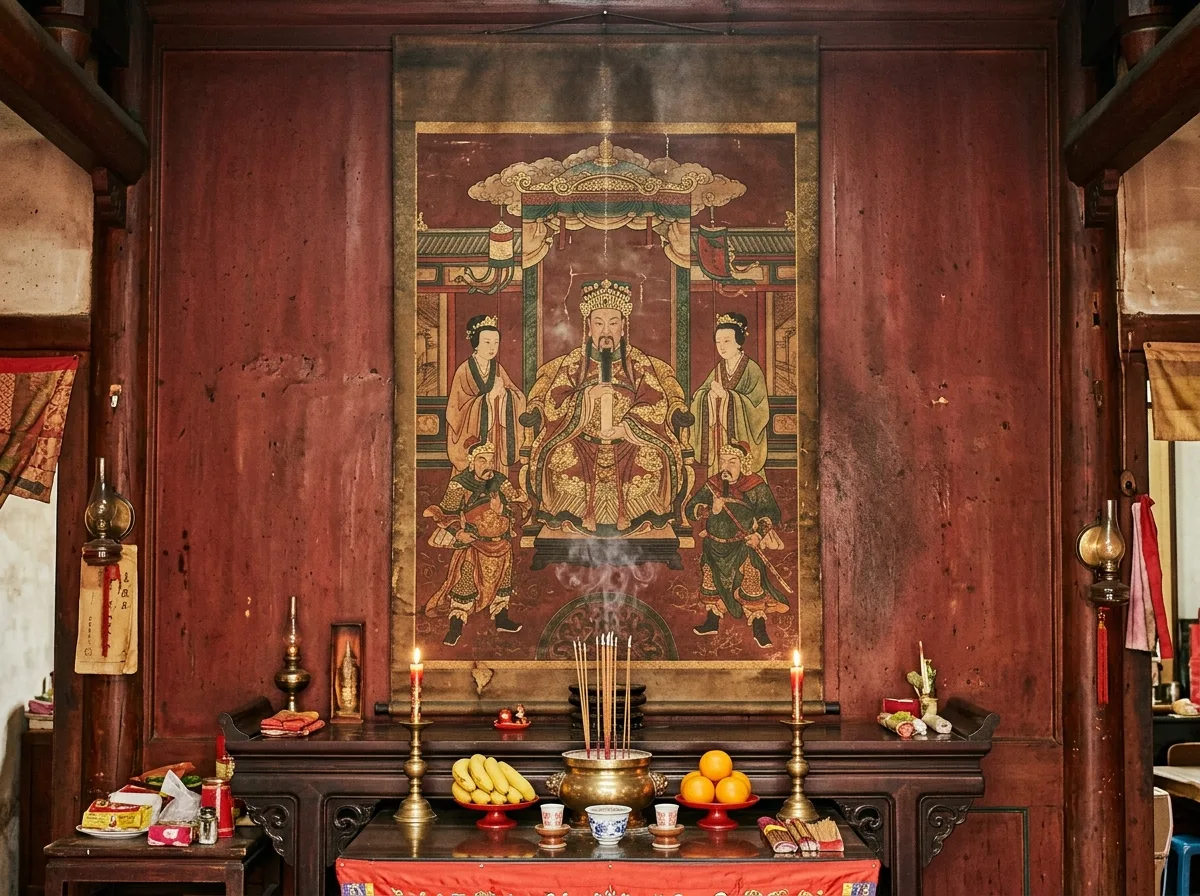
A traditional ancestral altar painting (Shenmingcai) hanging on the wall behind an altar table, a common sight in Taiwanese homes: a large vertical painted or printed scroll, with a dark red or gold background, depicting a seated deity with attendants on either side. The composition is strictly symmetrical, with traditional fine-line brushwork and rich coloring, primarily vermilion, malachite green, gold, and black. The painting is framed top and bottom with wooden strips, and the edges show slight yellowing and smoke stains from age. In front of the painting is the altar table with an incense burner, from which incense smoke slowly rises. The entire wall becomes the most formal surface in the house because of this painting. Avoid: depicting the deity as a specific identifiable religious figure's portrait, using a modern illustration style, adding non-traditional color schemes, depicting the painting as brand new with no signs of use.
Translated from Chinese by AI.
Show the original prompt
神桌後方牆面上懸掛的一幅傳統神明彩,是台灣民宅常見的形式:一大幅直式的彩繪或印刷畫,底色是暗紅或金,畫中是端坐的神像與兩側的隨侍,構圖嚴格對稱,線條是傳統的工筆勾勒,設色濃重,以硃紅、石綠、金與黑為主。畫的上下以木條裱框固定,邊緣因為年代而略有泛黃與煙燻的痕跡。畫前就是神桌與香爐,香煙緩緩上升。整面牆因為這幅畫而成為房子裡最正式的一面。避免:把神像畫成特定可辨識的宗教人物肖像、使用現代插畫風格、加入非傳統的配色、把畫面畫成全新無使用痕跡。