Text-to-Image
Interior Design
通用
Thick Walls and Deep Window Sills: A Window Is a Seat
Prompt
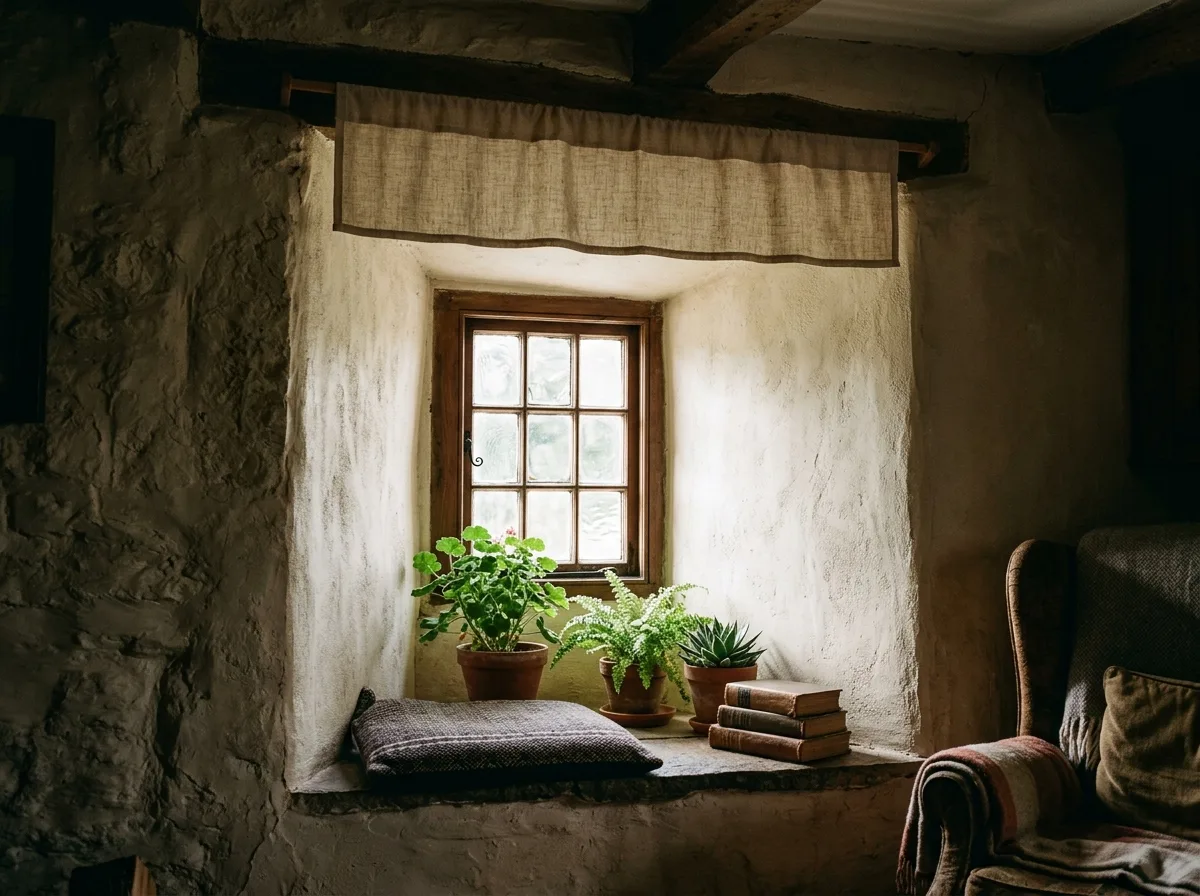
A small window set in a half-meter thick wall. Because the wall is thick, the window opening forms a recess fifty centimeters deep. The side walls are slanted, flaring outwards to help guide light into the room. The windowsill thus becomes a platform where one can sit, covered with a cushion, adorned with a few potted plants and a stack of books. The window itself is small, a multi-pane wooden frame window with slightly wavy, imperfect glass. The curtain is just a short piece of fabric hung on the inside of the window recess. As light enters through this deep opening, the side walls of the recess are illuminated, while the deeper parts of the room remain relatively dark, making the window a glowing square frame, the brightest spot in the room. Avoid: using large floor-to-ceiling windows, making the wall thin and losing the depth of the window opening, using aluminum windows with single large panes of glass, making the windowsill a narrow, unusable ledge.
Translated from Chinese by AI.
Show the original prompt
一扇開在半米厚牆上的小窗。因為牆很厚,窗洞形成一個深達五十公分的凹室;側壁是斜的向外擴開,幫助把光導進室內。窗台因此變成一個可以坐的平台,上面鋪著一塊坐墊,擺著幾盆植物與一疊書。窗本身很小,是木框的多格窗,玻璃有一點波紋不完全平整;窗簾只是一片短短的布掛在窗洞內側。光從這個深洞進來時,凹室的側壁被照亮而房間深處相對暗,窗因此成為房間裡最亮的一個發光的方框。避免:使用大面積的落地窗、把牆做薄失去窗洞的深度、使用鋁窗與單片大玻璃、把窗台做成無法使用的窄檯。