Text-to-Image
Architecture
通用
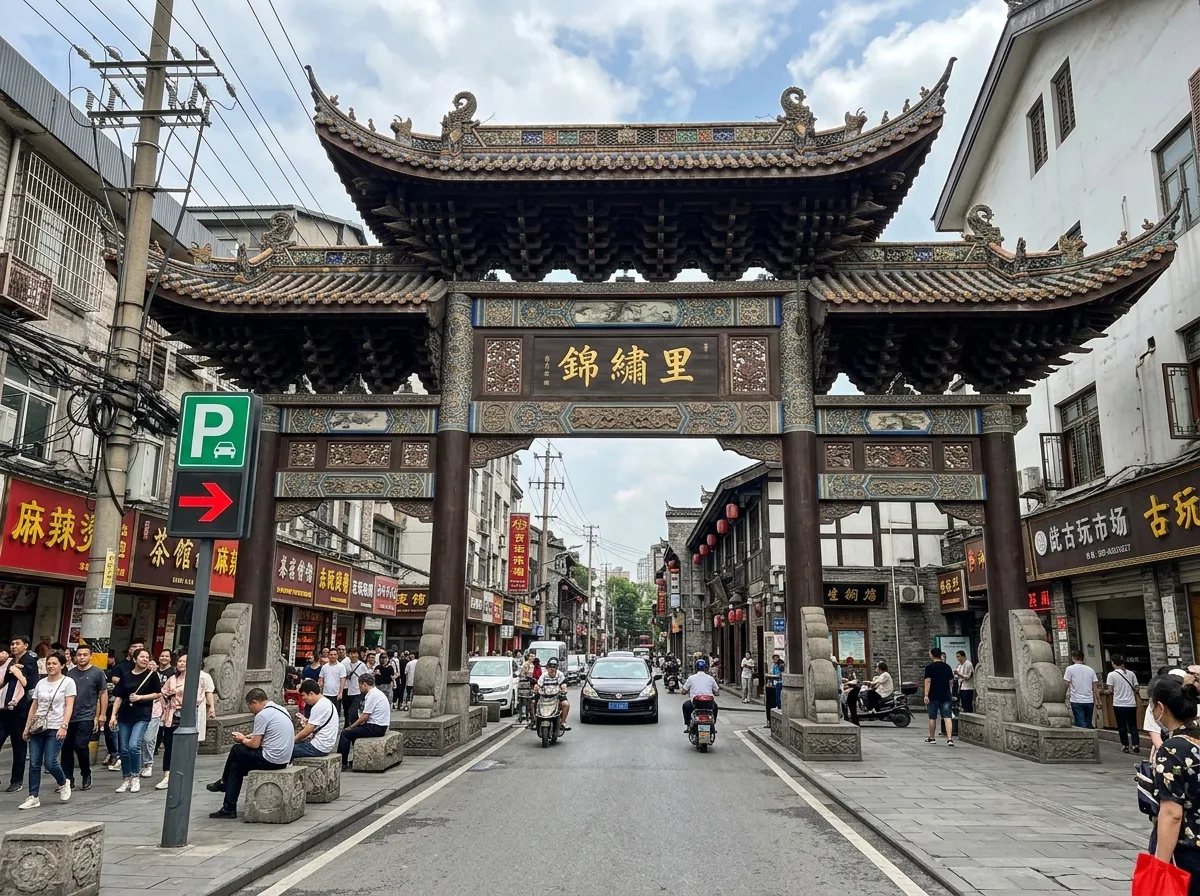
Street Archway: Where Cars and People Pass Under
Prompt
A paifang (archway) spanning an entire street. Its scale is determined by the width of the street: the main bay must accommodate vehicular traffic, thus it is 6 meters wide and over 5 meters clear height; the side bays correspond to the sidewalks. The column bases stand directly on the edges of the sidewalks on both sides of the street, with the夹杆石 (jiagan shi, column-holding stones) and抱鼓石 (baogu shi, drum-holding stones) becoming part of the street furniture, with people leaning against them to sit. Above the paifang are dense dougong brackets and five roof structures, forming a clear horizontal boundary in the airspace above the street. After passing through it, the character of the street changes—one side features commercial street signs and crowds, while the other is a quieter neighborhood. Power lines and modern traffic signals are mounted nearby. Avoid: making the paifang narrower than the street so it cannot span it, eliminating surrounding modern urban elements, making it an isolated monument in a park, making the bays too low for passage.
Translated from Chinese by AI.
Show the original prompt
一座橫跨整條街道的牌樓。它的尺度由街道的寬度決定:明間必須容納車行,因此開間寬達六公尺、淨高超過五公尺;兩側的次間對應人行道。柱腳直接立在街道兩側的人行道邊緣,夾杆石與抱鼓石成為街道家具的一部分,有人靠著坐。牌樓的上方是密集的斗栱與五座樓頂,在街道的上空形成一道明確的水平界線。穿過它之後街道的性質改變——一側是商業街的招牌與人潮,另一側是較安靜的街區。電線與現代的號誌就架在旁邊。避免:把牌樓做得比街道窄無法跨越、消除周邊的現代都市元素、讓它變成公園裡的孤立紀念物、把開間做得過低無法通行。