Text-to-Image
Interior Design
通用
Lattice Windows: Decorative Openings in the Wall
Prompt
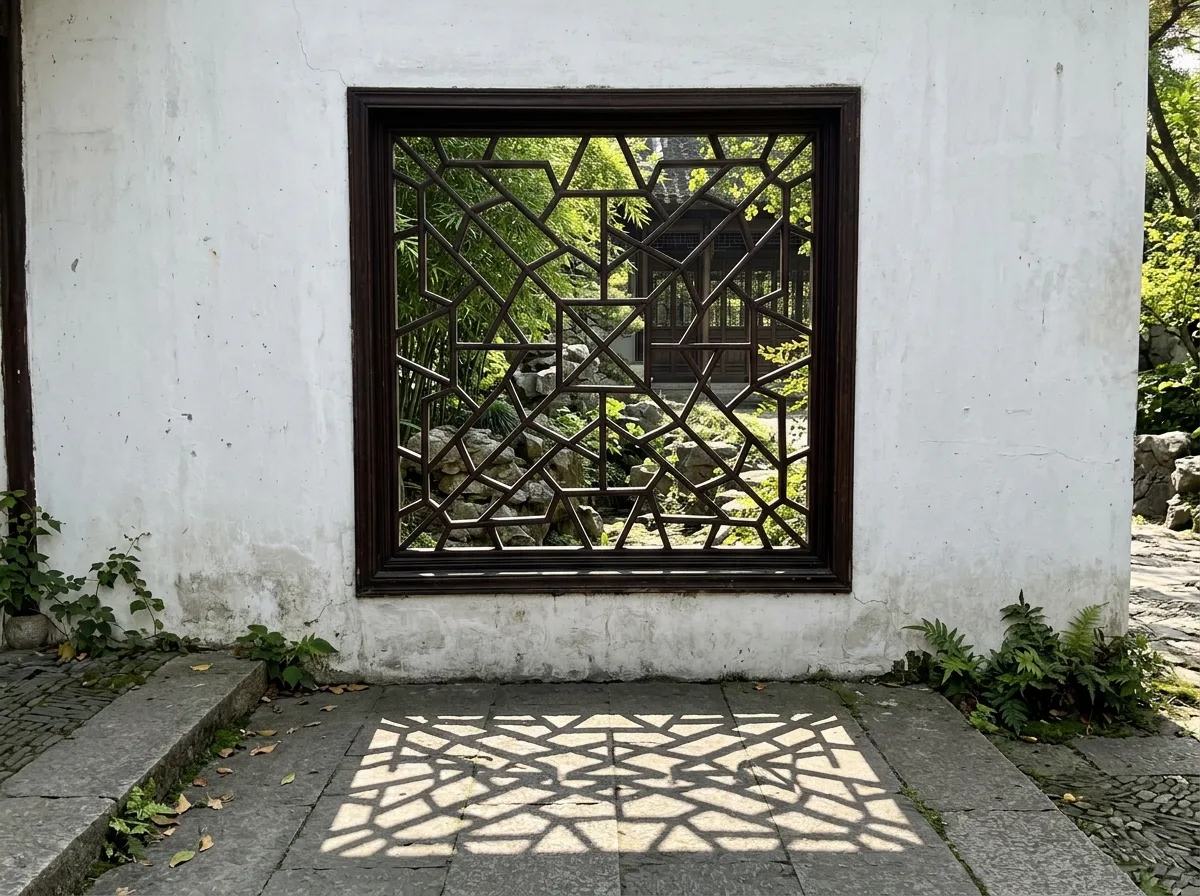
A carved window (leuchuang) opened in a solid wall. It is not for passage or primary lighting, but rather to create a permeable pattern in an otherwise enclosed wall, allowing sight and air to pass through. The window's outline is square, hexagonal, or fan-shaped; its interior is carved with fine wooden lattices or stone tracery into patterns like ice cracks, swastikas, or geometric designs, with about 50% transparency. The wall is plain white, and the window is dark, creating a clear contrast. Due to the obscuring pattern, the scenery on the other side seen through the carved window is fragmented and partial, requiring movement to see it fully. When sunlight passes through, it casts shadows of the same pattern on the opposite wall and floor, which move with time. Avoid: making the carved window too large, turning it into a main opening; making the pattern too transparent, losing its obscuring effect; filling it with glass; eliminating the penetrating light and shadow patterns.
Translated from Chinese by AI.
Show the original prompt
一面實牆上開出的漏窗。它不是用來通行也不是主要採光,而是在一道封閉的牆上開一個透空的圖案讓視線與空氣穿過。窗的輪廓是方形、六角形或扇形;內部以細木櫺條或石材鏤空成冰裂、萬字或幾何的圖案,通透率約一半。牆是素白的,窗是深色的,對比清楚。因為圖案的遮擋,透過漏窗看到的另一側景物是被切碎的、片段的,必須移動才能看全。陽光穿過時在對面的牆與地面投下相同圖案的影子,並隨時間移動。避免:把漏窗做得過大變成主要開口、讓圖案的通透率過高失去遮擋、使用玻璃填滿、消除穿透的光影圖案。