Text-to-Image
Interior Design
通用
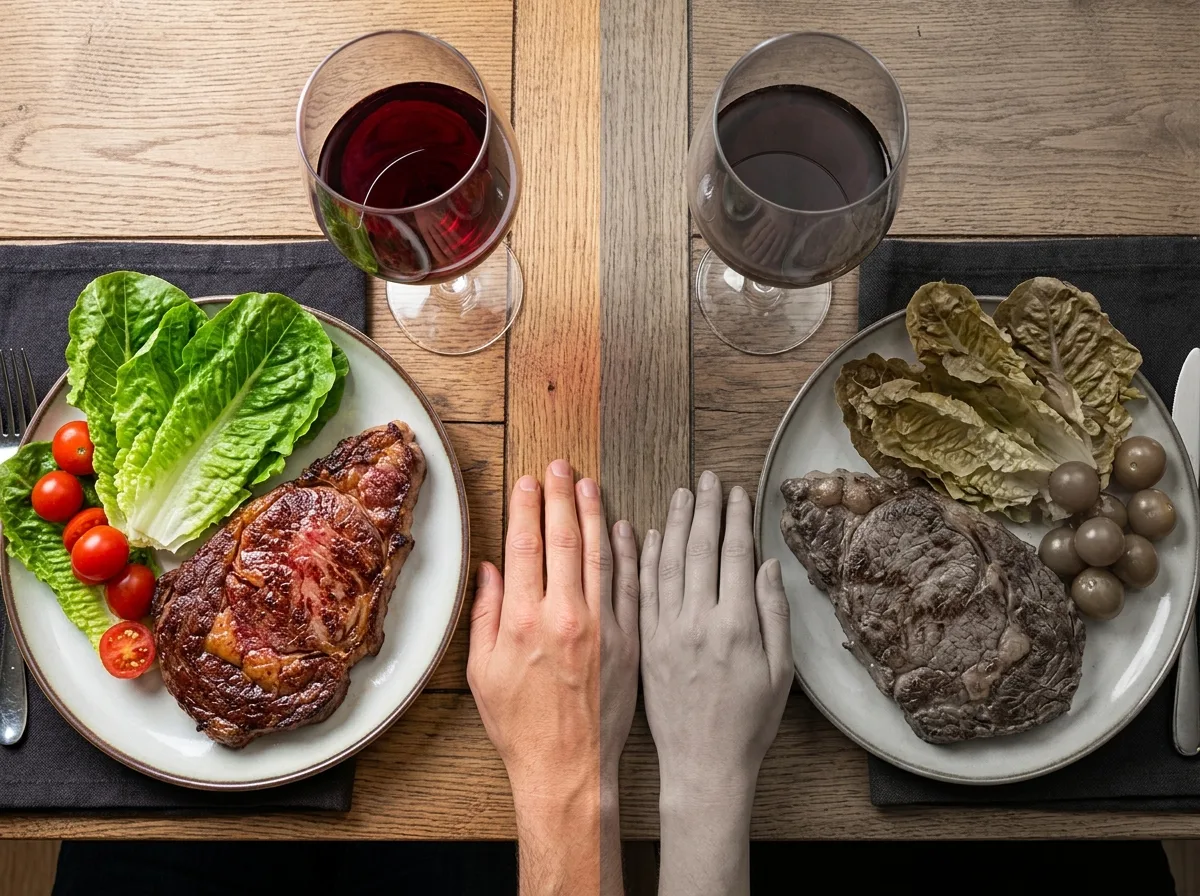
Color rendering: the color of food and skin
Prompt
A close-up, top-down view of a dining table. On the table are lettuce, tomatoes, steak, and a glass of red wine, with a hand nearby. The left half of the tabletop is illuminated by a high color rendering index light source: the tomatoes are a saturated, clean red; the lettuce is a vibrant green; the steak's blood color and seared edges are clearly layered; the red wine shows a deep ruby red; and the skin is a healthy warm tone. The right half of the tabletop is illuminated by a low color rendering index light source: the colors of the same foods all appear dull and muddy; the tomatoes are brownish; the lettuce is yellowish-green; the steak looks old; the wine color is darker and mixed; and the skin appears grayish. Both halves have the same brightness, differing only in their color reproduction ability, with a clear boundary visible. Avoid: making the two halves look identical, replacing color differences with brightness differences, adding colored filters, depicting food unrealistically.
Translated from Chinese by AI.
Show the original prompt
一張餐桌的俯視近景,桌上擺著生菜、番茄、牛排與一杯紅酒,旁邊有一隻手。桌面左半由高演色性的光源照明:番茄是飽和乾淨的紅、生菜是鮮明的綠、牛排的血色與焦邊層次分明、紅酒透出深寶石紅、皮膚是健康的暖色。桌面右半由演色性差的光源照明:同樣的食物顏色全部變得灰濁、番茄偏褐、生菜偏黃綠、牛排看起來像放久了、酒的顏色變深而混、皮膚泛灰。兩半的亮度相同,只有顏色還原能力不同,交界處清楚可見。避免:讓兩半看起來一樣、用亮度差異取代顏色差異、加入彩色濾片、把食物畫得不寫實。