Text-to-Image
Architecture
通用
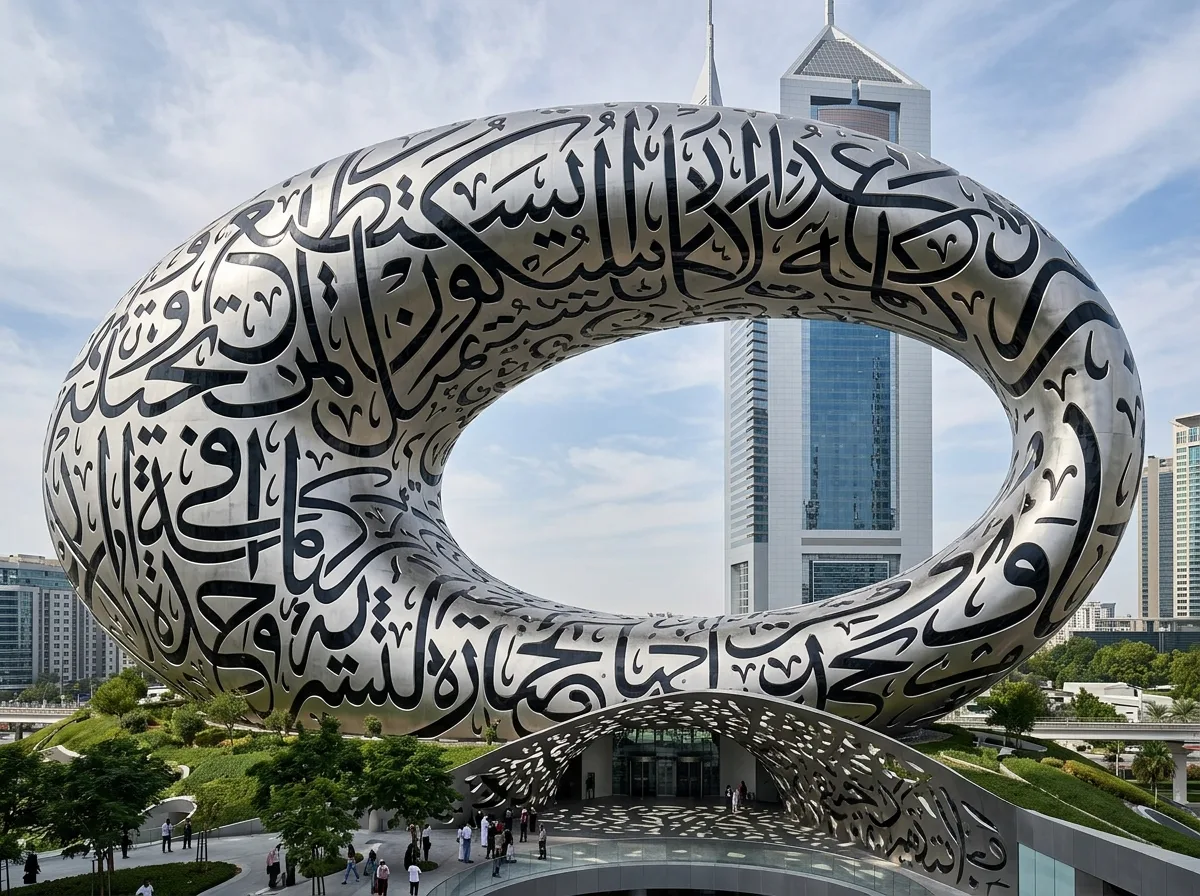
Contemporary Mashrabiya Facade: Calligraphy Transformed into Shading Perforations
Prompt
The facade of a building is composed of thousands of unique stainless steel panels, each a double-curved surface. The surface is molded in a three-dimensional manner with lines of Arabic calligraphy, which simultaneously serve as structural stiffeners and shading openings. Because the curvature and text of each panel are different, the entire facade has no repetition. During the day, sunlight passes through the calligraphic cutouts, casting constantly moving, dappled light and shadow on the interior floors and walls. The panels are matte, non-reflective. The building volume is annular, with an elliptical void in the center. Avoid: using flat or regularly repeating panels, making calligraphy into flat printed patterns, using glass for the facade, making the volume a rectilinear shape.
Translated from Chinese by AI.
Show the original prompt
一棟建築的外皮由上千片各不相同的不鏽鋼板組成,每一片都是雙曲面,表面以立體的方式模製出阿拉伯書法的線條,這些線條同時是結構的加勁肋與遮陽的開口。因為每一片的曲率與文字都不同,整片外皮沒有任何重複。白天,陽光穿過書法的鏤空,在室內的地面與牆上投下不斷移動的斑駁光影。板材是霧面的,不反光。建築量體是一個環形,中央是一個橢圓形的空洞。避免:板材使用平面或規則重複、書法做成平面的印刷圖案、外皮使用玻璃、量體做成方正的形狀。