Text-to-Image
Interior Design
通用
Consultation Room Tables: Side-by-Side Instead of Face-to-Face
Prompt
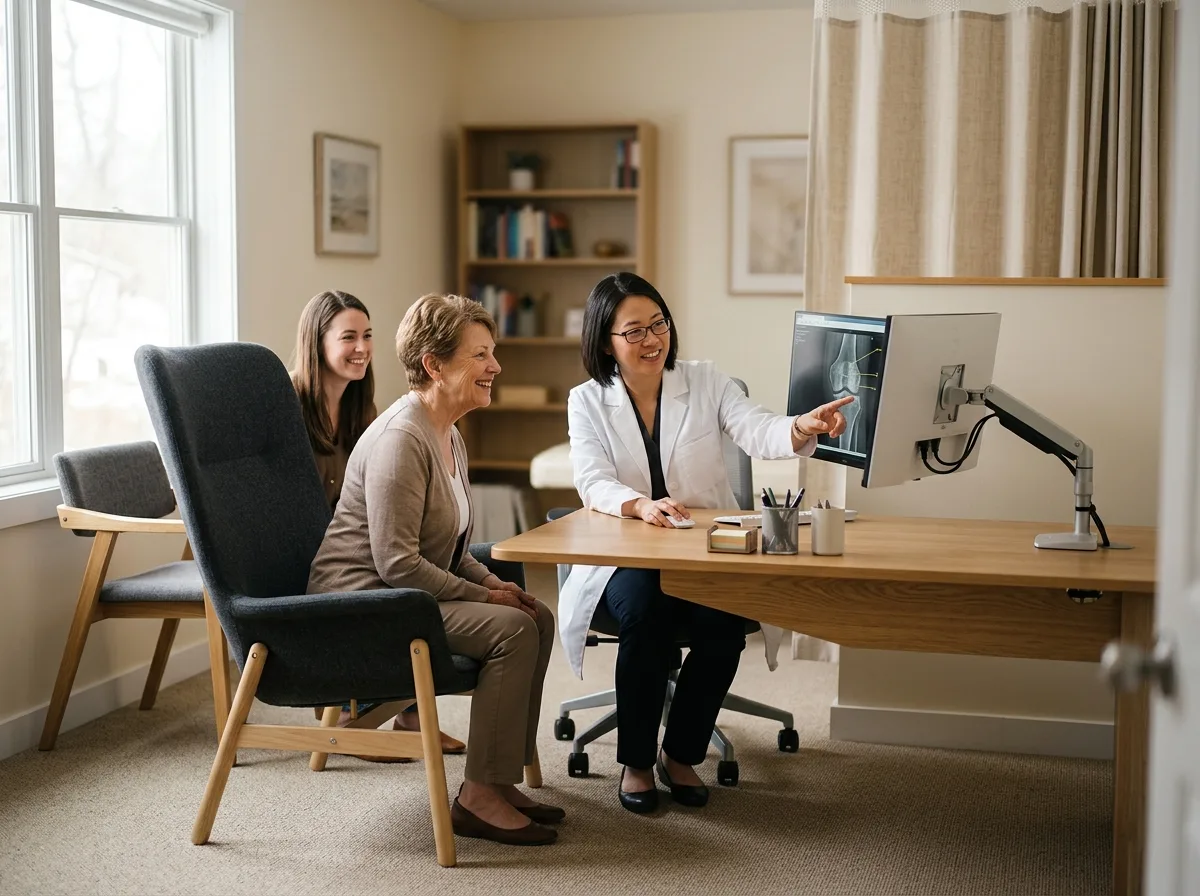
The power dynamics in a consultation room are determined by the furniture: sitting face-to-face across a desk, with the doctor behind a screen and the patient on the other side of the desk—that's an interrogation setup. Changing to two people sitting diagonally side-by-side, sharing the same counter, with the screen turned to an angle where both can see it, immediately changes the conversation. The desk should not be a large office desk, but a light, thin counter with storage. The patient's chair should have a backrest and armrests, making it easy to get up. Space should be left for a companion. The examination bed should be separated from the conversation area by a curtain or low wall, not visible immediately upon entering. Shot under soft, natural side light, clearly showing the relationship of two people sitting side-by-side and looking at the screen together. Avoid: sitting across a large desk, screen facing away from the patient, examination bed directly facing the entrance, chairs without armrests.
Translated from Chinese by AI.
Show the original prompt
診間的權力關係由家具決定:隔著桌子面對面坐,醫師在螢幕後方,病患在桌子的另一邊——那是審問的配置。改成兩人斜向並排、共用同一個檯面、螢幕轉向可以一起看的角度,對話立刻改變。桌子不做成大塊的辦公桌,而是輕薄的檯面加收納。病患的座椅有靠背與扶手,方便起身。旁邊留出陪同者的位置。檢查床以簾幕或矮牆與談話區分開,不是一進門就看見。日間柔和的側光下拍攝,兩人並排、共看螢幕的關係清楚。避免:隔著大桌對坐、螢幕背對病患、檢查床正對門口、椅子無扶手。