Text-to-Image
Interior Design
通用
First Impression of the Lobby: The View Directly Opposite the Entrance
Prompt
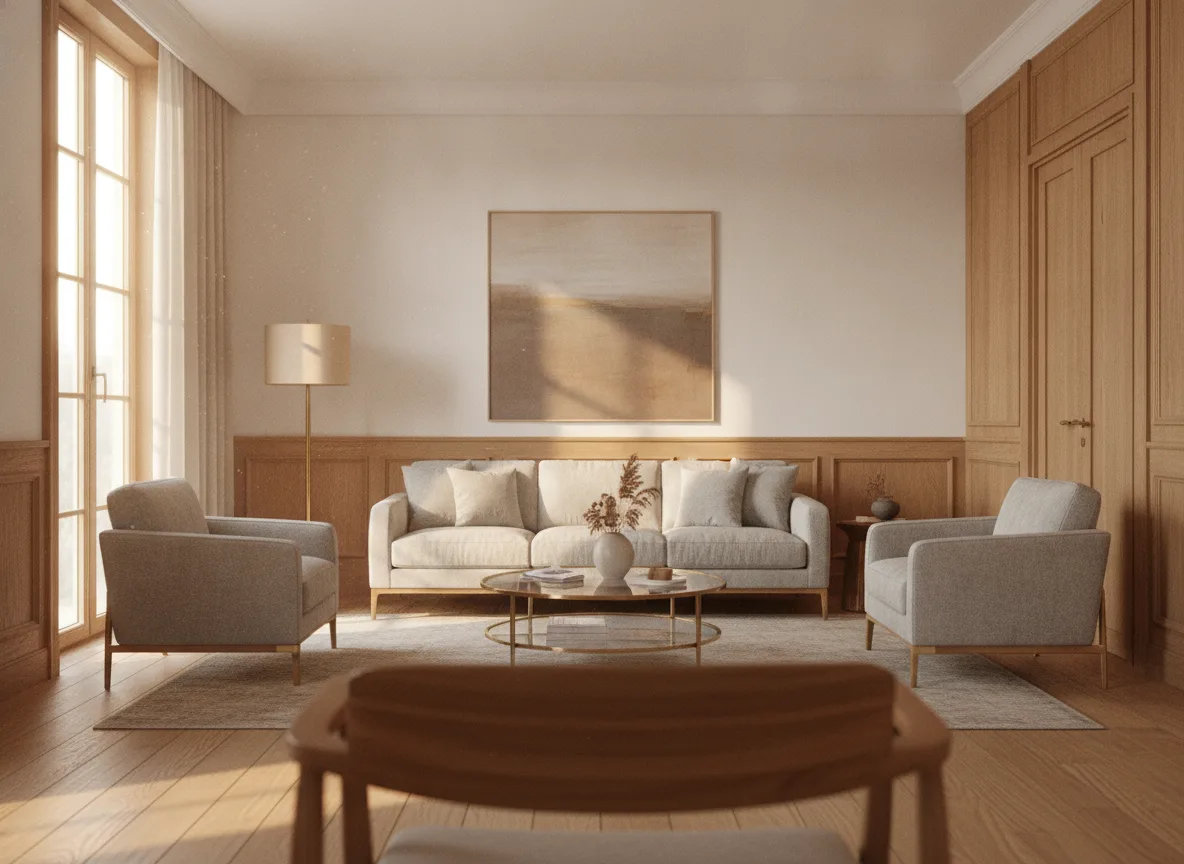
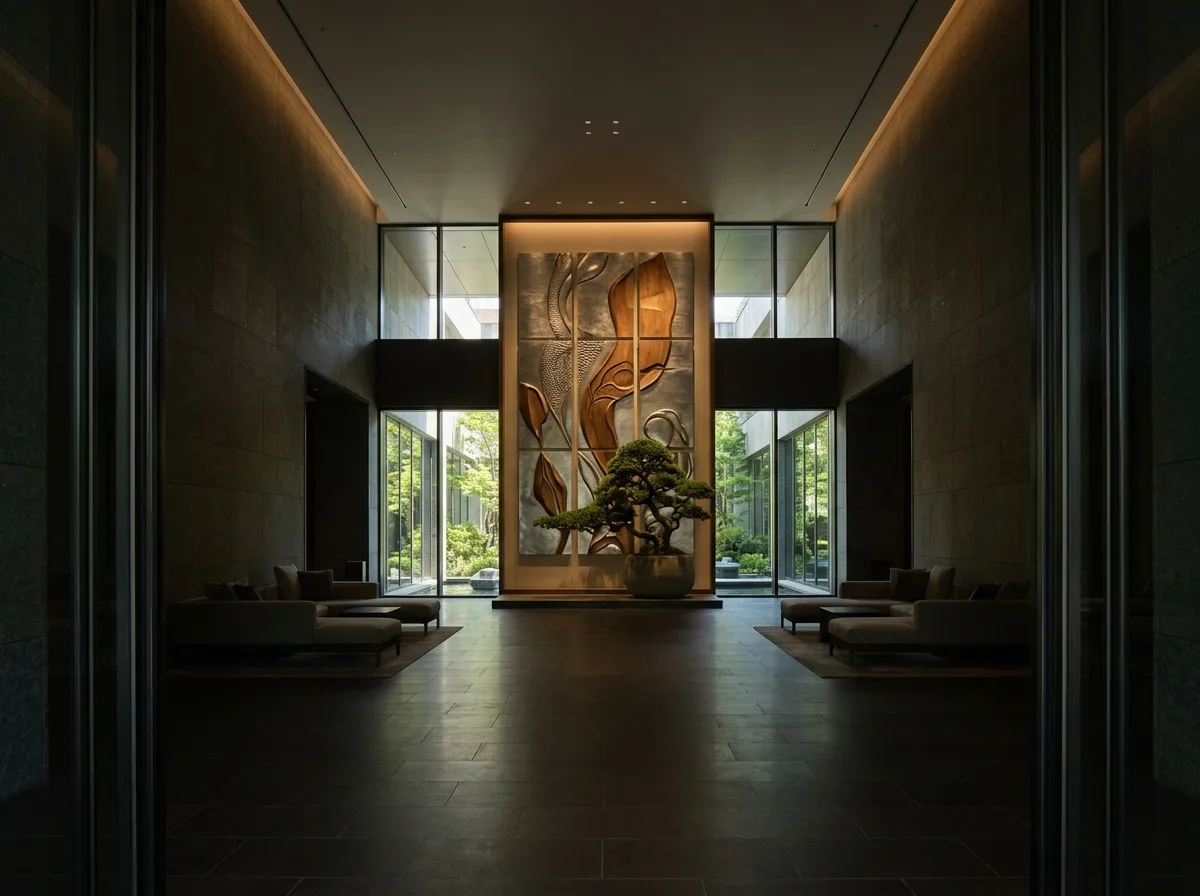
Upon pushing open the entrance door, the direct line of sight ends at a distinct focal point—it could be a large-scale commissioned artwork, a clearly shaped tree, or a floor-to-ceiling opening revealing a courtyard. This focal point determines the hotel's first impression, so its position is derived by working backward from the entrance's sightline, rather than placing it after the space is designed. Sufficient distance is left between the focal point and the entrance for a complete view, and furniture and circulation on both sides recede, not competing with this axis. Lighting is directed only onto the focal point, with the surroundings relatively dim. People will pause for half a second upon entering. Photograph during the day from eye level inside the entrance door, clearly showing the axis, the focal point, and the recessed spaces on both sides.

Avoid: Focal point being obstructed by furniture or columns; counters and signage appearing on the axis; surrounding lighting being too bright, making the focal point less prominent; focal point being too small to support the high ceiling.
Translated from Chinese by AI.
Show the original prompt
從入口推門進來時,正對的視線盡頭有一個確定的端景——可能是一件大尺度的委製作品、一株形態清楚的樹、或一道看得見中庭的落地開口。這個端景決定了整間飯店給人的第一個印象,所以它的位置是從入口的視線反推出來的,而不是先做好空間再找地方擺。端景與入口之間留出足夠的距離讓人看得完整,兩側的家具與動線都退開,不搶這條軸線。照明只打在端景上,周圍相對暗。人走進來會先停半秒。日間從入口門內的視線高度拍攝,軸線、端景與兩側退開的空間關係清楚。避免:端景被家具或柱子擋住、軸線上出現櫃檯與指標、周圍照明過亮使端景不突出、端景尺度太小撐不起挑高。