Text-to-Image
Architecture
通用
Base and Platform: Archways Also Have Feet
Prompt
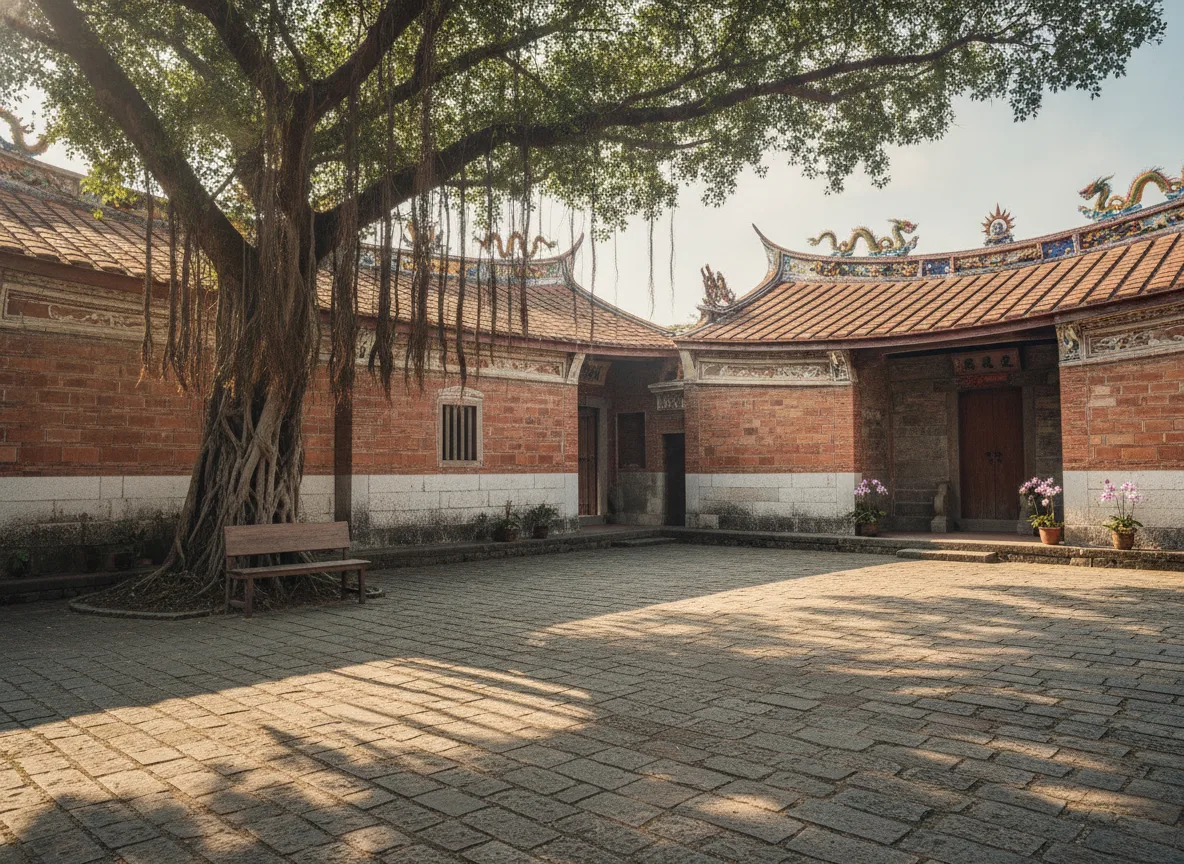
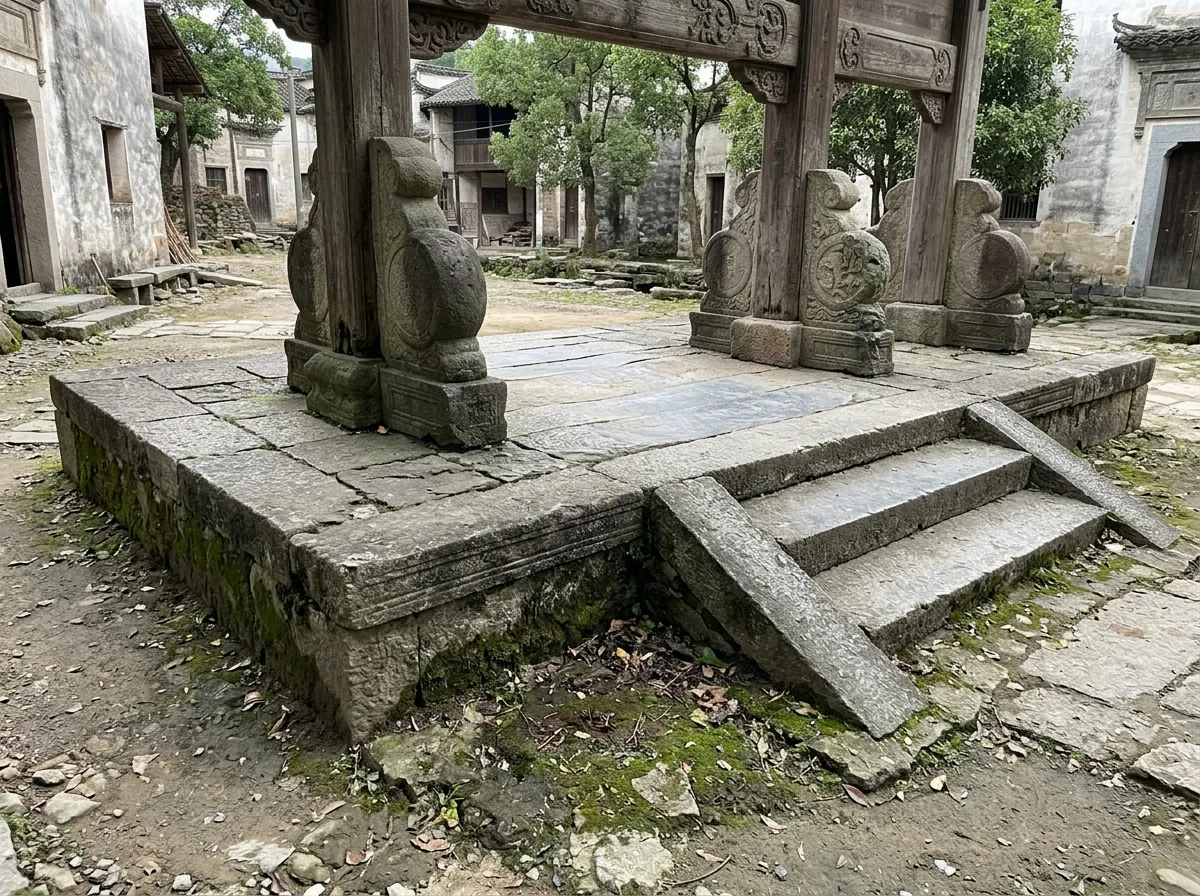
A detailed view of the base of a paifang. The entire structure does not stand directly on the ground but is erected on a slightly raised stone platform (taiming), approximately thirty centimeters high, edged with dressed stones and featuring simple moldings along its perimeter. The surface of the platform is paved with large stone slabs, which have been worn smooth and concave in the center from years of traffic, while the edges remain rough. The 'jia gan shi' (clamping stones) and 'bao gu shi' (drum-holding stones) at the column bases are all seated on this platform. In front of the platform are one to two gentle steps (taduo), with 'chui dai shi' (sloping stone slabs) on either side. Moss and accumulated soil are visible where the stone meets the ground. Although this elevation is not great, it clearly distinguishes the paifang from the surrounding ground. Avoid: depicting the paifang directly on the ground without a base, making the platform too high like a building's foundation, eliminating traces of wear on the stone slabs, using modern paving materials.
Translated from Chinese by AI.
Show the original prompt
一座牌坊下方基座的細部。整座構造不是直接站在地面上,而是立在一個略微抬高的石造台明上,高度約三十公分,四周以條石收邊,邊緣有簡單的線腳。台明的表面鋪著大塊的石板,因為長年通行而中央被磨得光滑凹陷、邊緣仍然粗糙。柱腳的夾杆石與抱鼓石都座落在這個台明上。台明的前方有一到兩級平緩的踏跺,兩側是垂帶石。石材與地面接觸處有青苔與積土。這個抬高雖然不多,但明確地把牌樓與周邊的地面區分開來。避免:讓牌樓直接落在地面沒有基座、把台明做得過高像建築的台基、消除石板被磨損的痕跡、使用現代的鋪面材料。