Text-to-Image
Interior Design
通用
Single vs. Double Patient Rooms: Whose Window Is It?
Prompt
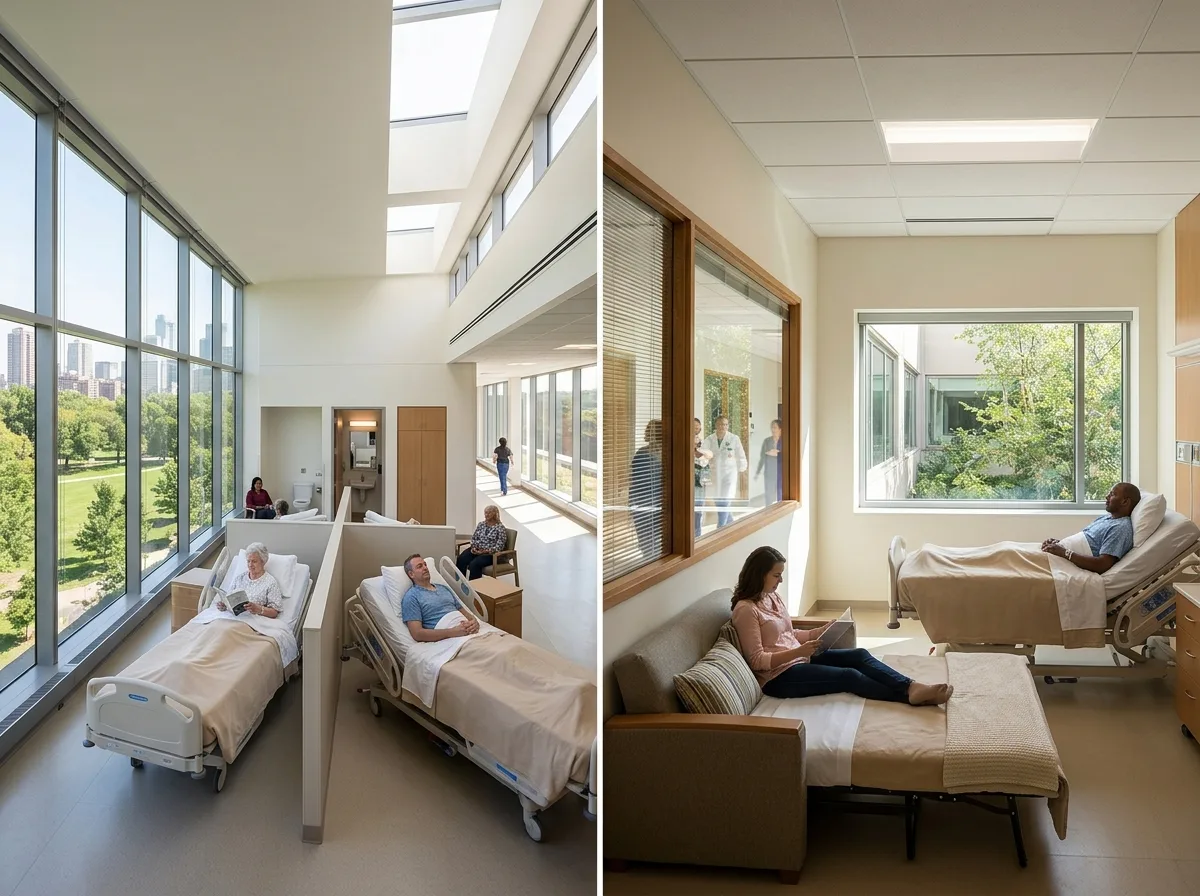
The most unfair thing in multi-bed wards is "who gets the window"—the bed by the window has light and a view, while the bed by the door only has the corridor and other people's visitors. Design responses include: reconfiguring beds diagonally or sideways so both beds can see the window, adding high side windows or skylights on the door side, and moving bathrooms and storage to the interior to leave the exterior wall entirely for the beds. Single rooms, on the other hand, need to address the opposite problem: too quiet, too isolated, thus requiring a view of people passing in the corridor, and space for family members to stay overnight. Shot in natural daylight, clearly showing the relationship between the two beds and the window. Avoid: beds arranged in parallel with only one bed by the window, bathrooms occupying the exterior wall, single rooms completely enclosed, no arrangements for family overnight stays.
Translated from Chinese by AI.
Show the original prompt
多床病房最不公平的事情是「窗歸誰」——靠窗的床有光有景,靠門的床只有走道與其他人的訪客。設計的回應包括:把床位改為斜向或側向配置讓兩床都看得見窗、在靠門那一側加設高側窗或天窗、以及把衛浴與收納挪到內側讓外牆完全留給床。單人房則要處理相反的問題:太安靜、太孤立,因此需要能看見走道有人經過的視線,以及讓家屬過夜的空間。日間自然光下拍攝,兩床與窗的關係清楚。避免:床位平行排列且只有一床靠窗、衛浴佔據外牆、單人房完全封閉、沒有家屬留宿的安排。