Text-to-Image
Interior Design
通用
Genkan Threshold: Removing shoes is a boundary
Prompt
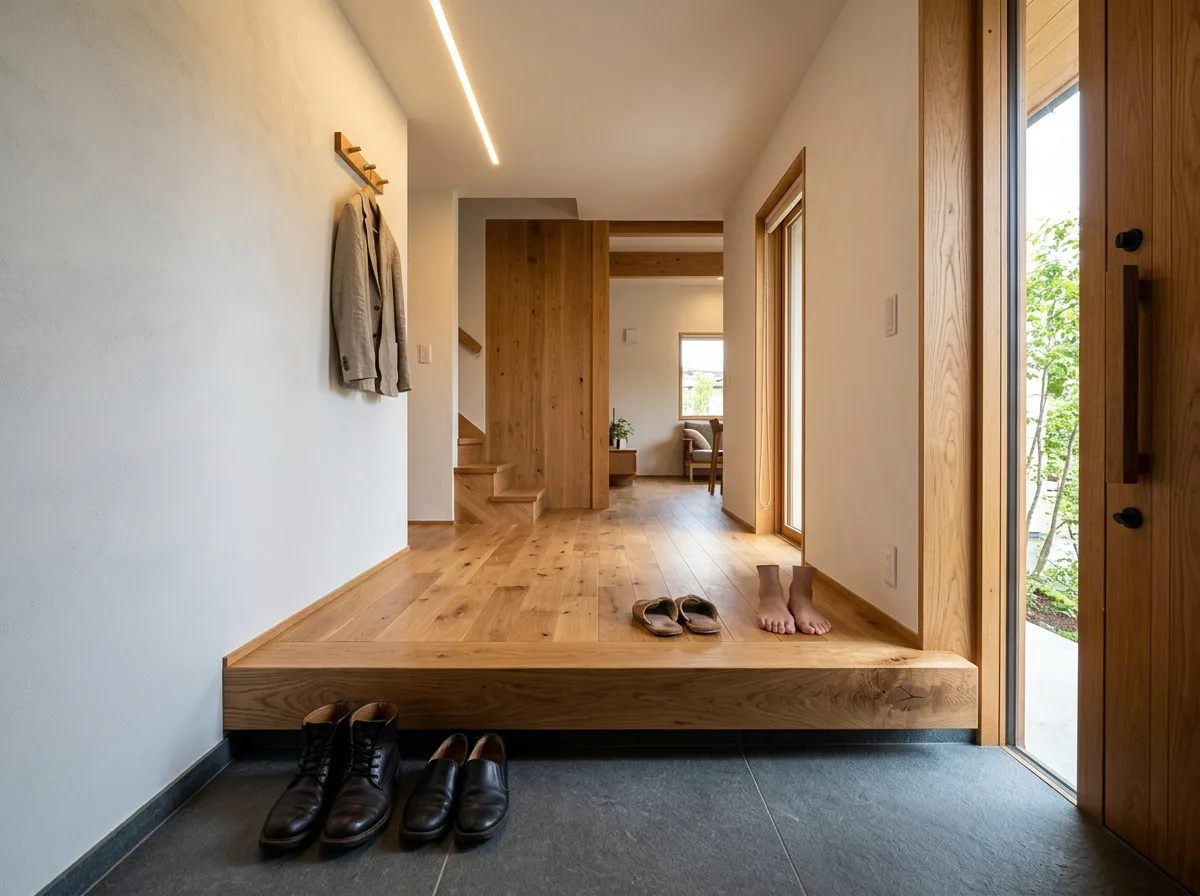
An entrance defined by a height difference between inside and outside. Upon entering, there is a stone dust-collecting area, 18 centimeters lower than the interior floor, with a matte dark gray surface suitable for wearing shoes. Between this area and the interior wooden floor, there is a thick solid wood frame edge, with a clearly visible cross-section. Due to this height difference, the act of taking off shoes is spatialized—sitting on the frame edge to remove shoes, leaving them below, and stepping barefoot onto the wooden floor becomes a clear transition rather than casually kicking them off at the door. The boundary of the dust-collecting area is a straight line, aligned with the module. There is no superfluous decoration above. Avoid: making the indoor and outdoor floor levels flush, losing the height difference; making the height difference too small; adding shoe cabinets that fill the entrance; using the same material, thus eliminating the distinction between inside and outside.
Translated from Chinese by AI.
Show the original prompt
一個以高低差界定內外的玄關。進門處是一塊比室內低十八公分的石材落塵區,表面是霧面的深灰,可以穿鞋踩踏;它與室內的木地板之間有一道厚實的實木框緣,斷面清楚可見。因為有這個高差,脫鞋這個動作被空間化——坐在框緣上脫鞋、把鞋留在下面、赤腳踏上木地板,是一個明確的過渡而不是隨便在門口踢掉。落塵區的邊界是一條筆直的線,與模矩對齊。上方沒有多餘的裝飾。避免:讓室內外地坪齊平失去落差、把高差做得過小、加入鞋櫃佔滿玄關、使用相同材質讓內外沒有區分。