Text-to-Image
Interior Design
通用
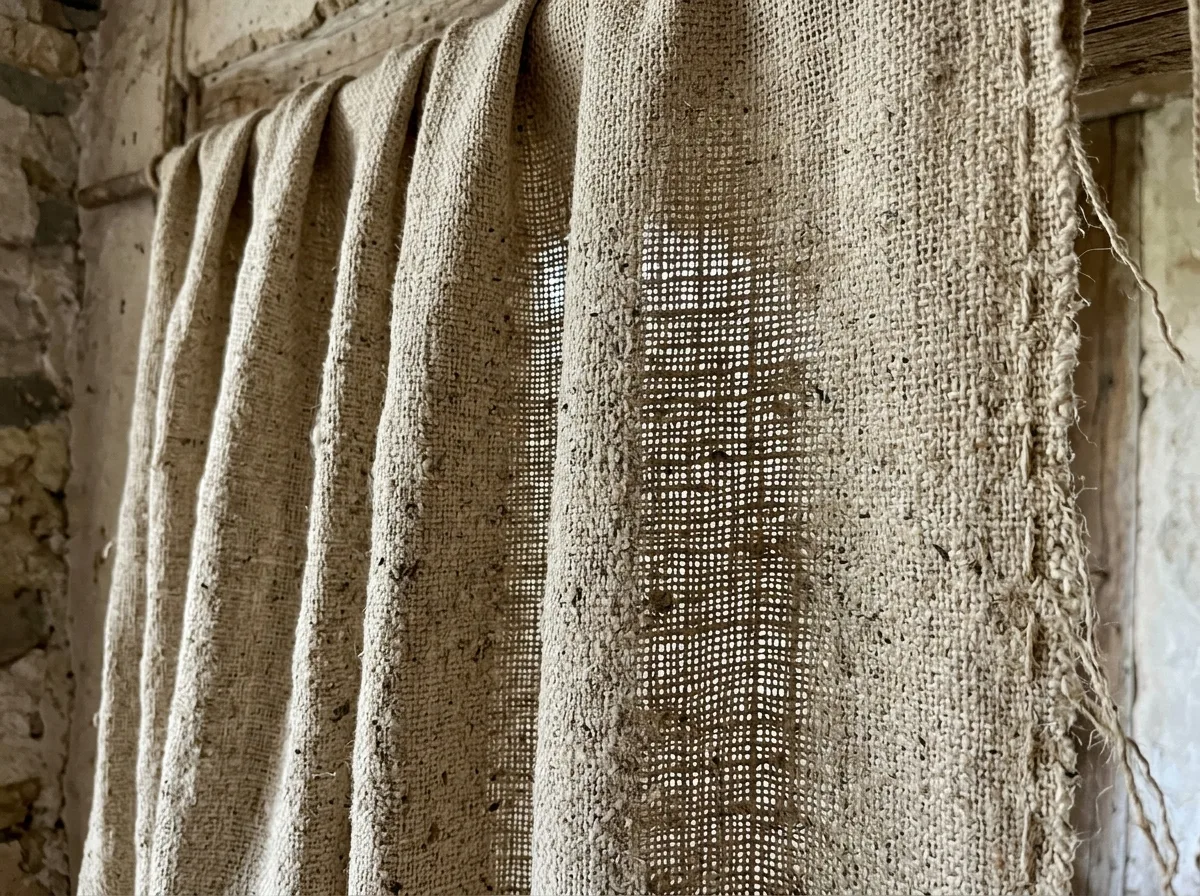
Hemp: So Coarse You Can See the Warp and Weft
Prompt
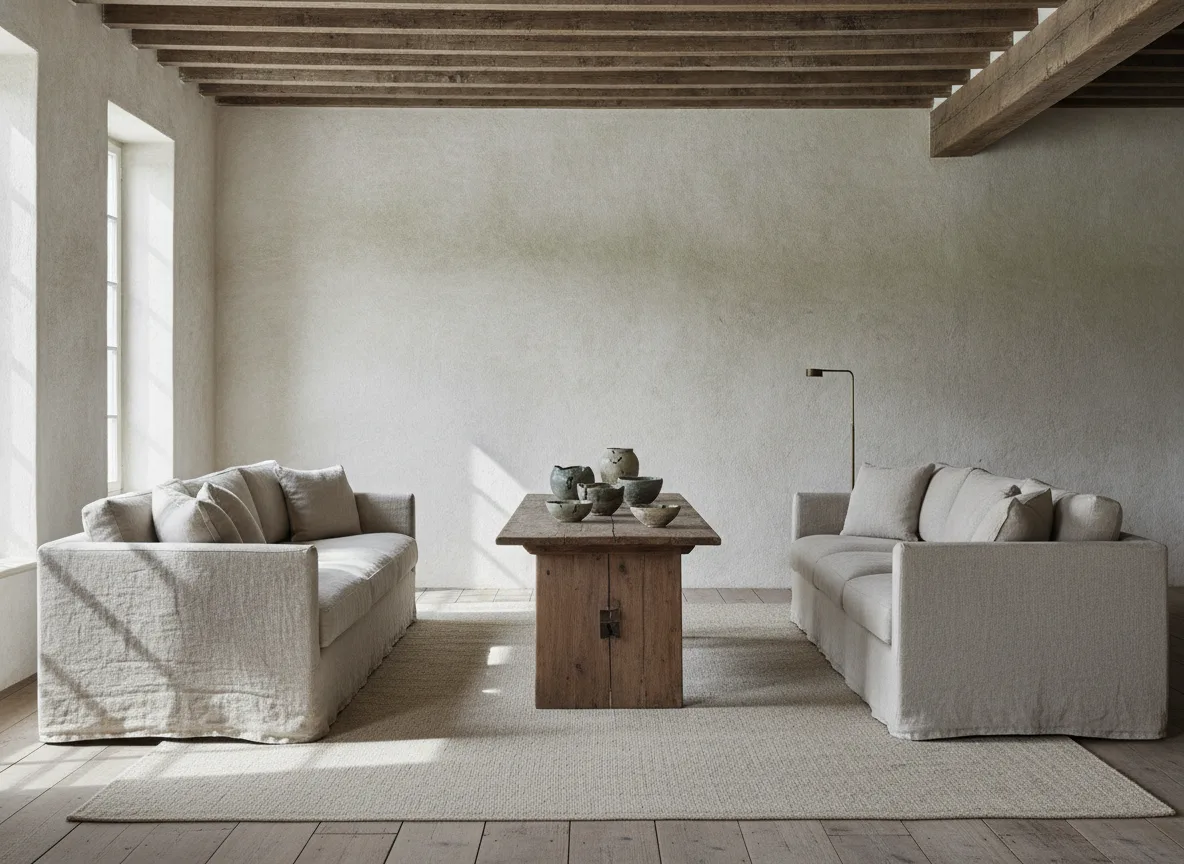
A close-up of a coarsely woven linen fabric. The yarn is very thick and uneven in thickness, woven loosely, so the interwoven structure of warp and weft is clearly visible, with even noticeable gaps that allow light to pass through. The color is unbleached natural beige-gray, with dark plant fiber impurities scattered across the fabric surface. The fabric is unsized, with a stiff yet soft texture, forming large, loose folds when hung, and its edges are hand-stitched with coarse thread or left raw. It is used as a wall hanging, a cushion cover, or a curtain that drapes to the floor. After long-term use, some areas have darkened in color and the fibers have become fuzzy. When backlit, the entire fabric is slightly translucent, and the weave pattern becomes a design. Avoid: using fine, smooth machine-woven fabric, dyeing the fabric a uniform color, eliminating fiber impurities and thickness variations, depicting the fabric as stiff and flat.
Translated from Chinese by AI.
Show the original prompt
一片粗織麻布的近景。紗線很粗且粗細不均,織得鬆散,因此經線與緯線的交錯結構清楚可見,甚至有明顯的空隙可以透光。顏色是未漂白的自然米灰,布面上散佈著深色的植物纖維雜質。布料沒有上漿,質地硬挺中帶著柔軟,懸掛時形成大而鬆的褶皺,邊緣是手工的粗針縫或直接留下毛邊。它被用作一片掛在牆上的布、一個坐墊的套、或一道垂到地面的簾。長期使用後某些區域顏色變深、纖維起毛。逆光時整片布微微透光,織紋成為圖案。避免:使用細密光滑的機織布、把布料染成均勻的顏色、消除纖維的雜質與粗細變化、把布畫得挺括平整。