Text-to-Image
Interior Design
通用
Counterless Check-in: One Table and Two Chairs
Prompt
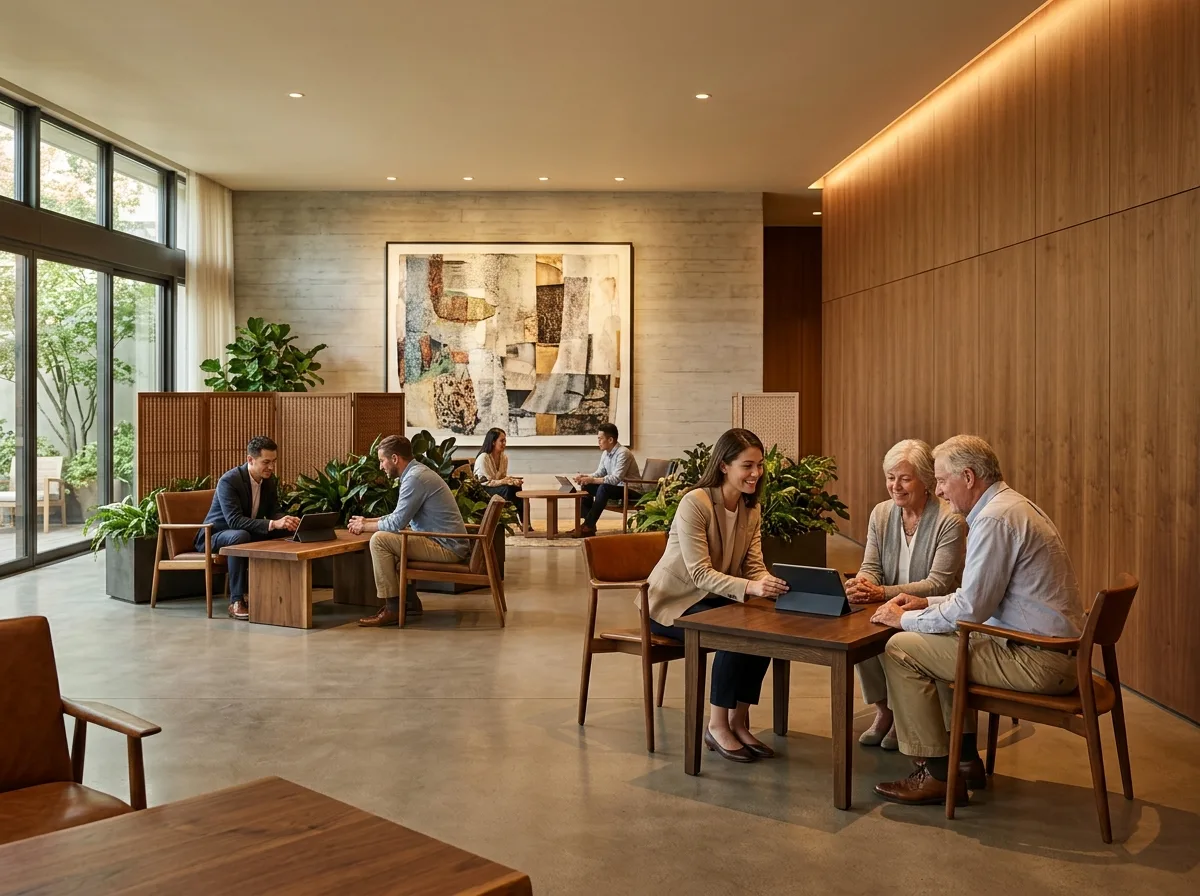
The traditional high counter is removed, replaced by several scattered low wooden tables in the lobby. Reception staff sit side-by-side with guests, using tablets to check in, creating an equal posture rather than a confrontational one across a counter. Sufficient distance is left between each set of tables and chairs, along with a low planting or screen, so that two groups checking in simultaneously do not overhear each other. Back-of-house items like keys, luggage tags, and printers are stored behind a handle-less wooden wall, completely out of sight. Without a counter, the visual focus of the lobby returns to the space itself and its main artwork. There are few people, and the atmosphere is quiet. Photograph during the day from the lobby's seating height, showing the low tables, side-by-side seating, and the hidden back-of-house wall simultaneously.

Avoid: High counters and computer screens appearing; tables arranged in a row like a bank; back-of-house equipment exposed; adding queuing lines and number tickets.
Translated from Chinese by AI.
Show the original prompt
傳統的高櫃檯被拿掉,換成幾張分散在大廳裡的木質矮桌,接待人員與客人並肩坐著用平板辦理入住,姿勢是平等的而不是隔著檯面對峙。每一組桌椅之間留出足夠的距離與一道低矮的植栽或屏風,讓同時辦理的兩組人不會互相聽見。後場的鑰匙、行李單與印表機收在一道無把手的木牆後面,完全看不見設備。因為沒有櫃檯,大廳的視覺重心回到空間本身與那件主要的藝術品上。人不多,氣氛安靜。日間從大廳的座位高度拍攝,矮桌、並肩的坐姿與隱藏的後場牆同時可見。避免:出現高櫃檯與電腦螢幕、桌子排成一列像銀行、後場設備外露、加入排隊動線與號碼牌。