Text-to-Image
Interior Design
通用
Kintsugi: Turning Cracks into Decoration
Prompt
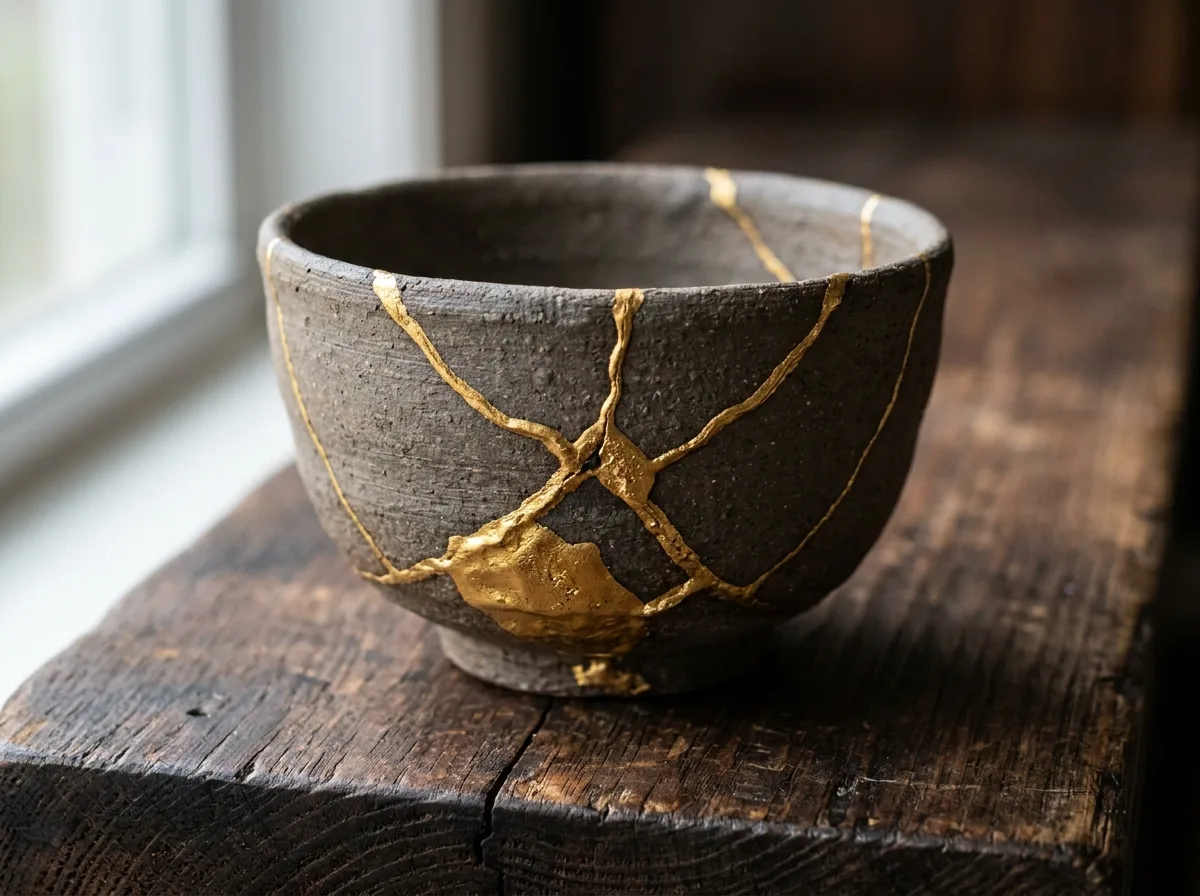
A close-up of a ceramic bowl repaired with Kintsugi technique. The bowl was once broken into five or six pieces, now reassembled, with the seams filled with lacquer and gold powder sprinkled on the surface. Thus, each crack has become a golden line, winding, branching, and intersecting on the dark pottery, forming a unique pattern that cannot be replicated. The thickness of the gold lines is uneven, some places as wide as a fingernail, others as thin as a hair. A small missing fragment is filled with pure lacquer, forming a golden area. The original part of the bowl is plain grey-brown and unglazed. The repair is not hidden; instead, it has become the most valuable part of this bowl. It is placed alone on a dark wooden board. Avoid: repairing cracks to be invisible, using bright gold paint, making the gold lines uniform in thickness, depicting the bowl as intact.
Translated from Chinese by AI.
Show the original prompt
一只以金繼工法修補過的陶碗近景。碗曾經破裂成五六片,現在被重新黏合,接縫處以生漆填補並在表面撒上金粉,因此每一道裂痕都變成一條金色的線,在深色的陶土上蜿蜒、分岔、交會,構成一幅無法複製的圖案。金線的粗細不均,有些地方寬如指甲、有些細如髮絲;缺失的一小塊碎片以純漆填成一片金色的區塊。碗的原本部分是樸素的灰褐,沒有上釉。修補沒有被隱藏,反而成為這只碗最有價值的部分。它單獨放在深色的木板上。避免:把裂痕修補得看不見、使用亮金色的顏料塗裝、讓金線的粗細均勻、把碗畫成完好無損。