Text-to-Image
Interior Design
通用
The Lightness of Ming Style: Why It Doesn't Look Heavy
Prompt
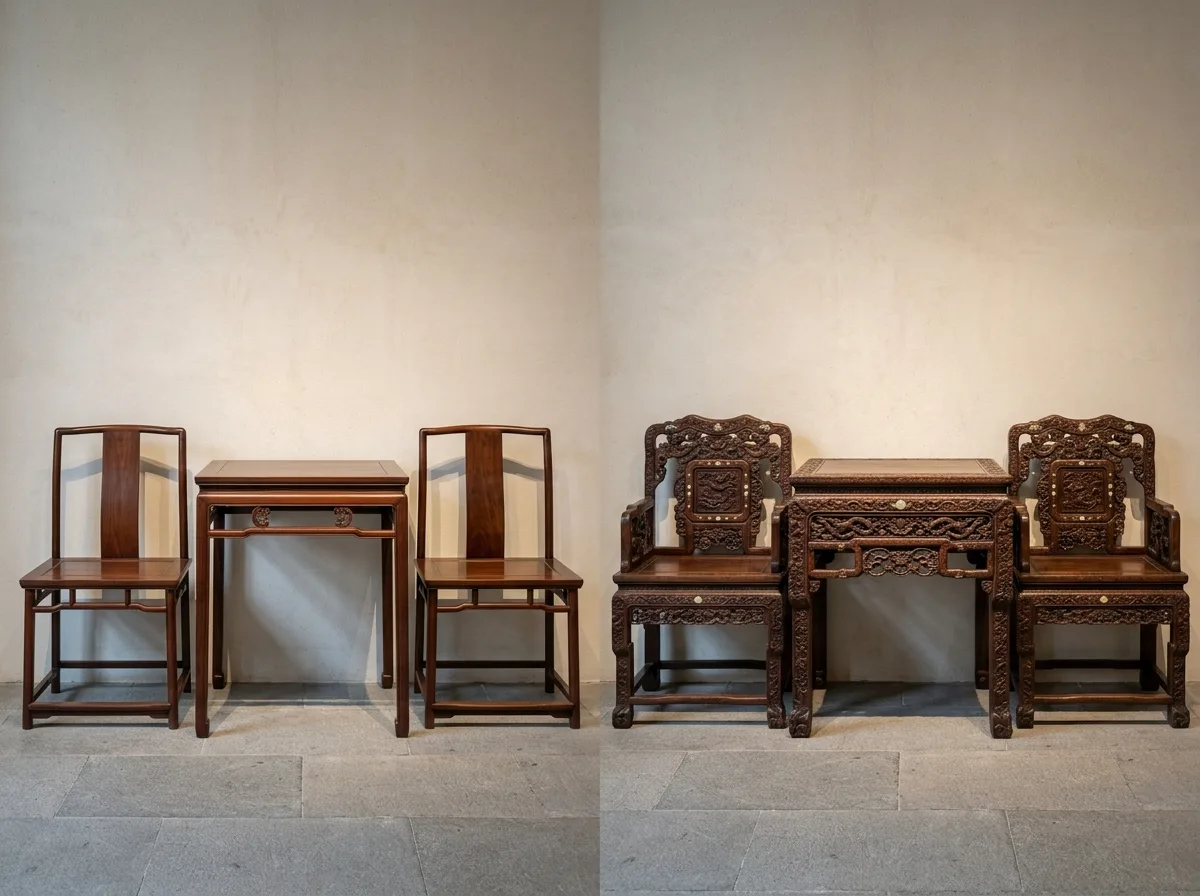
A side-by-side comparison of Ming style and Qing style furniture. On the left is Ming style: slender component cross-sections, with leg thickness only three to four centimeters; simple lines, with only essential moldings; decoration concentrated in very few locations, large areas are plain; the space between the legs is open and transparent, allowing views through to the back; overall visual weight is light, the furniture appears to float on the ground. On the right is Qing style: noticeably thicker component cross-sections; surfaces covered with relief carvings and inlays; complex apron panels and blocking panels fill the gaps between the legs; overall heavy, dense, and opaque. Both have the same dimensions and function, and use the same wood, differing in cross-section, decoration density, and transparency. Avoid: making them look similar, adding carvings to Ming style, making Qing style components slender, changing their dimensions and function.
Translated from Chinese by AI.
Show the original prompt
一組明式家具與清式家具的並置對照。左側是明式:構件的斷面細,腿的粗細僅三到四公分;線條簡潔,只有必要的線腳;裝飾集中在極少數位置,大面積是素的;腿間的空間開闊通透,可以看穿到後方;整體視覺重量輕,家具像浮在地上。右側是清式:構件斷面明顯加粗;表面佈滿浮雕與鑲嵌;腿間有繁複的牙板與擋板填滿空隙;整體厚重、密實、不透。兩者的尺寸與功能相同,木料相同,差別在斷面、裝飾密度與通透程度。避免:讓兩者看起來相似、把明式也加上雕刻、讓清式的構件變細、改變兩者的尺寸與功能。