Text-to-Image
Interior Design
通用
Lobby Sounds: Why Some Lobbies Are Hard to Stay In
Prompt
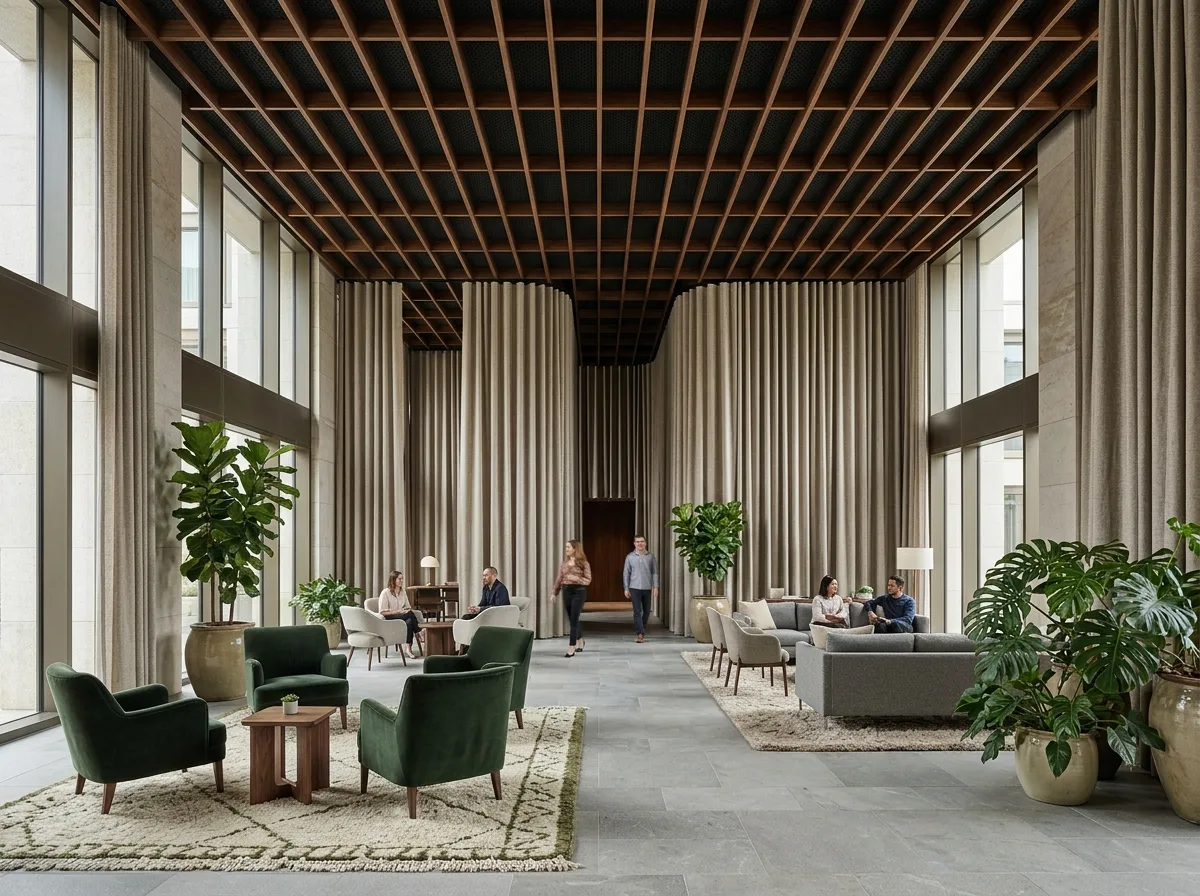
The most common problem with high-ceiling stone lobbies is echo—footsteps, luggage wheels, and conversations bounce repeatedly between hard surfaces, making people want to leave after ten minutes. This space deliberately addresses sound: the upper part of the high ceiling features a large area of wooden grilles and sound-absorbing layers, which are visually decorative; although the floor is stone, thick carpets are laid in each seating area; vertical long fabric drapes fall from above, serving both as partitions and sound absorbers; and plant foliage also helps. The ratio of hard to soft surfaces is roughly half and half. Therefore, the space still looks crisp, but sounds soft, and people naturally lower their voices. Shot from seating height during the day, the ceiling's sound-absorbing structure, the layers of carpet, and fabric drapes are all visible. Avoid: flat hard ceiling, entirely stone floor without carpets, lack of vertical soft elements, space looking like it's wrapped in foam.
Translated from Chinese by AI.
Show the original prompt
挑高的石材大廳最常見的問題是回音——腳步聲、行李輪聲與交談聲在硬面之間反覆彈射,人待十分鐘就想走。這個空間刻意處理了聲音:天花在挑高的上半部做了大面積的木格柵與吸音層,視覺上是造型;地坪雖然是石材,但每個座位區都鋪了厚地毯;垂直的長布幔從高處落下,兼作分區與吸音;植栽的葉面也在幫忙。硬與軟的比例大約各半。因此空間看起來仍然是挺的,但聽起來是柔的,人自然把音量放低。日間從座位高度拍攝,天花的吸音構造、地毯與布幔的層次同時可見。避免:天花做成平整硬面、地坪全部石材沒有地毯、缺少垂直的軟性元素、空間看起來像被泡棉包住。