Text-to-Image
Interior Design
通用
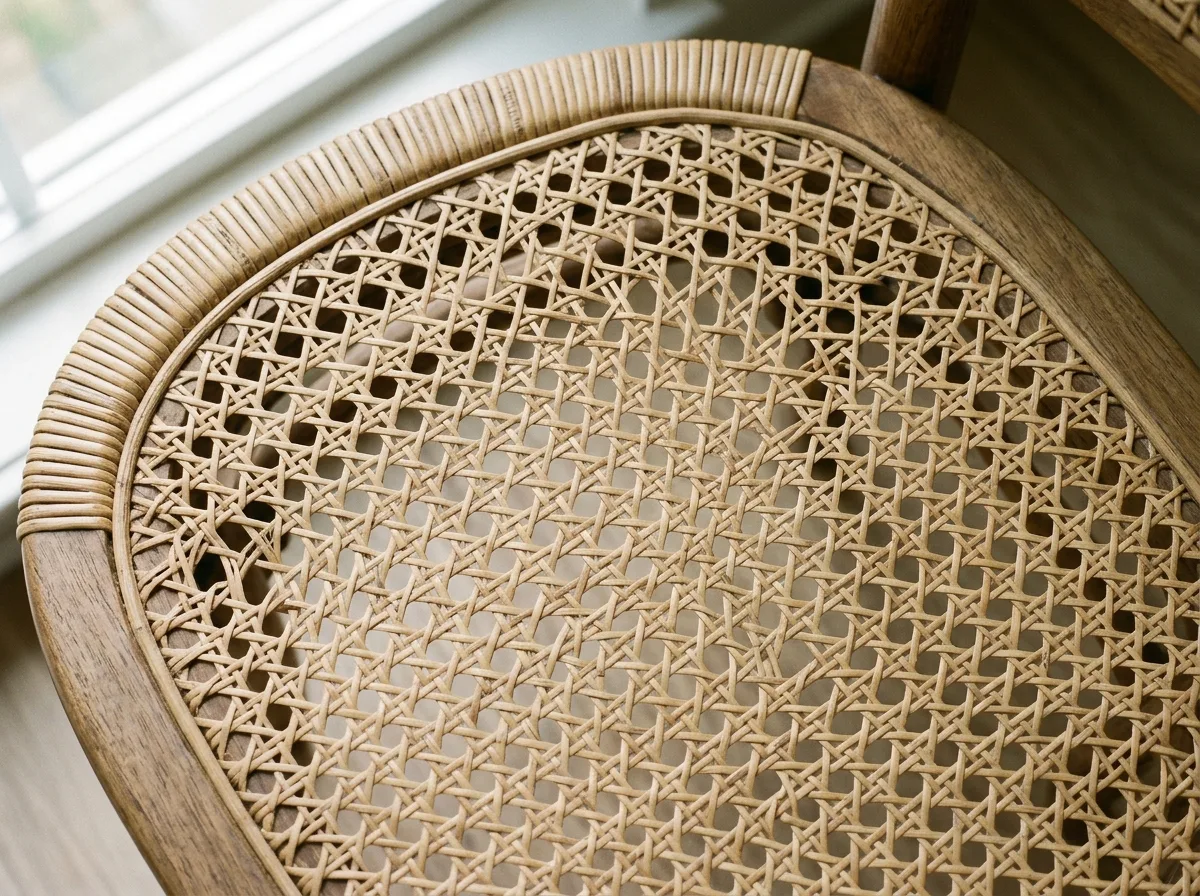
Woven rattan seats: weaving determines pattern and elasticity
Prompt
A close-up, top-down view of a chair seat, hand-woven with rattan strips into a regular hexagonal pattern. Each rattan strip is 3mm wide, and the overlapping sequence at the intersections is visible. Due to hand-weaving, there are subtle variations in the size of the holes, and they are slightly deformed near the edges for finishing. The rattan color is a natural light honey, not yet darkened by use. The seat edge is wrapped with a thicker rattan cane, secured by thin rattan windings into the groove of the wooden frame; the number and spacing of the windings are clearly visible. Soft, oblique light casts delicate shadows through the holes.
Avoid: Pattern made perfectly uniform like machine weaving, using plastic rattan, edges pressed down by metal strips, holes too large losing elasticity.
Translated from Chinese by AI.
Show the original prompt
一張椅子座面的俯視近景,以手工藤皮編成規律的六角孔圖案,每一條藤皮寬 3mm,交錯處看得見上下壓疊的順序。因為是手編,孔的大小有極細微的差異,靠近邊緣處為了收邊而略微變形。藤皮的顏色是自然的淺蜜色,尚未經過使用而變深。座面邊緣以一圈較粗的藤條包覆,並用細藤纏繞固定在木框的溝槽裡,纏繞的圈數與間距清楚可見。柔和的斜光讓孔洞投下細碎的影子。避免:圖案做成機器編的完全均勻、使用塑膠藤、邊緣以金屬條壓住、孔洞太大失去彈性。