Text-to-Image
Interior Design
通用
Gallery-Style Clothing Store: Clothes as Art Display
Prompt
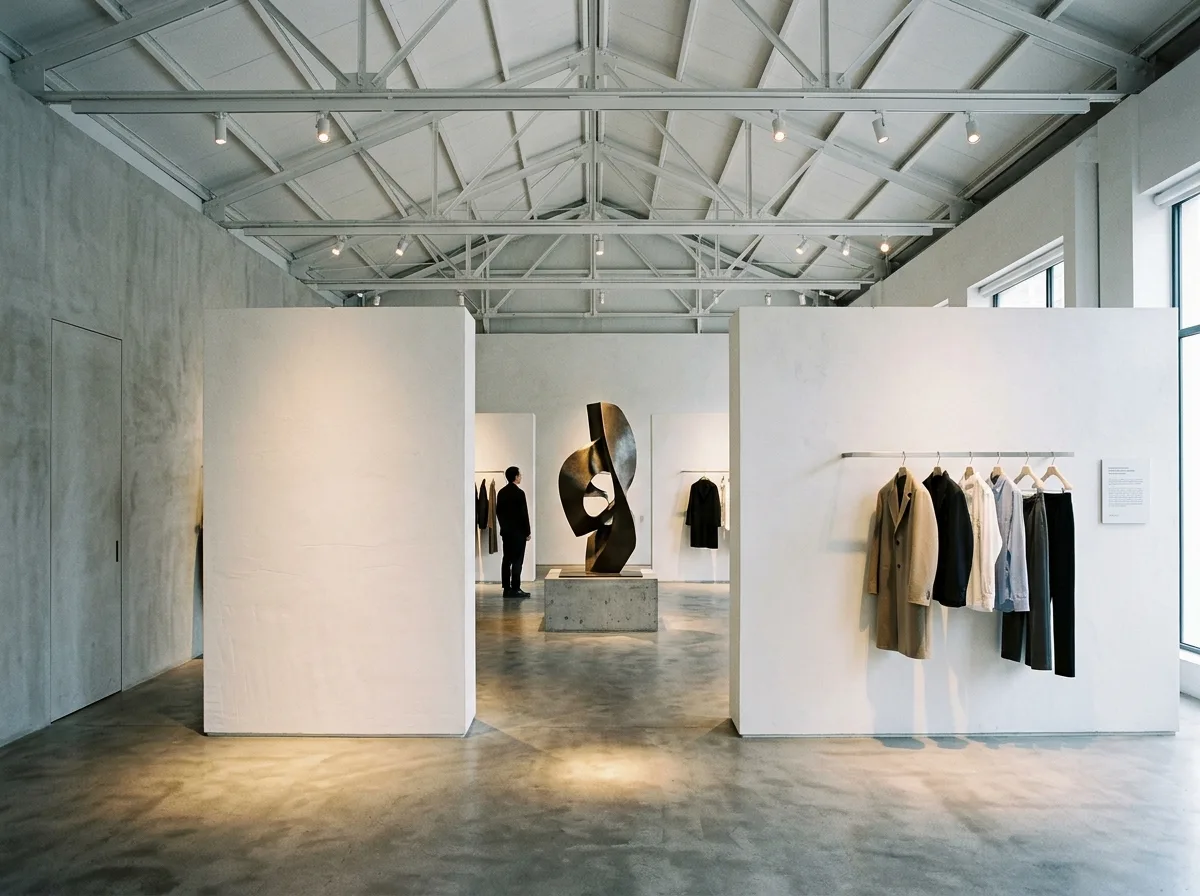
The spatial language directly borrows from contemporary art galleries: a high-ceilinged white box, exposed steel structure ceiling, concrete floor, and several independent display walls standing in the space—these walls do not reach the ceiling, leaving a gap between them and the ceiling, allowing people to walk around them. Clothes are hung on one side of the wall, the other side is blank; next to each display group is a small descriptive label, like an artwork caption. In the center, a real artwork or sculpture is placed, large enough to make one momentarily unsure if clothes are sold here. The fitting room doors are made of the same material as the display walls, invisible when closed. Lighting consists of track lights, precisely angled to illuminate the clothes, leaving clear light spots on the floor. Shot during the day, the gaps of the independent display walls, the relationship between the artwork and the clothes are all visible simultaneously. Avoid: using commercial-looking shelves and hanging rods, posting price tags and promotional signs, uniform lighting without focus, low and cramped space.
Translated from Chinese by AI.
Show the original prompt
空間的語彙直接借自當代藝廊:挑高的白盒、外露的鋼構天花、水泥地坪,以及幾道獨立立在空間中的展示牆——這些牆不到頂,與天花之間留出縫隙,人可以繞著走。衣服掛在牆的一側,另一側是空白;每一組陳列旁有一小塊說明的標籤,像展品的圖說。中央放置一件真正的藝術品或雕塑,尺度大到讓人一時分不清這裡賣不賣衣服。試衣間的門與展示牆同材質,關上時看不出來。照明是軌道燈,角度精準地打在衣服上,地面留下清楚的光斑。日間拍攝,獨立展示牆的縫隙、藝術品與衣服的關係同時可見。避免:使用商業感的層架與掛桿、貼出價格牌與促銷標示、照明均勻沒有重點、空間低矮擁擠。