Text-to-Image
Interior Design
通用
The Difference Between Plated Titanium and Solid Brass
Prompt
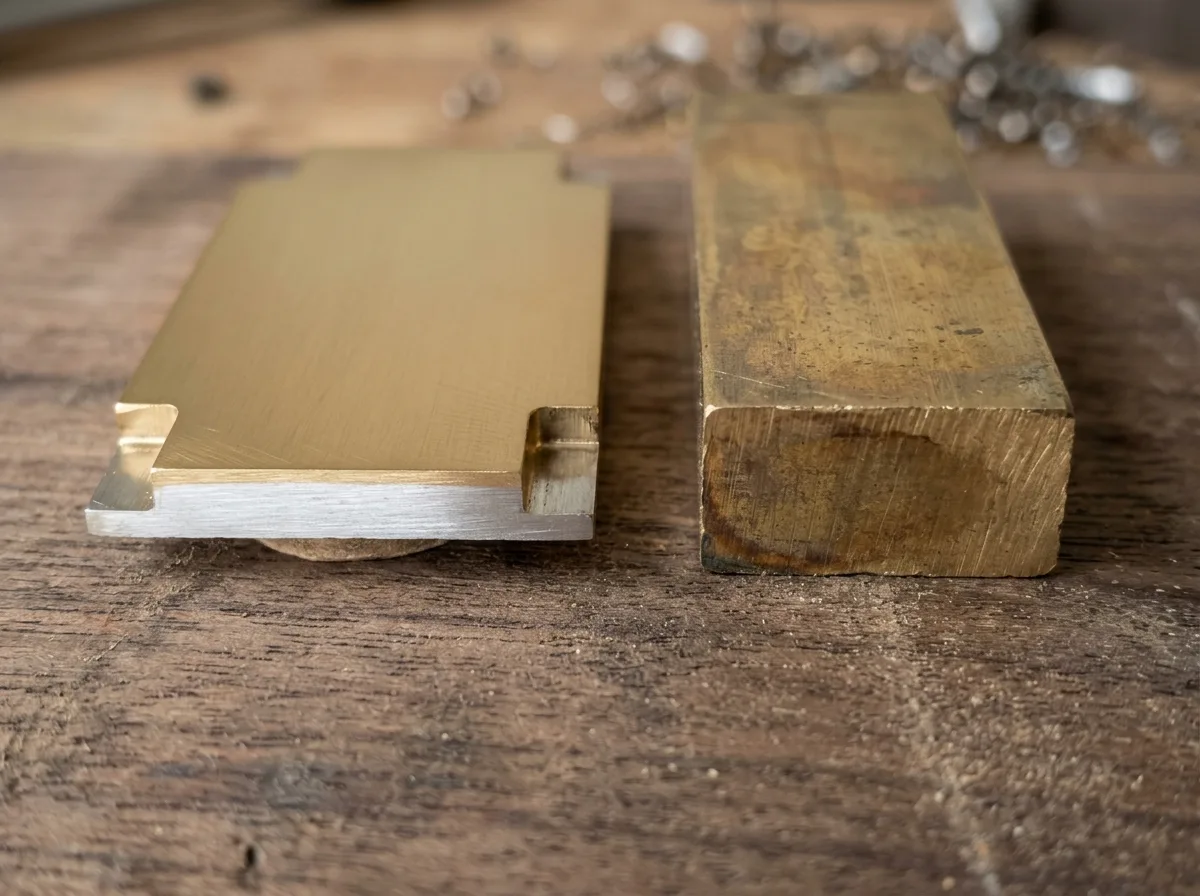
A close-up comparison of two metal components. The left side shows titanium-plated stainless steel, commonly used in light luxury designs: the base material is a stainless steel plate, with a champagne gold layer plated on the surface. It works well when made into thin sheets and fine strips—the color is uniform, it won't oxidize or change color, and the cost is a fraction of solid brass. However, it has limitations: the cross-section will expose the silver-white base material underneath, so it can only be used in positions with edges or embedded, and cannot be made into solid pieces where the end face needs to be seen. The right side shows solid brass: the cross-section is solid metal, it has weight, and it will oxidize with use. The image presents a cross-section to show the difference in their end faces. Avoid: using titanium plating in positions where the end face will be visible, making the cross-sections of both look identical, using bright electroplating, depicting titanium plating as oxidizing or changing color.
Translated from Chinese by AI.
Show the original prompt
一組金屬件的近景對照。左側是輕奢常用的鍍鈦不鏽鋼:基材是不鏽鋼板,表面鍍上一層香檳金色;做成薄片與細條時效果良好——顏色均勻、不會氧化變色、成本只有實心黃銅的幾分之一。但它有界線:斷面會露出底下的銀白色基材,所以只能用在有包邊或嵌入的位置,不能做成需要看到端面的實心件。右側是實心黃銅:斷面是完整的金屬、有重量、會隨使用氧化。畫面以剖切呈現兩者的斷面差異。避免:把鍍鈦用在會看到斷面的位置、讓兩者的斷面看起來相同、使用亮面電鍍、把鍍鈦畫成會氧化變色。