Text-to-Image
Architecture
通用
Backlit Halo Letters: Illuminating the Outline, Not the Face
Prompt
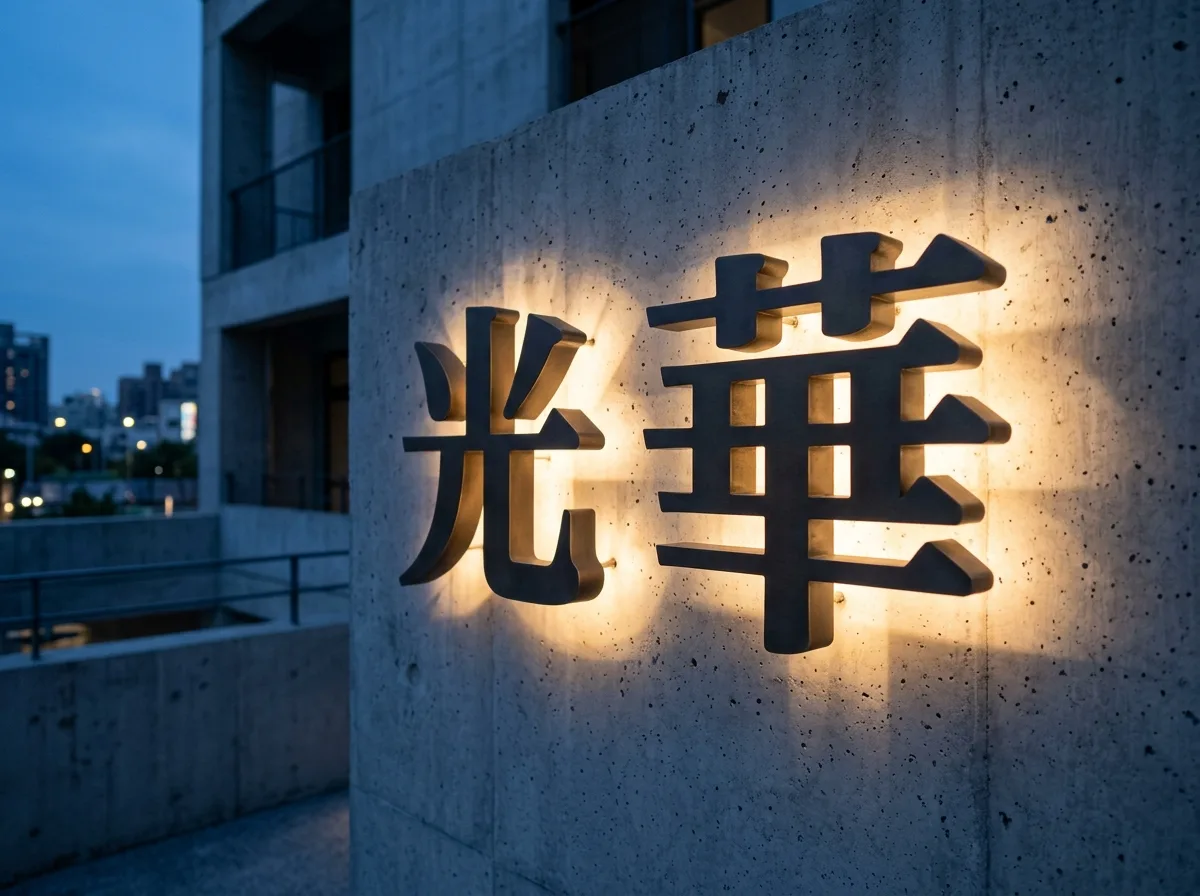
The front of the three-dimensional letters is solid, opaque metal or dark acrylic. The light source is hidden behind the letters, washing light onto the wall behind them, causing each letter to emerge with a soft halo. A gap of about three to five centimeters is left between the letters and the wall; this spacing determines the width and softness of the halo—the greater the distance, the softer and wider the halo. The wall material determines the character of the light: fair-faced concrete absorbs light and appears subdued, white paint reflects light and appears bright, and tiles will cut the light into a grid. Shot during the blue hour at dusk, with ambient light and halo light in equilibrium, and the front of the letters retaining their material solidity. Avoid: the letter face itself emitting light, overly sharp halo edges, or visible light source particles.
Translated from Chinese by AI.
Show the original prompt
立體字的正面為實心不透光的金屬或深色壓克力,光源藏在字的背後,把光洗在後方牆面上,讓每個字浮現一圈柔和的光暈。字與牆之間留出約三到五公分的離牆距離,這個間距決定暈開的寬窄——距離越大,光暈越柔越寬。牆面的材質決定光的性格:清水混凝土吸光而沉,白色塗料反光而亮,磁磚會把光切成格子。黃昏藍調時刻拍攝,環境光與暈光勢均力敵,字的正面仍保有材質的實體感。避免:字面本身發光、暈光邊界過於銳利、看得見光源顆粒。