Text-to-Image
Interior Design
通用
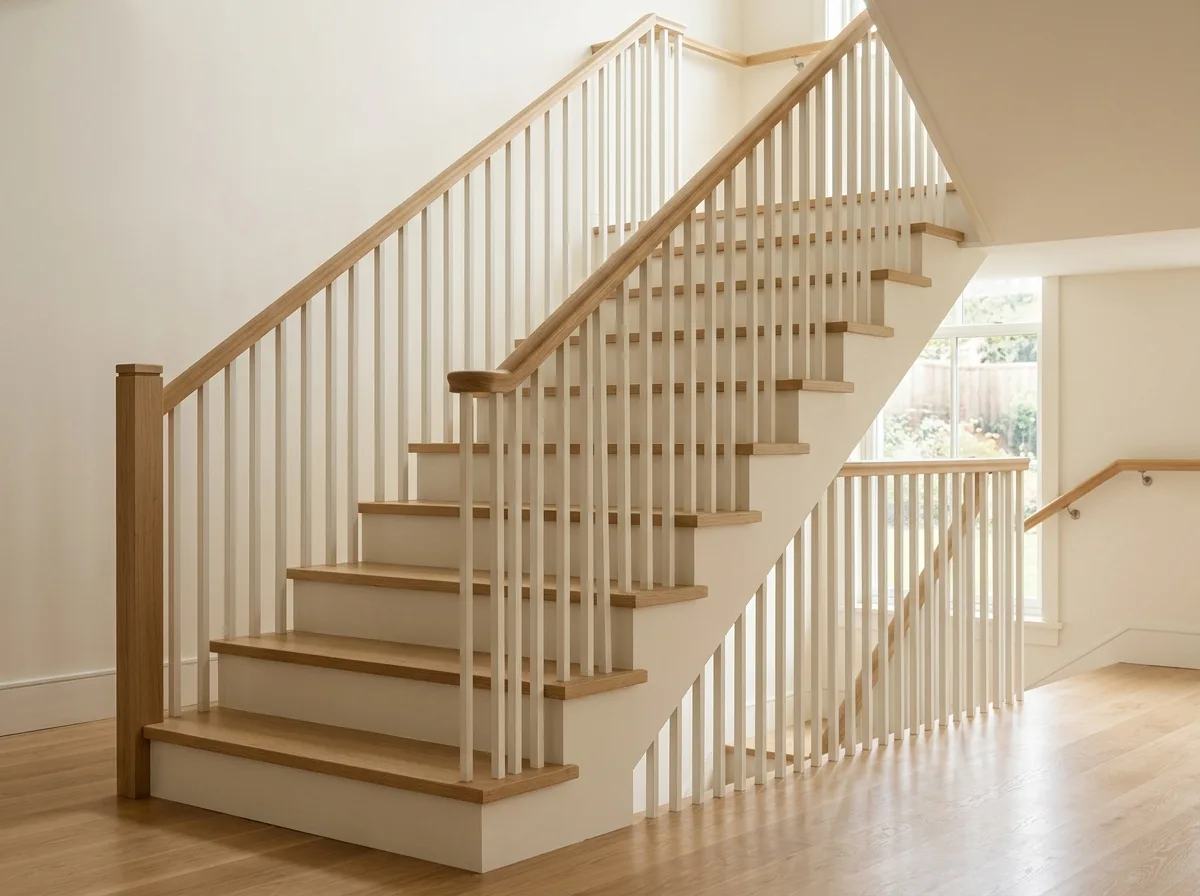
Stairs: Refinement of Traditional Balusters
Prompt
A new traditional interior staircase. The form is traditional—wooden treads, closed stringers, and a wooden handrail at the top—but the proportions are significantly refined: the baluster uprights have a cross-section of only two centimeters square, spaced closely and regularly, making the entire balustrade appear light and almost transparent, unlike the heavy, turned balusters of traditional designs. The handrail has a simple rounded rectangular cross-section, with precise mitered joints at corners, devoid of carved newel posts and volutes. The starting newel post is similarly simplified to a slightly thicker square post. The treads are solid wood, while the stringers and balusters are painted the same color as the wall, with only the handrail retaining its natural wood color. Avoid: using turned spherical balusters and carved newel posts, making the balusters thick, replacing wooden balusters with glass and metal, having complex profiles on the handrail.
Translated from Chinese by AI.
Show the original prompt
一座新傳統的室內樓梯。形式是傳統的——木質踏板、封閉的側板、上方的木扶手——但比例被大幅細化:欄杆的直桿斷面只有兩公分見方,間距密而規律,因此整組欄杆看起來輕盈而幾乎透明,不像傳統的粗車枳欄杆那樣厚重。扶手是簡單的圓角矩形斷面,轉角處以精確的斜接收頭,沒有雕刻的柱頭與渦卷。起始的端柱同樣簡化為一根略粗的方柱。踏板是實木,側板與欄杆漆成與牆面相同的顏色,只有扶手保留木色。避免:使用車枳的圓球欄杆與雕花端柱、把欄杆做得粗壯、使用玻璃與金屬取代木欄杆、讓扶手出現複雜的斷面。