Text-to-Image
Interior Design
通用
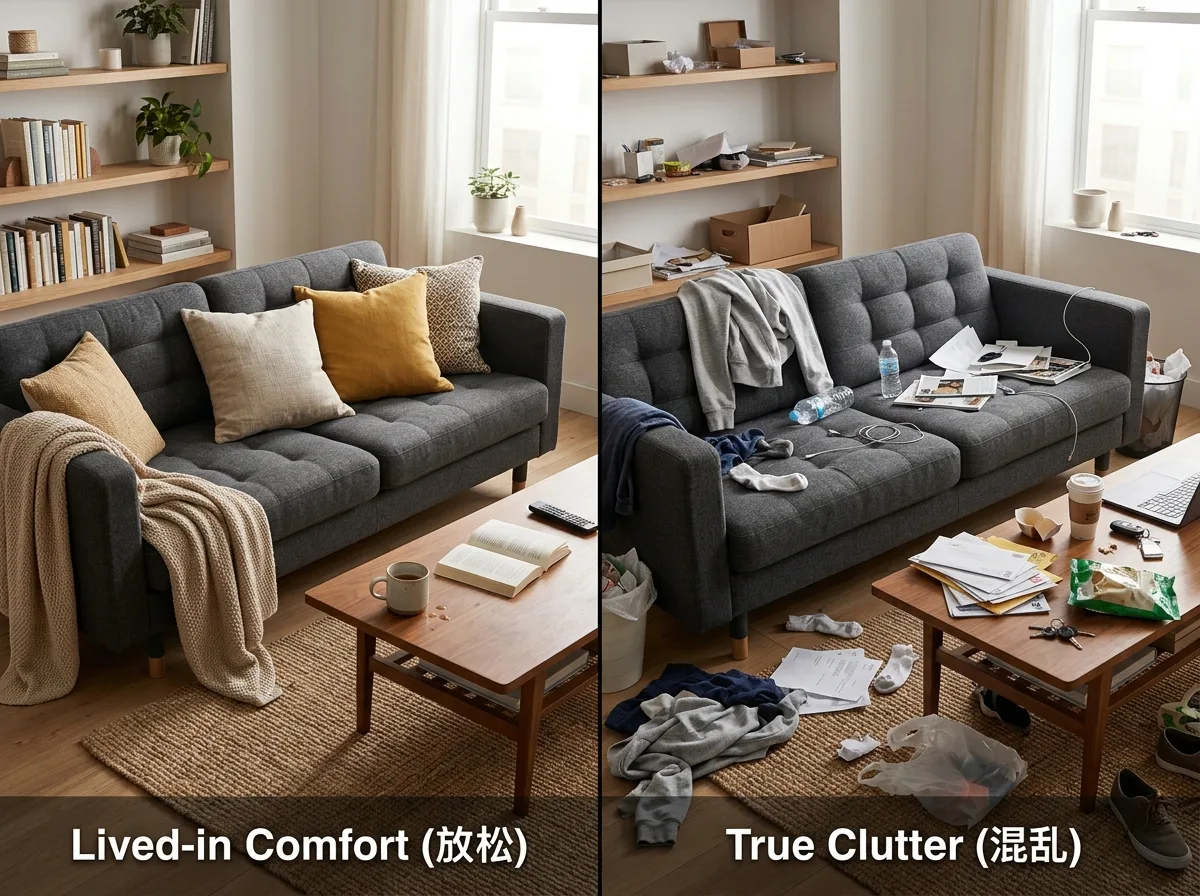
The Line Between Lazy Style and Clutter: Relaxed Doesn't Mean Dirty
Prompt
Two states of the same living room juxtaposed, illustrating the fine line. The left side shows the correct state of a "lazy" style: cushions are indented, throw pillows are not neatly arranged, a blanket has slipped halfway, there are cups and books on the table—but the floor is clean, items are within their designated areas, materials are good, and the color scheme is unified, making the overall impression relaxed rather than out of control. The right side shows true clutter: clothes and papers are scattered on the floor, the tabletop is piled with unrelated items, trash hasn't been cleared, items cross all boundaries, and colors and materials are chaotic. The furniture and space in both are identical; the difference lies in the nature and extent of the traces. Avoid: making the two similar, depicting the left side as perfectly tidy, making the right side only slightly messy, changing the furniture and materials of either.
Translated from Chinese by AI.
Show the original prompt
同一個起居室的兩種狀態並置,說明分寸。左側是懶系的正確狀態:坐墊有凹陷、抱枕沒排整齊、毯子滑落一半、桌上有杯子與書——但地面是乾淨的、東西都在該在的區域內、材質良好、色調統一,整體讀起來是放鬆而不是失控。右側是真正的雜亂:地上散落衣物與紙張、桌面堆滿不相干的物品、垃圾沒清、東西跨越了所有區域、顏色與材質雜亂。兩者的家具與空間完全相同,差別在於痕跡的性質與範圍。避免:讓兩者相似、把左側畫成完全整齊、讓右側只是稍微凌亂、改變兩者的家具與材質。