Text-to-Image
Interior Design
通用
Symmetry and Asymmetry: The Effects of Two Arrangement Styles
Prompt
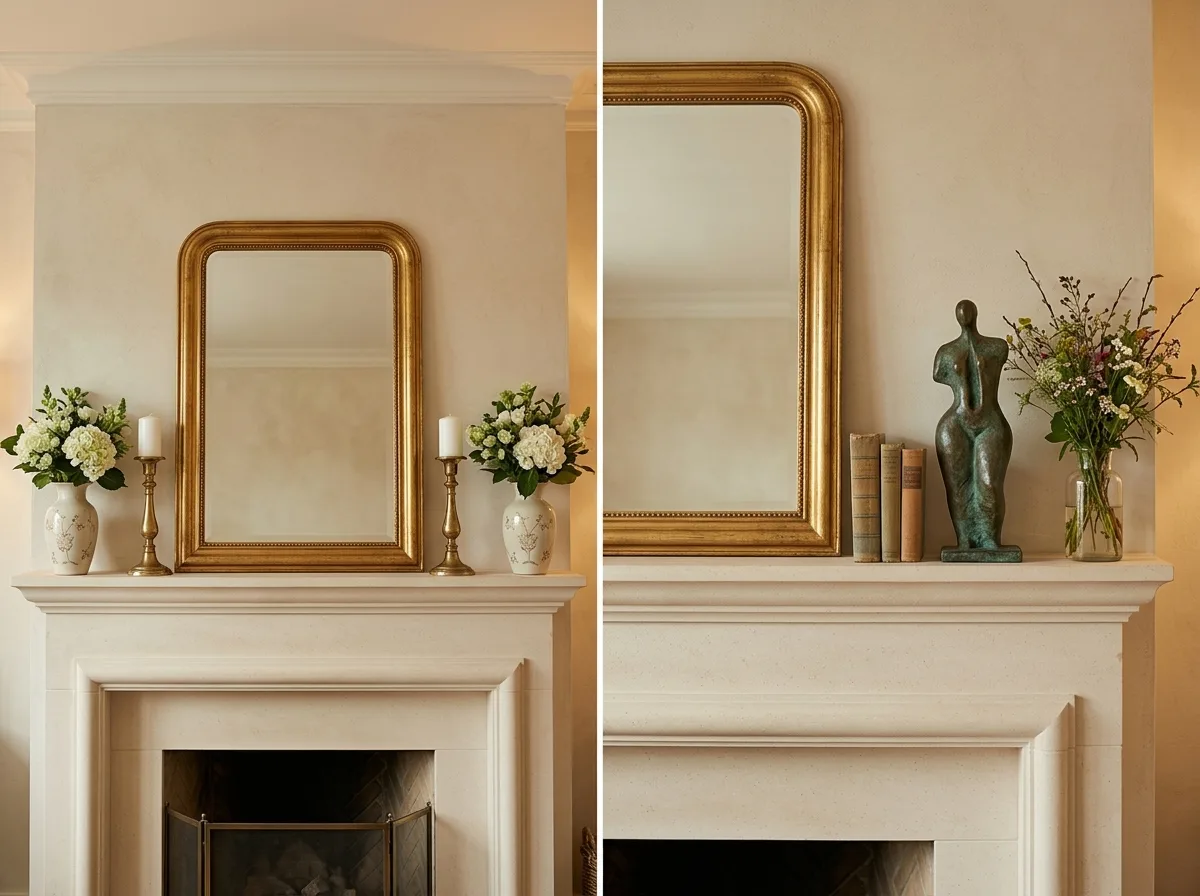
Two arrangements of the same fireplace mantel juxtaposed: the left half is symmetrical—a mirror in the center, with an identical candlestick and an identical vase on each side, strictly mirrored, creating a formal, quiet, and distant effect; the right half is asymmetrical—the mirror is off-center to the left, with books stacked and a larger sculpture on the right to achieve visual balance, creating a casual, lived-in effect. Both are valid, but suitable for different occasions: symmetry for formal reception spaces, asymmetry for daily living. The architectural elements and number of objects on both sides are the same. Avoid: inconsistent fireplaces or perspectives on both sides, one side clearly arranged worse, the asymmetrical side being truly unbalanced, too large a difference in the number of objects.
Translated from Chinese by AI.
Show the original prompt
同一座壁爐檯面的兩種陳設方式並置:左半是對稱的——中央一面鏡子,兩側各一支相同的燭台、各一只相同的花瓶,嚴格鏡射,效果是正式、安靜、有距離感;右半是不對稱的——鏡子偏左,右側堆疊書與一件較大的雕塑取得視覺平衡,效果是隨性、有生活感。兩者都成立,但適合的場合不同:對稱用在正式的接待空間,不對稱用在日常起居。兩側的建築元素與物件數量相同。避免:兩側的壁爐或視角不一致、其中一側明顯擺得比較差、不對稱那側做成真的失衡、物件數量差異過大。