Text-to-Image
Interior Design
通用
Corridor Door Rhythm: Room Numbers, Doorknobs, and That Little Bit of Light
Prompt
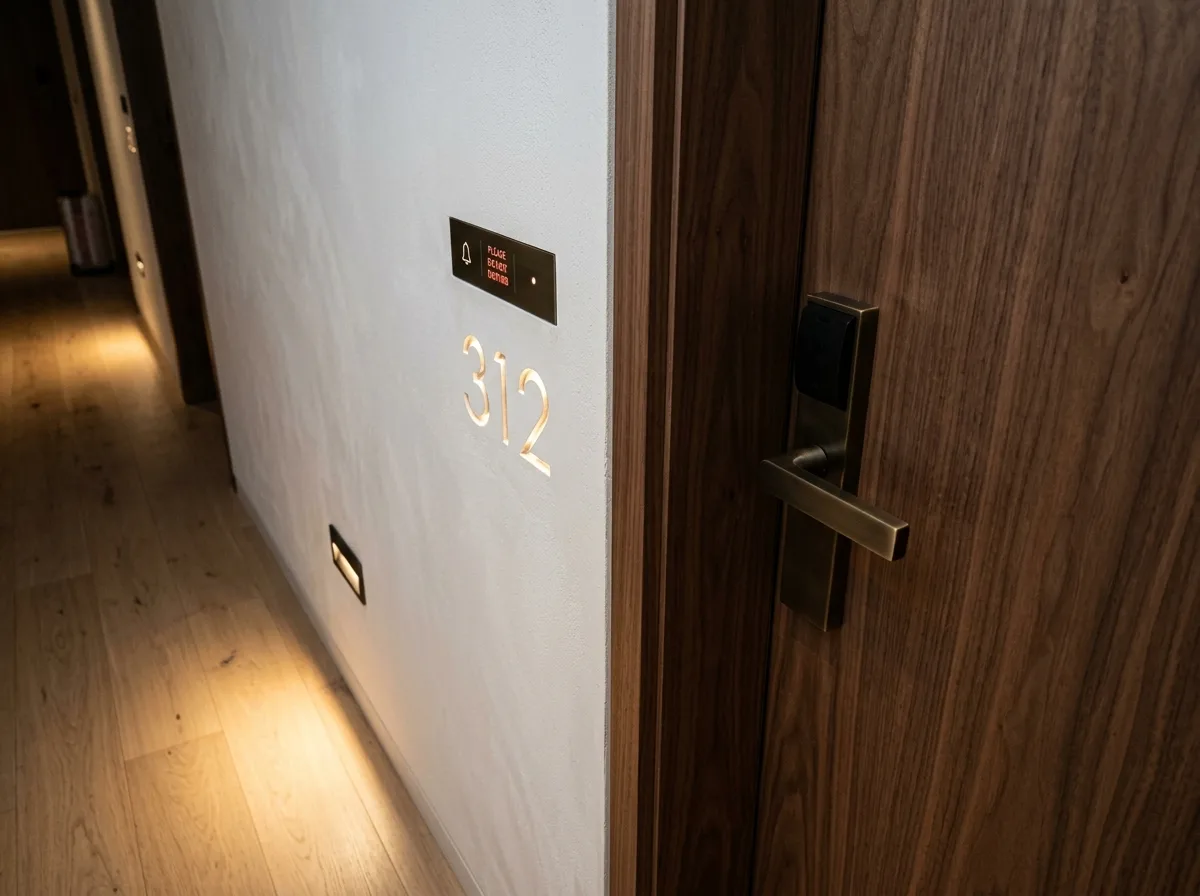
Focus on the guest room door elevation: the door panel is solid wood or wood veneer, with a clean recessed trim between it and the wall, no superfluous moldings; the room number is directly integrated into the wall next to the door—etched, embedded, or backlit, not a hanging plaque; a small wall sconce or recessed light next to the door casts a pool of light on the floor, making it easy to find one's door even when corridor lighting is dimmed at night. The doorknob is solid metal, chosen for its length and proportion, with a substantial feel. The doorbell, do not disturb indicator light, and room number are integrated into a single panel, rather than three separate devices. Shot at a close, oblique angle at the junction of the door and wall, the trim, room number, and light spot on the floor are all visible simultaneously. Avoid: using surface-mounted plastic room numbers, stacking multiple independent devices next to the door, using moldings to decorate the door frame, no light falling on the floor.
Translated from Chinese by AI.
Show the original prompt
把注意力放在客房門這個立面上:門片是實木或木飾面,與牆面之間有一道乾淨的凹槽收邊,沒有多餘的線板;房號的數字直接處理在門旁的牆上——蝕刻、嵌入或以背光的方式,不是掛牌;門旁有一盞小小的壁燈或嵌燈,在地面上留下一塊光,夜間即使走廊照明調暗也找得到自己的門。門把是實心金屬,長度與比例經過選擇,握感偏重。門鈴、請勿打擾的指示燈與門牌整合成同一個面板,而不是三個東西各貼一處。近距離斜角拍攝門與牆的交界,收邊、房號與地面的光斑同時可見。避免:房號使用外掛塑膠牌、門旁堆疊多個獨立裝置、門框使用線板裝飾、地面沒有光的落點。