Text-to-Image
Interior Design
通用
Humidity Exit: Defogging Relies on Ventilation, Not Wiping
Prompt
Humidity outlet: defogging relies on ventilation, not wiping.
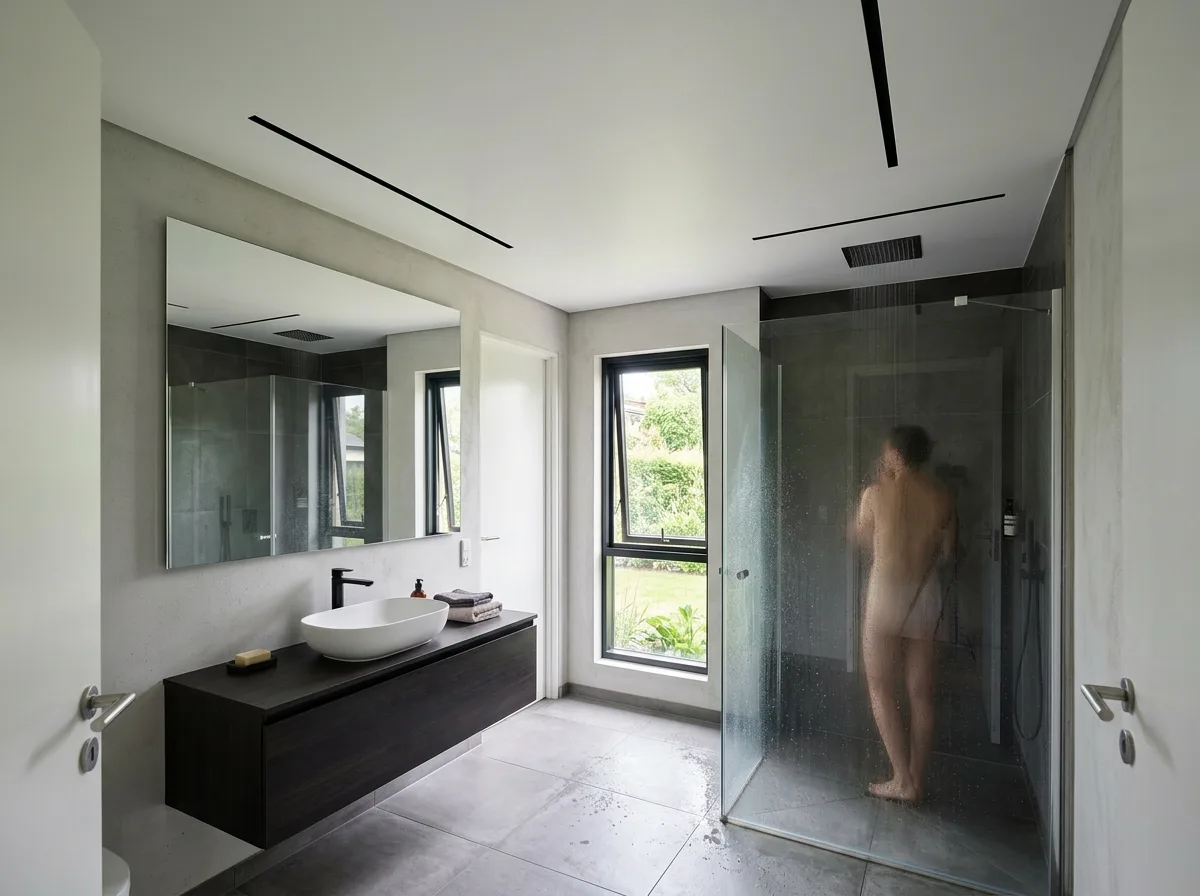
A well-humidity-controlled bathroom, with emphasis on the unseen parts. The ceiling has two extremely thin linear slits: one is the exhaust air inlet, located directly above the shower area where humidity is highest; the other is the supply air outlet, located on the dry side near the door, so the air path flows unidirectionally from the dry area to the wet area. The width of both slits is only 1.5 cm, and their interiors are deep black, with no visible blades or ducts. The mirror has an anti-fog electric heating film on its back, so the mirror surface remains clear after showering. The window is operable. The image shows a state immediately after showering: there is a thin mist in the air, but the mirror is clear, and there is no standing water on the floor. Avoid: using exposed square exhaust fans and grilles, placing the exhaust vent in the dry area, allowing the mirror to fog up, installing ordinary bathroom heaters on the ceiling.
Translated from Chinese by AI.
Show the original prompt
一間濕度控制良好的浴室,重點在看不見的部分。天花有兩個極細的線性縫:一個是排風的入口,設在淋浴區的正上方濕氣最重的位置;另一個是補風的出口,設在乾區靠門的一側,因此空氣的路徑是從乾區往濕區單向流動。兩個縫的寬度僅一點五公分,內部是深黑的,看不見葉片與管線。鏡子背面有除霧的電熱膜,所以洗完澡鏡面仍然清晰。窗是可開啟的。畫面呈現一個剛洗完澡的狀態:空氣中有薄薄的水氣但鏡子是清楚的,地面沒有積水。避免:使用外露的方形排風扇與格柵、把排風口設在乾區、讓鏡面起霧、在天花加裝一般的浴室暖風機。