Text-to-Image
Interior Design
通用
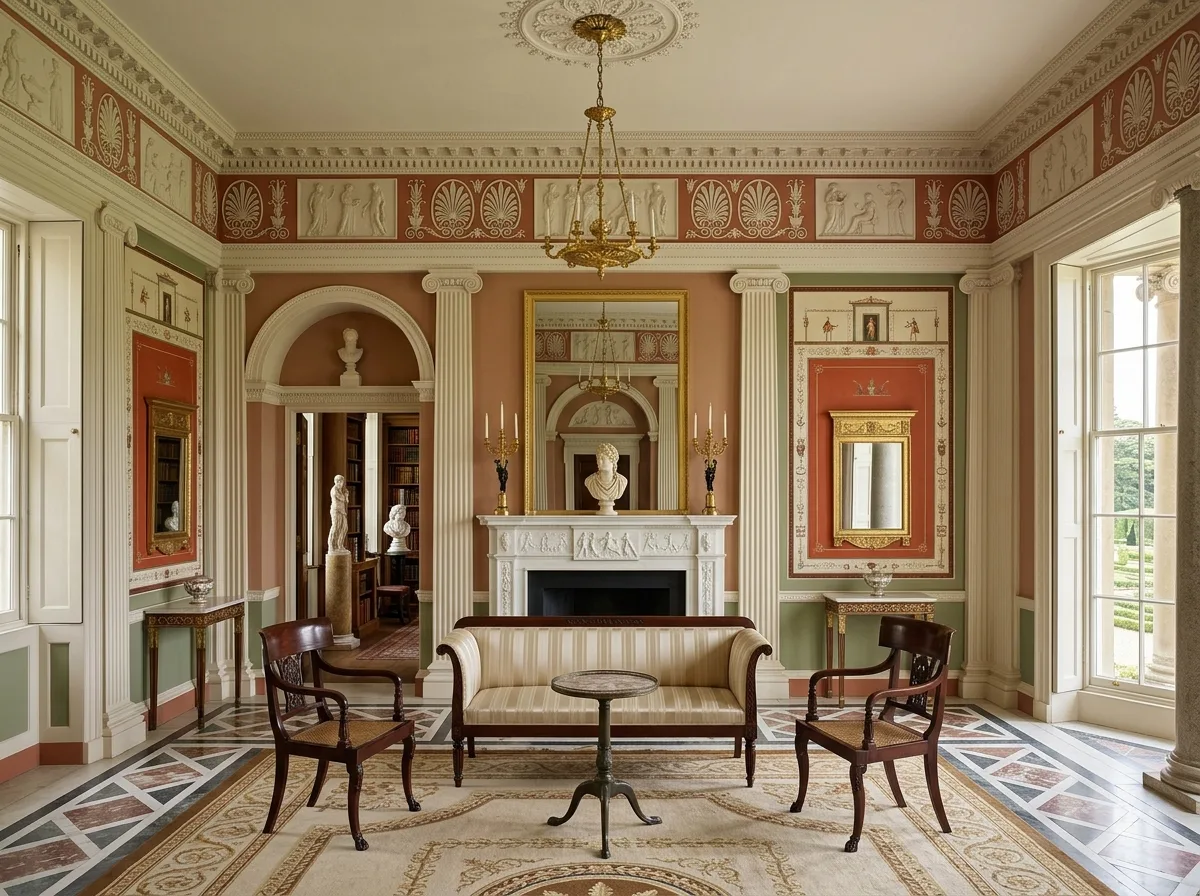
Provenance: The Vocabulary Unearthed from Pompeii
Prompt
An late 18th-century Neoclassical interior. The spatial vocabulary is directly derived from the recently excavated Pompeii and Greek ruins: pilasters, architraves, friezes, urn and palmette motifs. These are not arbitrarily designed decorations, but concrete forms learned and replicated after archaeological discoveries, thus strictly proportioned and with clear origins for their motifs. The overall impression is rational, symmetrical, and elegant. Avoid: using freely created decorative forms, adding Baroque twists and dynamism, drawing motifs casually without adhering to classical norms, making the composition asymmetrical.
Translated from Chinese by AI.
Show the original prompt
一個十八世紀末的新古典室內。空間的語彙直接來自剛被挖掘出來的龐貝與希臘遺址:壁柱、楣樑、浮雕飾帶、甕形與棕葉飾。它們不是憑空設計的裝飾,而是考古發現後被學習與複製的具體形式,因此比例嚴謹、母題有明確的出處。整體理性、對稱、優雅。避免:使用自由創作的裝飾造型、加入巴洛克的扭轉與動勢、把母題畫得隨意不合古典規範、讓構圖不對稱。