Image Editing
People & Space
Nano Banana
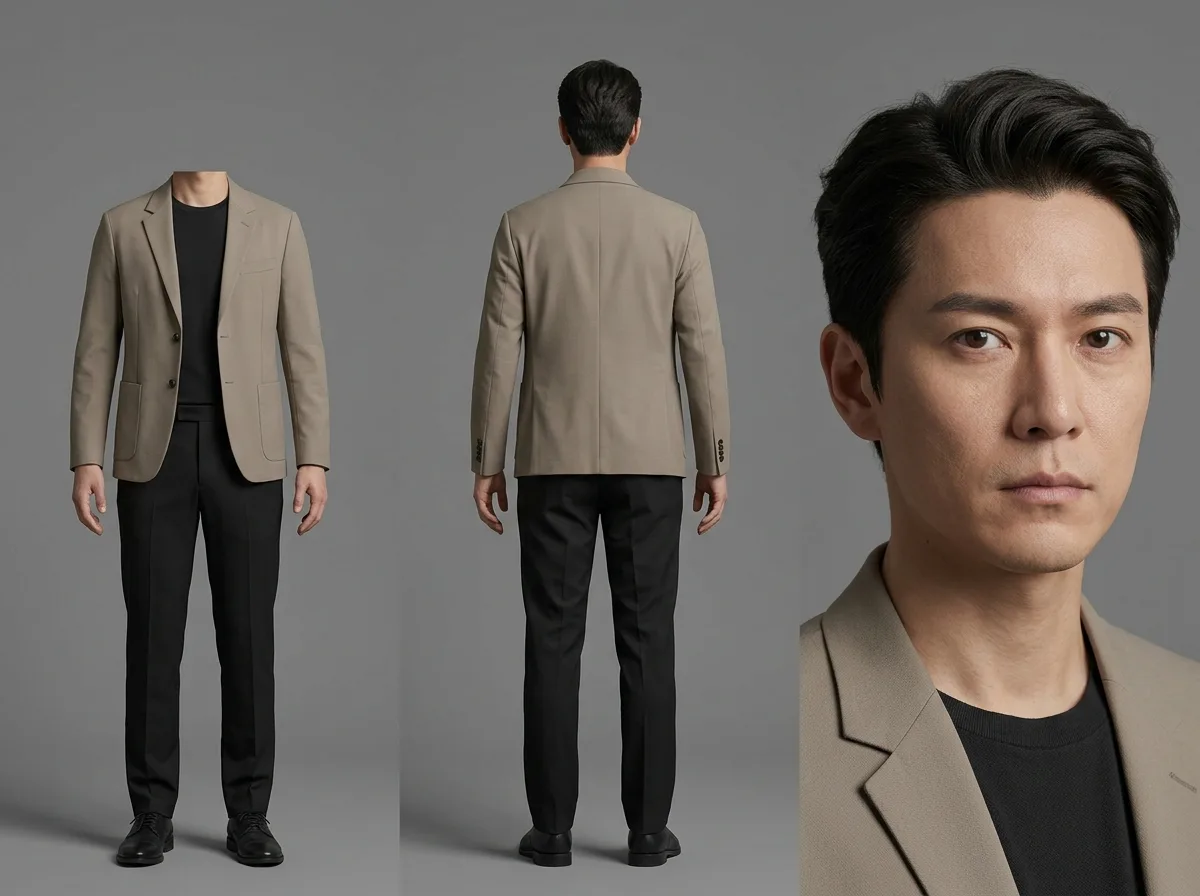
Three-Panel Garment Record Sheet: Front, Back, and Close-up of Face (Headless)
Prompt
Strictly follow the uploaded reference image to create a realistic three-panel character reference sheet. The uploaded image is the sole basis for identity, age, facial structure, hairstyle, body proportions, skin tone, clothing design, fabric, colors, and accessories; no redesign or reinterpretation is allowed.

Layout: Horizontal composition, read from left to right, divided into three vertical panels of equal height and width, each occupying one-third of the total width. The first two panels are full-body views, and the third is a close-up of the face and upper body. The three panels must form a continuous, seamless single image, with no dividing lines, frames, borders, gaps, white space, or background changes between panels.

Panel One: Full body front view, head omitted. Standing upright in a neutral pose, arms naturally hanging at the sides, facing the camera directly, clothing fully visible from neckline to shoes. First, establish the figure with the exact same full-body proportions and framing as Panel Two, then simply omit the head area above the neckline, leaving the original head position as normal blank background. No decapitation, wounds, severed neck, or any depiction of anatomical damage—this is a deliberate removal of head information for clothing presentation. Do not enlarge, scale, reframe, shift, or recrop the body to compensate for the missing head.

Panel Two: Full body back view. The exact same figure, viewed from directly behind, maintaining the same neutral pose and hanging arms. Clearly show the back silhouette, hairstyle as seen from the rear, clothing structure and seams, lower body clothing, and shoes, all strictly according to the reference image.

Panel One and Panel Two Proportion Lock: As if continuously shot with an unmoving tripod—same focal length, camera height, camera distance, subject scale, and lighting. Shoulder width, torso length, leg length, shoe size, distance from shoulder to ground, and left/right white space on the image must be identical. Both figures share the same horizontal ground baseline and the same horizontal shoulder line, each occupying the same proportion of the panel height. No scaling, cropping, vertical shifting, or differences in body size between the two. A technical perspective close to orthographic projection, with minimal perspective distortion.

Panel Three: Face and upper body close-up. A head-and-shoulders portrait of the same figure, cropped from the upper chest upwards. The head is slightly turned to the figure's own right, creating a subtle three-quarter angle, with the face still generally facing the camera: the figure's left cheek and left half of the face must be more prominently visible than the right side, and the tip of the nose points slightly to the figure's own right rather than directly at the camera. Both eyes are clearly visible with direct eye contact with the camera, avoiding a perfectly symmetrical frontal angle. Expression is serious and neutral. The entire head, hairstyle, chin, and hairline silhouette are fully within the frame, with a small amount of white space above the hair. Preserve the exact identity, age, facial structure, hairstyle, skin texture, wrinkles, and natural asymmetry of the reference image.

Consistency: The identity, age, skin tone, hairstyle, body proportions, clothing (every single item, its cut, and all accessories strictly according to the reference image), fabric, colors, lighting, and color correction are completely consistent across all three panels. This is a technical visual reference and clothing record sheet, not a creative reinterpretation.

Background: Neutral medium gray #808080 seamless background, continuously extending across the entire image, without interruption or separation by panels. The background color and brightness are identical across all three panel areas.

Lighting and Presentation: Clean, soft, even lighting, with a large diffused key light and gentle fill light, soft natural shadows, no harsh highlights, true skin tones, neutral white balance. Minimalist high-fashion editorial style, aesthetic of a professional model's fitting sheet. Shot with a full-frame camera and an 85mm lens, well-controlled depth of field, the entire figure remains in focus, details are crisp and sharp, high dynamic range.

Avoid: Text, labels, typography, logos, dimension callouts, props, furniture, environmental objects, decorative graphics, dividing lines, frames, borders, panel gaps, or visible seams between panels. No panels of unequal width. No rim lighting, colored lights, harsh spotlights, or dramatic lighting.
Translated from Chinese by AI.
Show the original prompt
嚴格依照上傳的參考圖像,製作一張寫實的三面板角色參考表。上傳的圖像是身分、年齡、臉部結構、髮型、身體比例、膚色、服裝設計、布料、顏色與配件的唯一依據,不得重新設計或重新詮釋。

版面:水平橫向構圖,由左至右閱讀,分為三個等高等寬的垂直面板,每個面板各佔總寬度的三分之一。前兩個面板為全身視圖,第三個為臉部與上半身特寫。三個面板必須構成連續無縫的單一畫面,面板之間不得有分隔線、外框、邊界、間隙、留白或背景變化。

面板一:全身正面,省略頭部。以中性姿勢直立,雙臂自然垂放於身體兩側,正對鏡頭,服裝從領口到鞋子完整可見。先以與面板二完全相同的全身比例與取景建立人物,再單純省略領口以上的頭部區域,原本頭部的位置保留正常的空白背景。不得出現斷頭、傷口、斷頸或任何解剖損傷的表現——這是刻意移除頭部資訊的服裝呈現方式。不得為了填補缺少的頭部而放大、縮放、重新取景、位移或重新裁切身體。

面板二:全身背面。完全相同的人物,由正後方觀看,維持相同的中性姿勢與垂放的雙臂。清楚呈現背影輪廓、後方所見的髮型、服裝的結構與接縫、下半身服裝與鞋子,一律嚴格依照參考圖像。

面板一與面板二的比例鎖定:如同以未曾移動的三腳架連續拍攝——相同焦距、相機高度、相機距離、主體比例與照明。畫面上的肩寬、軀幹長度、腿長、鞋子大小、肩部到地面的距離與左右留白皆須相同。兩個人物共用同一條水平地面基準線與同一條水平肩線,各自佔據面板高度的相同比例。兩者之間不得有縮放、裁切、垂直位移或身體大小的差異。接近正投影的技術性視角,透視變形極小。

面板三:臉部與上半身特寫。同一人物的頭肩肖像,自上胸部向上裁切。頭部略微轉向人物自身的右側,形成細微的四分之三角度,臉部仍大致朝向鏡頭:人物的左臉頰與左半邊臉須比右側更明顯地露出,鼻尖略指向人物自身的右側而非正對鏡頭。雙眼清楚可見並與鏡頭有直接眼神接觸,不使用完全對稱的正面角度。表情嚴肅中性。整個頭部、髮型、下巴與髮際輪廓完全置於框內,頭髮上方保留少量留白。保留參考圖像確切的身分、年齡、臉部結構、髮型、皮膚紋理、皺紋與自然的不對稱。

一致性:三個面板中的人物身分、年齡、膚色、髮型、身體比例、服裝(每一件單品、其剪裁與所有配件皆嚴格依照參考圖像)、布料、顏色、照明與色調校正完全一致。這是一份技術性的視覺參考與服裝記錄表,不是創意重新詮釋。

背景:中性中灰色 #808080 無縫背景,連續延伸至整張圖像,不得中斷或因面板而分離。三個面板區域的背景顏色與亮度完全相同。

照明與呈現:乾淨柔和的均勻照明,大型漫射主光搭配溫和補光,柔和自然的陰影,無刺眼高光,真實膚色,中性白平衡。極簡的高階時尚編輯風格,專業模特兒定裝表的美學。以全片幅相機搭配 85mm 鏡頭拍攝,景深控制得宜,整個人物維持在焦點內,細節清晰銳利,高動態範圍。

避免:文字、標籤、排版文字、標誌、尺寸標註、道具、家具、環境物件、裝飾性圖形、分隔線、外框、邊界、面板間隙或面板之間可見的接縫。不得有寬度不等的面板。不得使用輪廓光、有色光、刺眼聚光燈或戲劇性打光。