Text-to-Image
Interior Design
通用
Shadow Baseboard Gap: Wall Appears to Float Above the Floor
Prompt
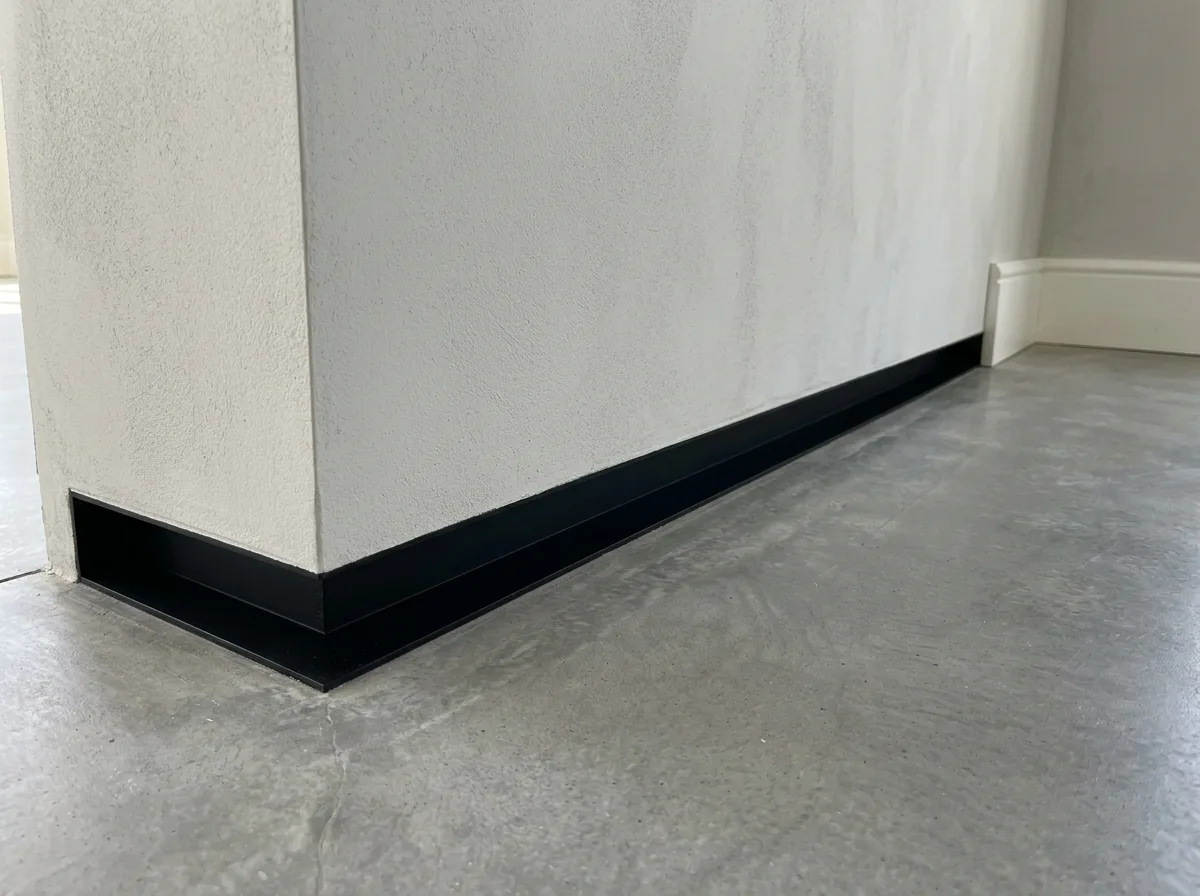
A close-up of the junction between a wall and the floor. There is no baseboard here; instead, there is a recessed dark slot: the wall surface recedes inward by three centimeters at two centimeters above the floor, forming an L-shaped groove. The interior of the groove is painted dark and completely devoid of light, so from a normal viewing distance, it appears as a pure black line. The wall thus appears not to rest on the floor but to float gently. The floor material extends all the way to the bottom of the groove. The width, depth, and horizontality of this slot must be perfectly consistent; any slight error will be visible. A corner of the image shows a comparison with a typical baseboard, immediately making the relationship between the wall and floor appear heavy. Avoid: making the two similar, adding any baseboard in the correct version, making the dark slot width inconsistent, showing reflections inside the groove.
Translated from Chinese by AI.
Show the original prompt
一段牆與地交界的近景。這裡沒有踢腳板,取而代之的是一道內凹的暗縫:牆面在離地兩公分處向內退縮三公分,形成一個 L 形的凹槽,凹槽的內部漆成深色並且完全沒有光線進入,因此從正常視距看過去是一條純黑的線。牆面因此看起來沒有落在地板上,而是輕輕懸浮著。地板的材料一路延伸到凹槽的底部。這道縫的寬度、深度與水平度必須完全一致,任何一點誤差都會被看見。畫面一角以一般的踢腳板作對照,牆與地的關係立刻變得沉重。避免:讓兩者相似、在正確版本加入任何踢腳板、讓暗縫的寬度不一致、讓凹槽內出現反光。