Text-to-Image
Architecture
通用
Seaside Material Selection: The Test of Salt Mist and UV Rays
Prompt
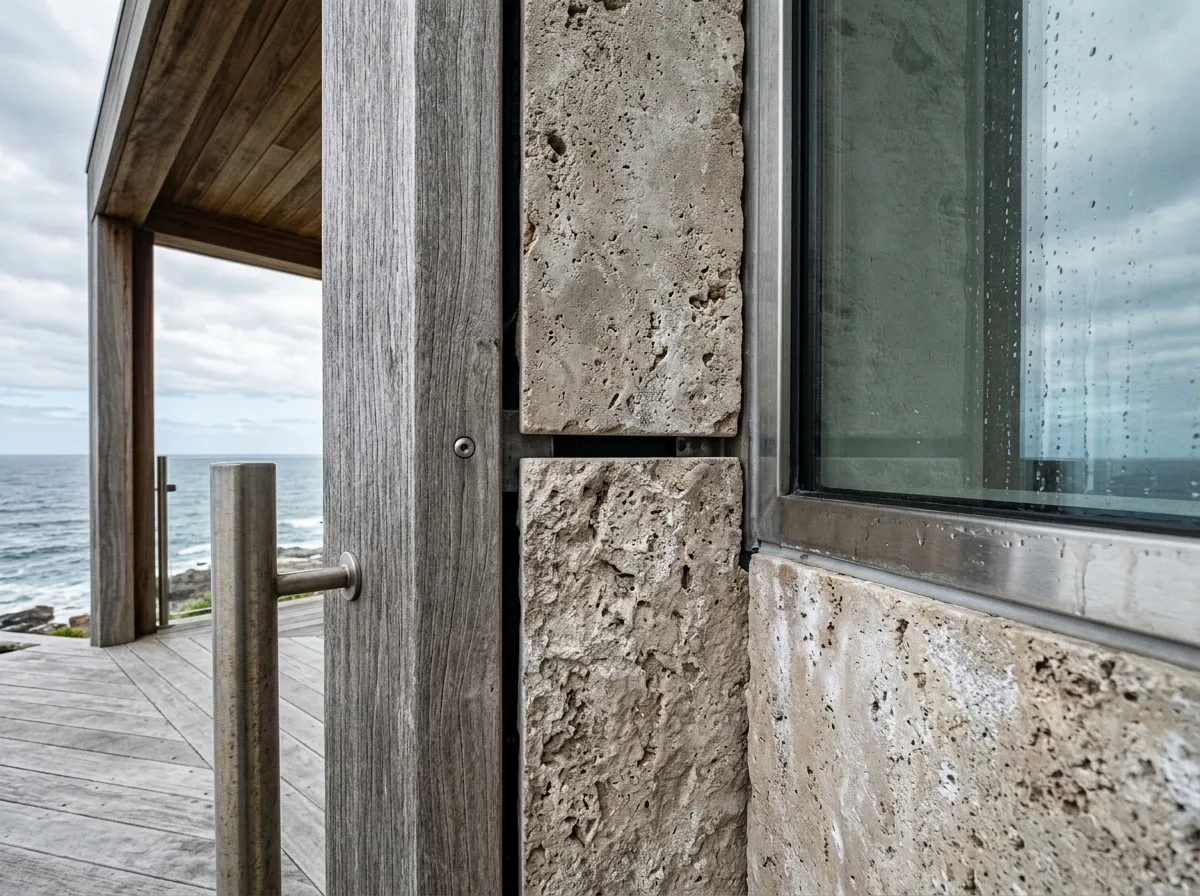
Close-up view of material details for a coastal luxury home: exterior walls are 40mm thick natural stone dry-hung with 10mm open joints and a ventilated cavity behind; all metal components are 316 stainless steel or anodized aluminum, no common carbon steel; wood components are teak or thermally modified hardwood, oiled only, not painted, with a uniform silver-gray patina already formed on the surface; glass is tempered insulated low-e with a hydrophobic coating on the exterior. The image clearly shows the junctions and finishing details of these materials, as well as the textural changes naturally formed in a salt spray environment. Avoid: using common carbon steel or painted metals, glossy paint on wood, thin stone slabs or tiles, materials depicted as brand new with no changes.
Translated from Chinese by AI.
Show the original prompt
以近景呈現濱海豪宅的材料細部:外牆是厚度 40mm 的天然石材乾掛,開放式縫隙 10mm,背後有通風腔;金屬件全部是 316 不鏽鋼或陽極處理鋁,沒有一般碳鋼;木構件是柚木或熱處理硬木,只上油不上漆,表面已呈現均勻的銀灰色;玻璃是強化中空低輻射,外側有防潑水鍍層。畫面清楚呈現這幾種材料的交接處與收邊細節,以及在鹽霧環境下自然形成的質感變化。避免:使用一般碳鋼或塗裝金屬、木材上亮光漆、石材使用薄板或磁磚、材料表面畫成全新無變化。