Text-to-Image
Architecture
通用
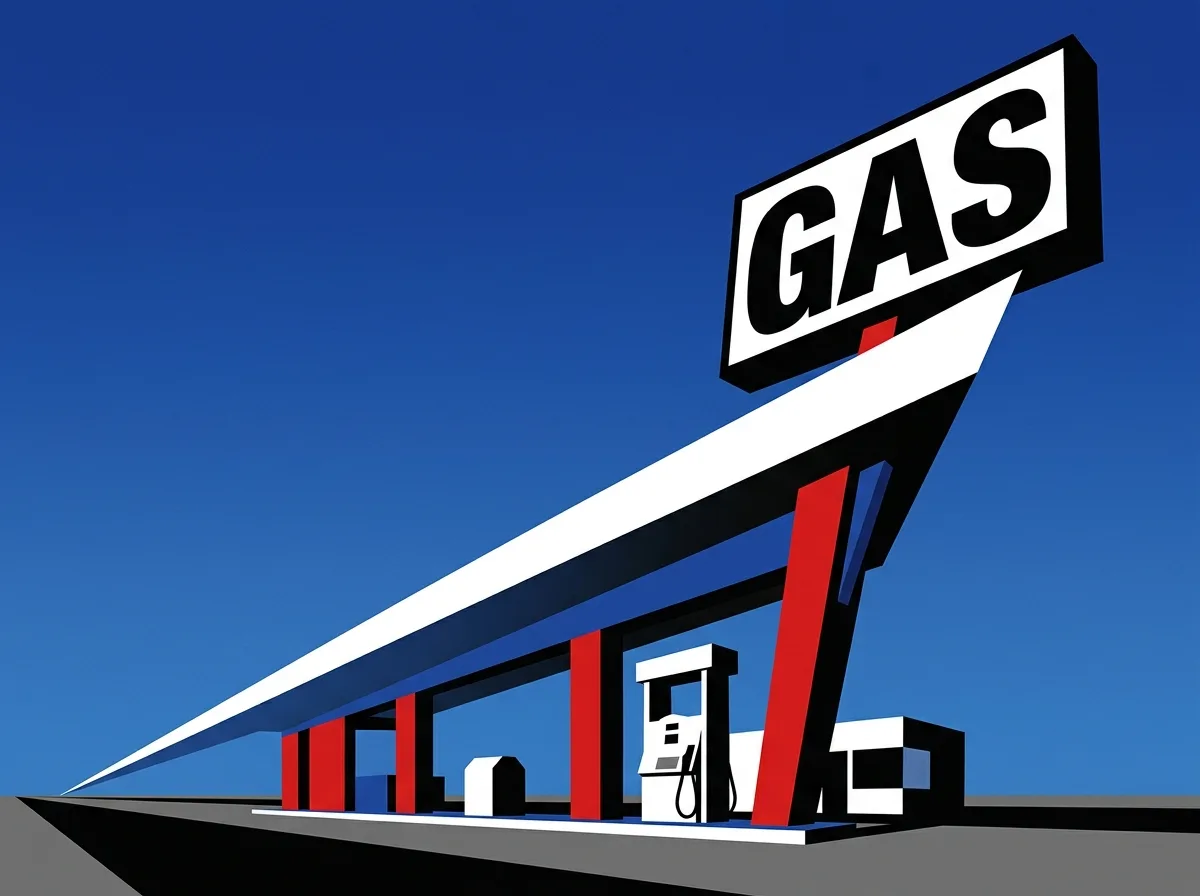
Text as Landscape: The American Imagery of Gas Stations and Words
Prompt
Place an ordinary gas station at the bottom of the frame with extreme perspective, its canopy and facade dramatically thrusting diagonally upwards and to the left out of the frame. A single word on the sign, rendered in bold, sans-serif capitals, forms the apex of the entire composition. The sky occupies most of the frame, treated with a simplified gradient, without clouds. Colors are extremely simplified into three to four flat blocks: red, white, blue, and black. The overall style is between realism and graphic—the architecture is abstracted into geometry, while only the word remains clear. This is an archetype translating American highway sign culture into a visual language. Low-angle, extreme single-point perspective composition. Avoid: realistic details, clouds in the sky, rich color gradients, unclear sign text.
Translated from Chinese by AI.
Show the original prompt
以極端的透視把一座平凡的加油站放在畫面下緣,建築的雨庇與立面以強烈的斜線向左上方衝出畫面,招牌上的單字以粗重的無襯線大寫呈現,是整個構圖的頂點。天空佔據大半畫面,以簡化的漸層處理,不畫雲。色彩極度簡化為三到四個平塗色塊:紅、白、藍與黑。整體介於寫實與圖像之間——建築被抽象成幾何,唯有那個字保持清晰。這是把美國公路的招牌文化轉譯成畫面語言的原型。低角度、極端單點透視的構圖。避免:細節寫實、天空畫雲、色彩層次豐富、招牌文字不清楚。