Text-to-Image
Interior Design
通用
Lighting Dark Spaces: Light Absorption by Black Walls, Needs Compensation
Prompt
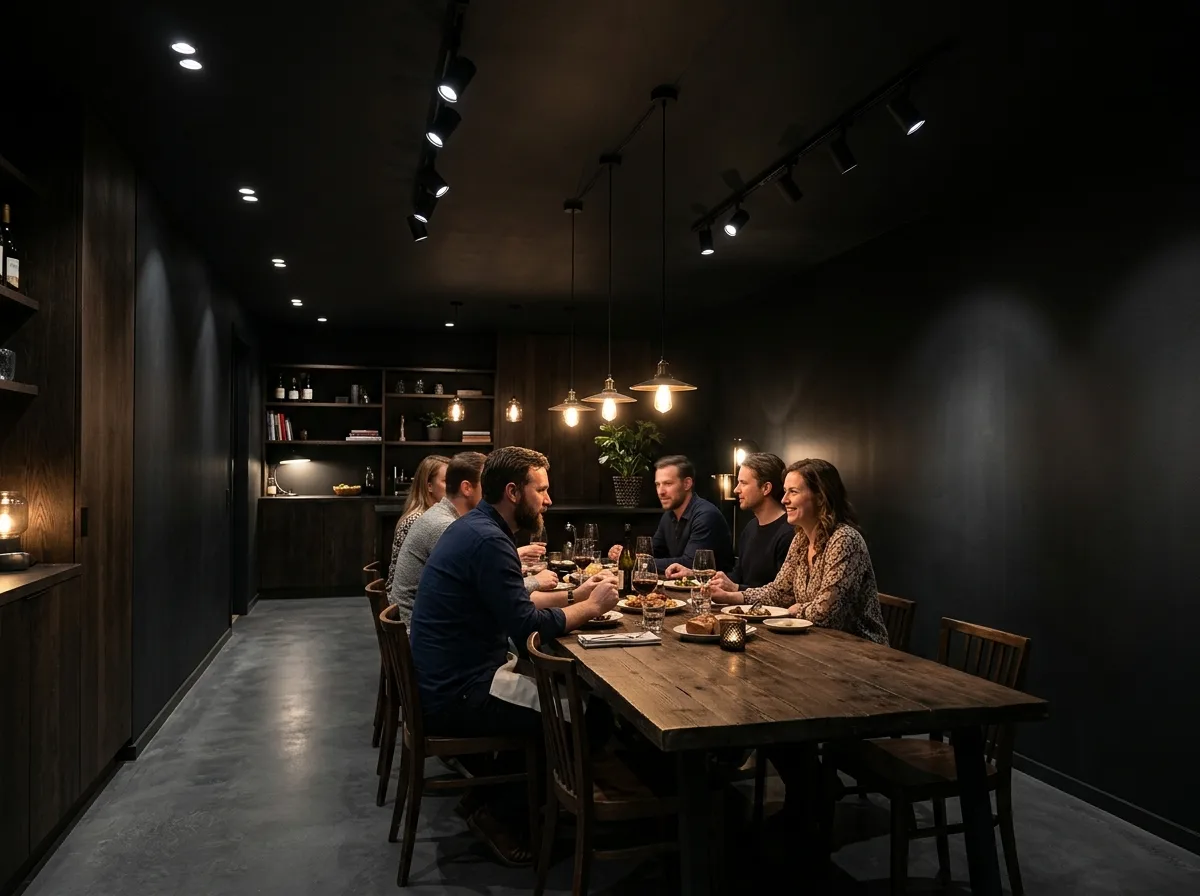
An interior space predominantly in dark tones—charcoal black walls, dark gray floors, dark wood furnishings. Due to the extremely low reflectivity of the materials, light hitting them barely bounces back into the space. Therefore, this room requires significantly more light fixtures and wattage than a similarly sized light-colored space to achieve the same usable brightness. The image shows the correctly configured state: a noticeably larger number of light sources, dispersed positions, with emphasis on illuminating people and objects rather than walls. The dark walls remain in a deep, dark state, but tabletops, chairs, pathways, and people's faces are clearly visible. Light leaves only faint edge reflections on dark surfaces, outlining the material's contours. Avoid: Applying the number of light fixtures suitable for a light-colored space, brightening dark walls to gray, leaving tabletops and people's faces in shadow, or using a single main ceiling light.
Translated from Chinese by AI.
Show the original prompt
一個以深色為主調的室內——炭黑的牆、深灰的地板、深色木作。因為材料的反射率極低,光打上去之後幾乎不會再彈回空間,所以這個房間需要比同尺寸的淺色空間多得多的燈具與功率,才能達到同樣的可用亮度。畫面呈現的是配置正確的狀態:光源數量明顯較多、位置分散,重點打在人與物件上而不是牆面上,深色的牆維持在深邃的暗,但桌面、座椅、走道與人的臉都清楚可見。光在深色表面上只留下微弱的邊緣反光,勾出材料的輪廓。避免:用淺色空間的燈具數量套用、把深色牆面打亮成灰、讓桌面與人臉落在暗處、使用單一的天花主燈。