Text-to-Image
Interior Design
通用
Dark colors and natural light: what to do during the day
Prompt
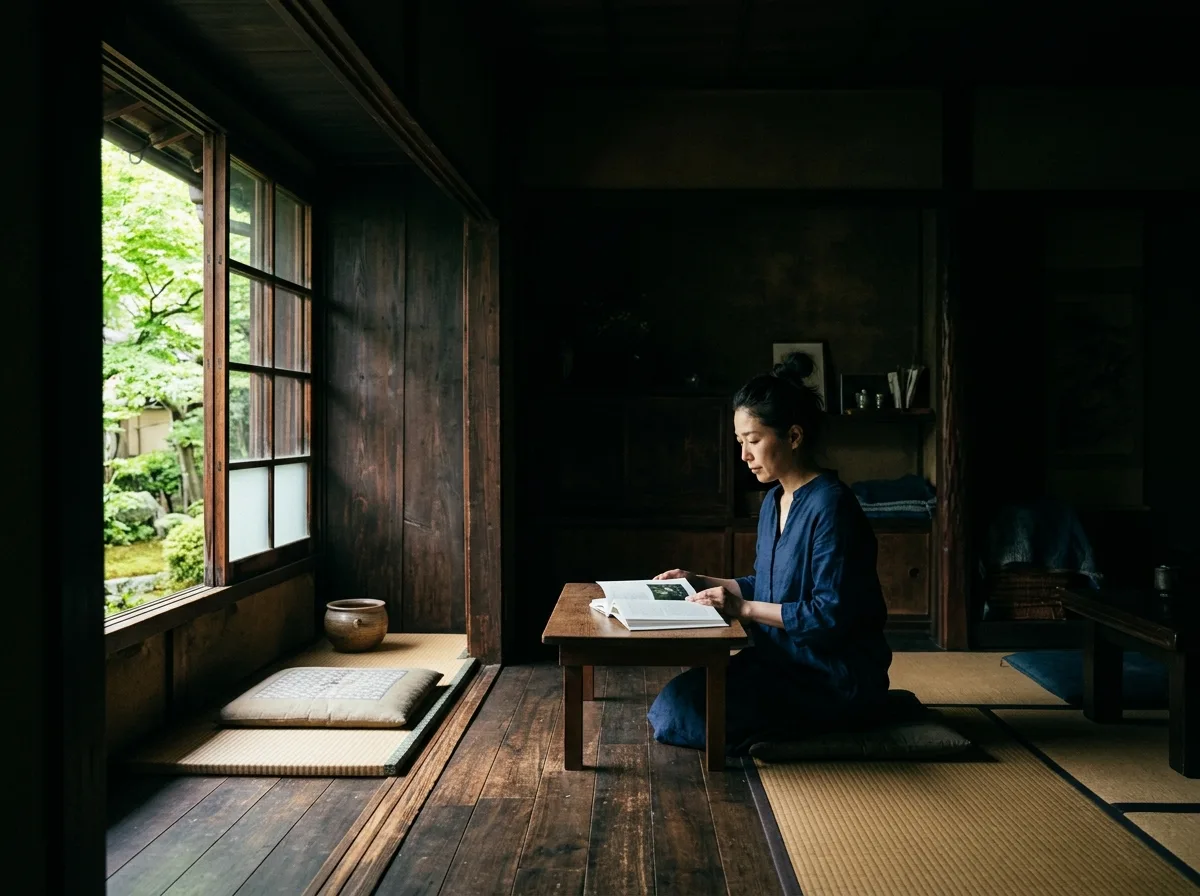
A dark room during the day. Because the walls absorb light, natural light entering does not reflect and fill the entire room as it would in a light-colored space, but rather concentrates near the window: an area by the window is bright, with materials clearly visible; light rapidly diminishes one or two meters deeper into the room, leaving the back half still dark. Thus, a dark space during the day has an extremely strong gradient of light and shadow, with the window becoming a luminous frame. This characteristic can be utilized—placing seating in the area where light diminishes, so a person is half in light and half in shadow. The image should show this gradient, demonstrating how quickly the light attenuates. Avoid: depicting the entire room as uniformly bright, using artificial lighting to fill in dark areas, making the window an overexposed white block, eliminating the light and shadow gradient.
Translated from Chinese by AI.
Show the original prompt
一個深色房間在白天的狀態。因為牆面吸光,自然光進來之後不會像淺色空間那樣被反射填滿整個房間,而是集中在窗附近:窗邊的一塊區域明亮、材質清楚可見;往深處一兩公尺光線就快速衰減,房間後半仍然是暗的。因此白天的深色空間有極強的明暗漸層,窗成為一個發光的框。這個特性可以利用——把座位放在光衰減的那個位置,人一半在光裡一半在暗中。畫面呈現這個漸層,可以看出光的衰減有多快。避免:把整個房間畫成均勻明亮、使用人工照明填滿暗部、讓窗變成過曝的白塊、消除明暗的漸層。