Text-to-Image
Architecture
通用
Brick Archway: Precisely Fitted Bricks and Brick Carvings
Prompt
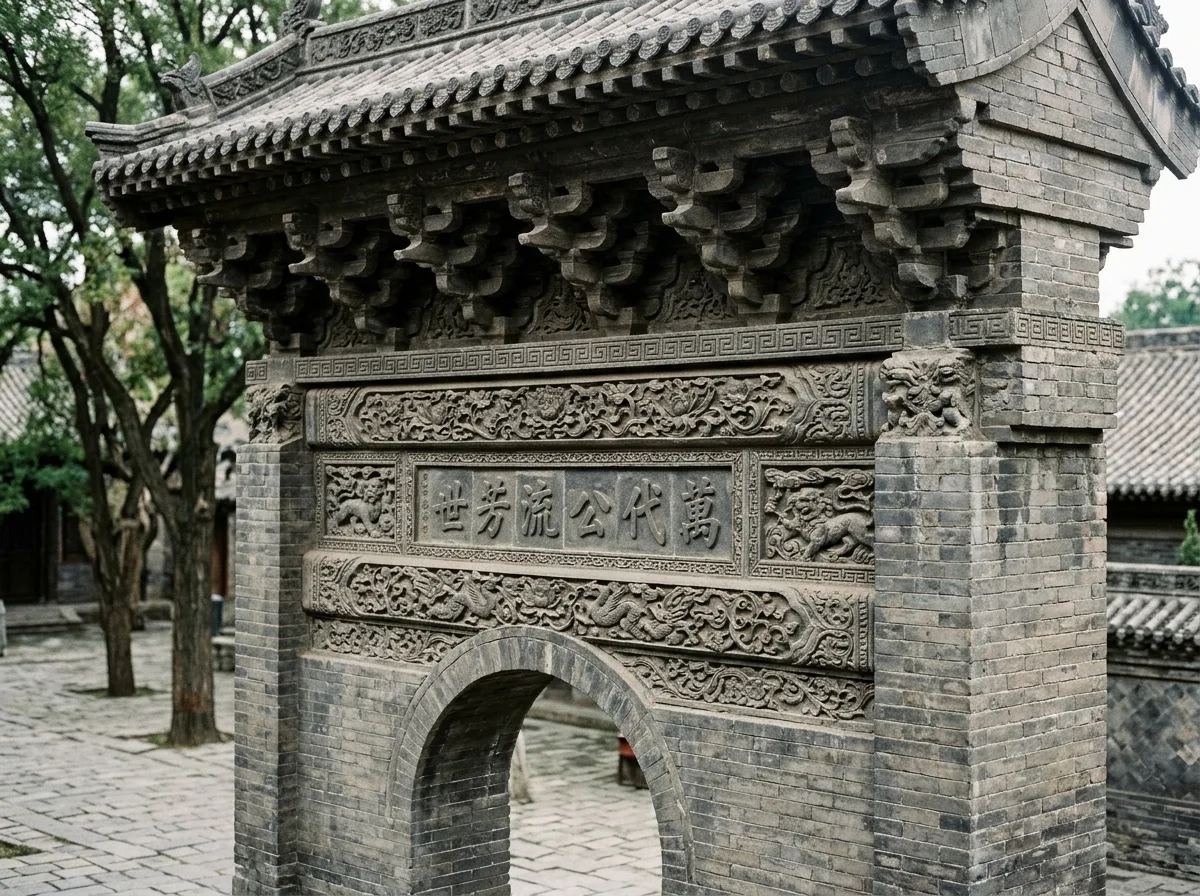
Detail of a paifang constructed with blue bricks. The bricks are finely ground blue-gray bricks, uniformly dark gray in color; the construction uses the 'polished brick, aligned joints' (mozhuanduifeng) technique, where mortar joints are almost invisible between bricks, making the entire wall appear like a single piece of stone. However, at the lintel and doorframe positions, the bricks are carved with intricate patterns—flowers, auspicious beasts, and geometric borders, with carving depths up to several centimeters, clearly layered, indicating brick carving rather than applied veneers. The dougong bracket sections are formed by corbeling bricks, projecting outwards layer by layer to create a stepped support. The top is covered with small gray tiles. The brick surface shows varying degrees of water stains and localized efflorescence and spalling due to age. Avoid: using rough red bricks with obvious mortar joints, depicting brick carvings as applied decorative panels, using modern bricklaying techniques, depicting the surface as brand new and unweathered.
Translated from Chinese by AI.
Show the original prompt
一座以青磚砌築的牌樓細部。磚是經過打磨的細泥青磚,顏色是均勻的深灰;砌築採用磨磚對縫的做法,磚與磚之間幾乎看不見灰縫,整面牆看起來像一整塊石頭。但在額枋與門楣的位置,磚被雕成繁複的圖案——花草、瑞獸與幾何邊飾,雕刻的深度可達數公分,層次分明,是磚雕而不是貼片。斗栱的部分以磚疊澀出挑,一層一層向外挑出形成階梯狀的托座。頂部覆蓋小青瓦。磚面因年久而有深淺不一的水漬與局部的酥鹼剝落。避免:使用粗糙的紅磚與明顯的灰縫、把磚雕做成貼上去的裝飾板、使用現代的磚砌工法、把表面畫成全新無風化。