Text-to-Image
Interior Design
通用
Corridor Endings: The Window at the End
Prompt
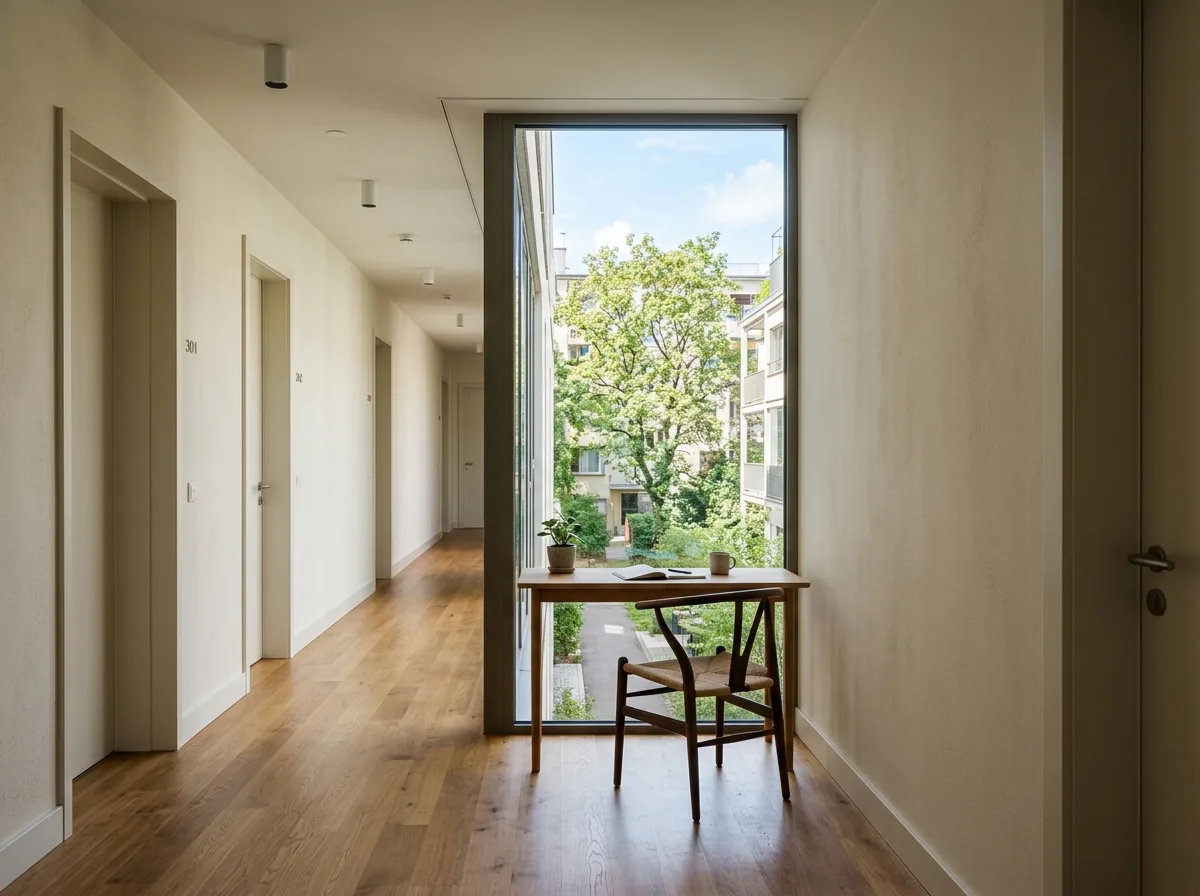
The end of the corridor is not a blank wall, but a floor-to-ceiling window looking out onto something with content—a courtyard tree, a corner of the city, or a framed sky. In front of the window, a console table and a chair create a small, undefined stopping point, where guests might actually make calls or enjoy the view. Natural light enters from the end, giving the entire corridor a sense of direction and time, completely different between day and evening. The walls on both sides of the window are minimally finished, not competing with the window. If an exterior window is not feasible, an alternative is a deep artwork with wall-washing light, but the effect will differ. Shot along the corridor axis towards the end view during the day, the light from the window, the console table, and the depth of the corridor are all visible simultaneously. Avoid: end being a blank wall or a small painting, window completely covered by blinds, stopping point used for fire or cleaning equipment, light only from artificial illumination.
Translated from Chinese by AI.
Show the original prompt
走廊的盡頭不是一面空白的牆,而是一扇從地板到天花的窗,外面是有內容的東西——中庭的樹、城市的一角、或一片被框住的天空。窗前放一張條桌與一張椅子,形成一個沒有人規定用途的小停留點,實際上住客會在那裡打電話或看風景。自然光從盡頭進來,讓整條走廊有了方向感與時間感,白天與傍晚完全不同。窗的兩側牆面收得極簡,不與窗爭。如果沒有外窗的條件,替代方案是一件有深度的作品加上洗牆的光,但效果不同。日間沿走廊軸線往端景拍攝,窗的光、條桌與走廊的縱深同時可見。避免:盡頭做成空白牆或掛一幅小畫、窗被百葉完全遮住、停留點放置消防或清潔設備、光線只來自人工照明。