Text-to-Image
Architecture
通用
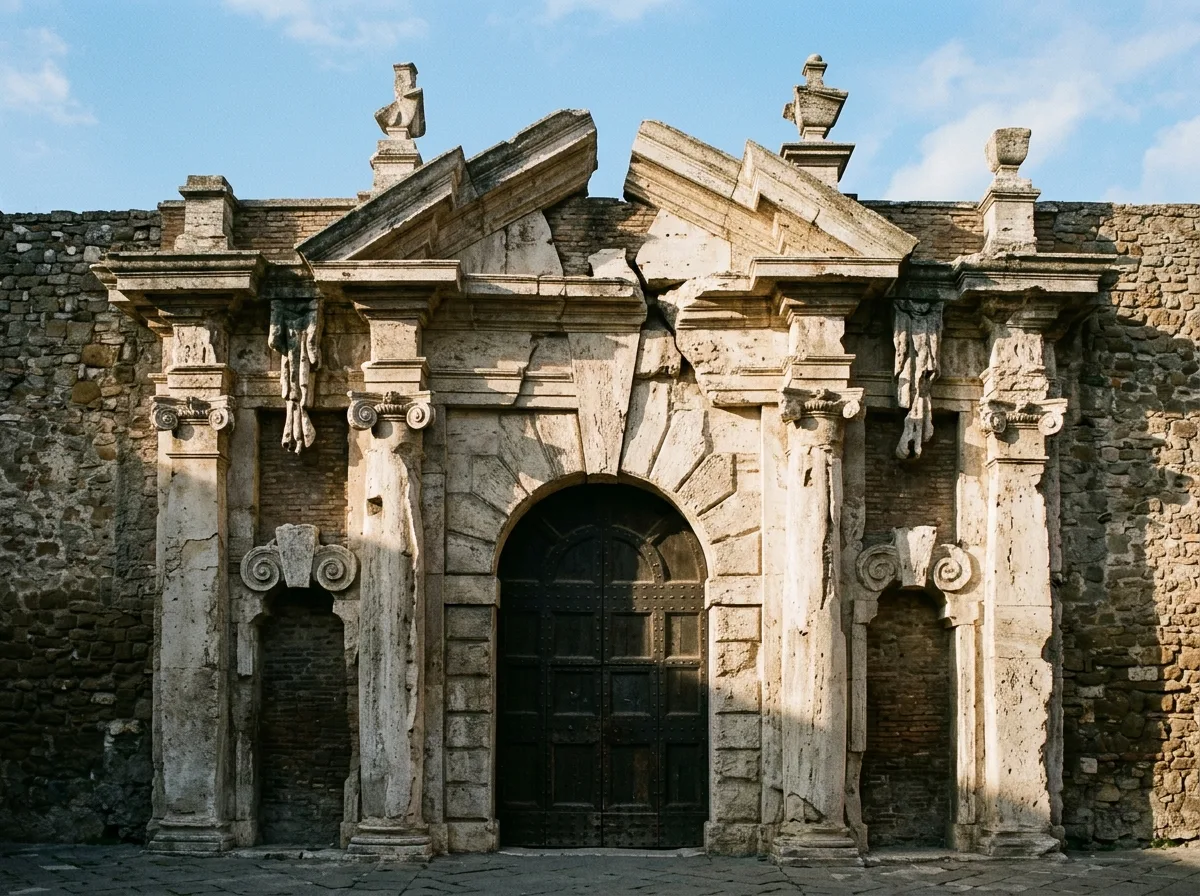
Michelangelo | Porta Pia: Deliberately Misinterpreting Classical Grammar
Prompt
The facade of a city gate, superficially classical: pilasters, pediments, and cornices are all present, but each element is deliberately misused—the pediment is split in half and nested into itself, the lintel hangs with inappropriate decorations, the pilasters are elongated, and volutes appear in illogical positions. This operation of "deliberately breaking rules after understanding them" is at the core of Mannerism. The gate opening itself is a simple arch, with all effort concentrated on the surrounding frame. The materials are brick and travertine, with a rough surface. The overall atmosphere is unsettling, tense, and intellectually provocative. Daytime shot from a frontal eye-level perspective, with side light casting deep shadows from the layered receding moldings. Avoid: correct use of classical grammar, harmonious proportions, symmetrical and regular decorations, smooth and refined surfaces.
Translated from Chinese by AI.
Show the original prompt
一座城門的立面,表面上是古典的:壁柱、山牆、簷口一應俱全,但每一項都被刻意用錯——山牆被拆成兩半又互相嵌套,楣石垂下不該存在的裝飾,壁柱的比例被拉長,渦卷出現在不合邏輯的位置。這種「懂規則之後故意破壞規則」的操作,是矯飾主義的核心。門洞本身是簡單的拱,力氣全花在周圍的框上。材質為磚與石灰華,表面粗糙。整體氣氛不安、緊張、帶有智性上的挑釁。日間正面平視拍攝,側光讓層層退縮的線腳投出深影。避免:古典語法使用正確、比例和諧、裝飾對稱規矩、表面平滑精緻。